

×

Recall of anti-tobacco advertising and information, warning labels and news stories in a national sample of Aboriginal and Torres Strait Islander smokers

Television advertisements and warning labels on tobacco products are the most commonly cited sources of information on the dangers of smoking.1,2 There is good evidence that messages about the harms of smoking increase knowledge, worry about health risks, attempts to quit, and even quit success.37 These messages aim to either change pro-smoking attitudes and intentions or strengthen those that support quitting.8

Smoking is the leading cause of sickness and death among Aboriginal and Torres Strait Islander peoples.9 To tackle this, funding was established in 2009 for community-led programs that raise awareness, provide education and challenge norms about smoking.10 Australia also launched its first national Indigenous Anti-Smoking Campaign (“Break the Chain”) in March 2011.11 These targeted programs ran alongside the National Tobacco Campaign, state and territory campaigns, and other sources of information, such as news media. In addition, plain packaging of tobacco products, with new and larger warning labels, was mandated from 1 December 2012.12

Some experts doubt the effectiveness of mainstream messages in reducing smoking among Aboriginal and Torres Strait Islander peoples.13 While culturally relevant messages are preferred,14 mainstream media campaigns achieve high recall,1517 including in remote areas.17,18 Here, we describe recall of anti-tobacco advertising and information (mainstream and targeted), pack warning labels and news stories among Aboriginal and Torres Strait Islander smokers, and assess the association of these messages with attitudes that support quitting.

Methods

Survey design and participants

The Talking About The Smokes (TATS) project surveyed 1643 current smokers from April 2012 to October 2013 (Wave 1, or baseline), and has been described in detail elsewhere.19,20 Briefly, we used a quota sampling design to recruit participants from communities served by 34 Aboriginal community-controlled health services (ACCHSs) and one community in the Torres Strait (project sites), which were selected based on the population distribution of Aboriginal and Torres Strait Islander people by state or territory and remoteness. In most sites (30/35), we aimed to interview a sample of 50 smokers or recent quitters (ex-smokers who had quit ≤ 12 months previously), with even numbers of men and women, and people aged 18–34 and ≥ 35 years. The sample size was doubled in four large city sites and in the Torres Strait community. People were excluded if they did not identify as Aboriginal or Torres Strait Islander, were under 18 years of age, were not usual residents of the area, were staff of the ACCHS, were unable to complete the survey in English if there was no interpreter available, or if the quota for the relevant age–sex–smoking category had been filled. In each site, different locally determined methods were used to collect a representative, albeit non-random, sample.

Interviews were conducted face to face by trained interviewers, almost all of whom were members of the local Aboriginal and Torres Strait Islander community. The survey, entered directly onto a computer tablet, took 30–60 minutes to complete. A single survey of health service activities was also completed for each project site.

The baseline sample closely matched the sample distribution of the 2008 National Aboriginal and Torres Strait Islander Social Survey (NATSISS) by age, sex, jurisdiction and remoteness, and by number of cigarettes smoked per day for current daily smokers. However, there were inconsistent differences in some socioeconomic indicators: our sample had higher proportions of unemployed people, but also higher proportions who had completed Year 12 and who lived in more advantaged areas.19

The project was approved by three Aboriginal human research ethics committees (HRECs) and two HRECs with Aboriginal subcommittees: Aboriginal Health & Medical Research Council Ethics Committee, Sydney; Aboriginal Health Research Ethics Committee, Adelaide; Central Australian HREC, Alice Springs; HREC for the Northern Territory Department of Health and Menzies School of Health Research, Darwin; and the Western Australian Aboriginal Health Ethics Committee, Perth.

Questions on health information exposure

As the TATS project is part of the International Tobacco Control Policy Evaluation Project (ITC Project), survey questions were based on ITC Project survey questions and are presented in Appendix 1. How often respondents noticed warning labels (in the past month), anti-tobacco news stories (in the past 6 months) and anti-tobacco advertising or information (in the past 6 months) was assessed on a five-point scale ranging from “never” to “very often”, which was later collapsed to three categories (never, sometimes, often).

Smokers who said they had never noticed advertising or information (hereafter collectively referred to as advertising) in the past 6 months were not asked further related questions. Smokers who had noticed advertising were asked whether it was on: television, radio, the internet, outdoor billboards, newspapers or magazines, shops or stores, pamphlets, and posters in various locations (yes or no). Those who recalled noticing advertising in the past 6 months were also asked whether any had featured an Aboriginal or Torres Strait Islander person or artwork (“targeted advertising”) and, if so, whether any featured an Aboriginal or Torres Strait Islander person or artwork from the local community (“local advertising”). We combined these responses to create the variable “type of advertising”, which categorised smokers as having: never noticed any advertising, noticed mainstream (but no targeted) advertising, noticed some targeted (but no local) advertising, or noticed some local advertising.

Main outcome measures and covariates

There were four main outcomes: believing smoking is dangerous to others (“agree” or “strongly agree” that cigarette smoke is dangerous to both non-smokers and children), being very worried that smoking will damage the smoker’s own health in the future, agreeing that mainstream society disapproves of smoking, and wanting to quit. Additional analyses were conducted on forgoing cigarettes because of warning labels.

Covariates included daily or non-daily smoking status and key sociodemographic indicators (sex, age, identification as Aboriginal and/or Torres Strait Islander, labour force status, education, remoteness and area-level disadvantage). We also assessed for variation according to tobacco control activity that had occurred at the project site over the previous year (whether there were dedicated tobacco control resources, and the number of media used to communicate anti-tobacco advertising), which was determined in the project site survey.

We also assessed differences in warning label recall before and after plain packaging was mandated (1 December 2012), treating the 3-month phase-in period as “before”.

Statistical analyses

Logistic regression was used to assess: (i) variation in health information recall (often v sometimes or never) by daily smoking status, sociodemographic variables, and tobacco control activity at the project site; (ii) the association between health information recall and the four main outcome measures; and (iii) variation in warning label recall and outcomes before and after plain packaging was mandated. Stata 13 (StataCorp) survey [SVY] commands were used to adjust for the sampling design, identifying the 35 project sites as clusters and the quotas (based on age, sex and smoking status) as strata.21

Data for health information recall were excluded for less than 2% of participants due to missing or refused responses, and for less than 2% due to “don’t know” responses. Questions about recall of warning labels were not asked of those who had not smoked in the past month (n = 44), nor those surveyed at the first project site (n = 26), after which questions were modified. These participants were therefore excluded from logistic regression analyses, which controlled for recall of each other type of health information, survey month (collapsed into 2-month blocks), daily smoking status and other sociodemographic covariates. Regression analyses for wanting to quit excluded a further 4.8% of smokers who responded “don’t know” to this question.

Results

Recall of health information

Of smokers who were asked about warning labels, 65% (1015/1557) said they had often noticed warning labels in the past month (Box 1). This was higher than the proportion of all smokers who recalled often noticing anti-tobacco advertising (45%; 730/1606) or news stories (24%; 386/1601) in the past 6 months.

Frequent recall of health information was similar for daily and non-daily smokers (Appendix 2). Fewer men than women reported often noticing warning labels (odds ratio [OR], 0.68; 95% CI, 0.51–0.90) and news stories (OR, 0.71; 95% CI, 0.51–1.00). While smokers from remote areas were less likely than those in major cities to recall often noticing advertising (OR, 0.56; 95% CI, 0.37–0.84), they were more likely to recall often noticing news stories (OR, 1.81; 95% CI, 1.18–2.79) and did not differ for recall of warning labels. Being from an area where the health service used a greater range of advertising media was associated with noticing it more often, with ORs increasing from 2.02 (95% CI, 1.15–3.57) for 5–8 media to 3.17 (95% CI, 1.84–5.46) for 9–12 media, compared with areas that used four or fewer media.

Associations with attitudes and wanting to quit

Recall of warning labels, advertising and news stories was positively associated with being very worried about future health and wanting to quit (Box 2). Only advertising recall was positively associated with believing society disapproves of smoking. For each outcome, the magnitude of ORs increased for those who recalled more targeted and local advertising, although this association was only significant for believing cigarette smoke is dangerous to others and wanting to quit.

Outcomes for warning labels before and after plain packaging

Compared with smokers surveyed in the period before plain packaging, those surveyed after its introduction were similarly likely to recall noticing warning labels but had higher odds for believing the labels made them more likely to quit (OR, 1.37; 95% CI 1.02–1.82) (Appendix 3). Smokers who had noticed warning labels in the past month were more likely to say these labels led them to forgo at least one cigarette after plain packaging compared with before it (OR, 1.54; 95% CI, 1.14–2.09). Further, those who said warning labels led them to forgo at least one cigarette were more likely to want to quit (OR, 3.73; 95% CI, 2.63–5.29) (data not shown).

Discussion

Advertising and information

We found high levels of recall of anti-tobacco advertising and information, particularly for television campaigns and local health promotion materials, which is likely to have been boosted by the community-led tobacco control activity that occurred over the survey period. However, even with this heightened activity, smokers from remote areas were less likely to say they often noticed advertising, consistent with trends for national mass media exposure.22 Recall of mass media advertising has been shown to increase with broadcast intensity,2325 which is fundamental to achieving good reach among smokers of low socioeconomic status.6,2527 Broadcast intensity is also important for influencing quitting activity and success.5,6,22,25,28,29

It is notable that targeted and local advertising was associated with higher levels of motivation to quit, a novel finding as far as we are aware. In part, targeted campaigns may be more memorable purely because of the interest in their targeted or local nature,30 which could be expected to weaken the observed relationship with wanting to quit. On the contrary, our results show the association increased in magnitude for recall of more targeted and local information, which suggests it is more potent than mainstream advertising. This finding is supported by analyses presented elsewhere in this supplement.31 While it is possible that the observed relationship could be due to higher exposure to all types of advertising, it remained significant irrespective of how often advertising was noticed.

Aboriginal and Torres Strait Islander peoples perceive targeted messages to be more relevant and effective,14,15,30 which may affect the influence of these messages on relevant attitudes. Among Maori people in New Zealand, culturally relevant campaigns have been shown to prompt discussions about smoking32 — an indirect effect of advertising that increases interest in quitting.33 While there is clear justification for targeted messages, together with emerging evidence regarding their benefit, consideration must also be given to whether this strategy is an effective use of scarce resources.34

Elsewhere, attitudes and intentions have been found to be most strongly influenced by advertising that evokes an emotional response, such as graphic or story-based messages.6,25,35 Such messages are rated highly by Aboriginal and Torres Strait Islander people and non-Indigenous Australians alike,14 and may also be an effective way to reduce disparities in quitting.36 How to best balance mainstream and targeted (including locally led) advertising will be an important area for future research.

Warning labels

We found that forgoing cigarettes was strongly associated with wanting to quit, as has been found in other settings,37,38 and that smokers were more likely to forgo cigarettes in the period after plain packaging was mandated than before. Although our before and after samples were not in any way random, the evidence is supportive of health warnings and plain packaging playing a role in maintaining concern about smoking. This is one of the aims of Australia’s plain packaging legislation, which increased the size of graphic warning labels, stripped all branding and regulated a drab brown pack colour.12

There is recent evidence that plain packaging increases the salience and effectiveness of health warnings.3941 Our findings confirm these findings in a minority population with a high smoking prevalence. Further, our finding that warning label recall was not socially patterned adds to scarce evidence on the socioeconomic impacts of graphic pack warning labels, which has been identified as an international priority for tobacco control research.6,42

News stories

Frequent recall of news stories was related to higher levels of worry about health and interest in quitting, which supports previous findings that news items can complement paid sources of communication.6,43 We found no evidence of a social gradient in recall of news stories; in fact, they were more likely to be noticed often by smokers from remote areas. Online platforms to share and discuss news could play an important role here, and have been used effectively for Aboriginal tobacco control news and advocacy efforts.44 Local stories and those about leaders and other role models may be particularly influential.45,46

Strengths and limitations

This article draws on data from a broadly representative national sample of Aboriginal and Torres Strait Islander smokers. The size of the sample has enabled us to consider subgroup analyses based on socioeconomic indicators and other participant characteristics, including remoteness of residence. The frequency at which health promotional materials were recalled is likely to have been inflated by biased recruitment of project sites that prioritised tobacco control and of participants who were more connected to the health service. Although this means we cannot generalise results about how often different types of advertising and information were recalled, it does not compromise the findings on whether more frequent recall is associated with relevant attitudes and intentions.

The main limitation of our study is its reliance on self-report of awareness. It does not incorporate more objective media market data, as these would not capture some of the local activity and would therefore have been a limited source of information beyond the main media markets. Awareness can be affected by opportunity for exposure, the potency of the material, and the openness of the individual to the message. While it is impossible to separate these entirely, it is possible to infer likely relative contributions. For example, warning labels on packs are roughly equally available (albeit affected by levels of consumption) and are of largely fixed (standardised) potency. Thus, differences in recall and reactions can be largely attributed to the openness of the individual to the label’s message. When assessing associations with attitudes or intentions, we adjusted for noticing other types of health information (to control for variability due to openness) and for socioeconomic indicators (to control for variability due to opportunity for exposure), with the rationale that associations independent of these influences were a better assessment of potency. However, campaign effects are difficult to disentangle from other tobacco control efforts and contextual factors,3 particularly when using cross-sectional data. As such, a multivariable model that considers these factors has been reported in detail elsewhere for the outcome of wanting to quit.31

Finally, we report adjusted analyses, which necessarily exclude a small proportion of smokers who declined to answer questions, answered “don’t know”, had not smoked in the past month or were surveyed at the first project site. While it is possible that the excluded participants differ from those who were included, the same pattern of results was observed for unadjusted associations (where there were fewer exclusions) and where outcomes with a high percentage of “don’t know” responses (eg, wanting to quit) were repeated with “don’t know” recoded as “no”.

With these limitations in mind, we found a clear link between more frequent recall of health information and attitudes that support quitting, including wanting to quit. Further research is required to assess whether more targeted information is better able to tap into relevant beliefs and subsequently increase quitting.

1 Exposure to health information in a national sample of Aboriginal and Torres Strait Islander smokers*

Health information exposure variables

% (frequency)


Warning labels (in past month)


How often have you noticed the warning labels on packs your smokes are sold in?


Never

11% (164)

Almost never or sometimes

24% (378)

Often or very often

65% (1015)

Have the warning labels stopped you from having a smoke when about to?


Never noticed warning labels

10% (164)

Noticed warning labels but never stopped

55% (887)

Noticed warning labels and stopped at least once

34% (550)

News stories (in past 6 months)


How often have you seen or heard a news story about smoking or quitting?


Never

30% (477)

Almost never or sometimes

46% (738)

Often or very often

24% (386)

Advertising and information (in past 6 months)


How often have you noticed anti-tobacco advertising or information?


Never

15% (241)

Almost never or sometimes

40% (635)

Often or very often

45% (730)

Noticed any targeted advertising


Yes

48% (783)

No or never noticed advertising

46% (745)

Don’t know

6% (96)

Noticed any local advertising


Yes

16% (258)

No or never noticed mainstream or targeted advertising

74% (1195)

Don’t know

11% (171)

Did you notice advertising or information:


On television

82% (1327)

On the radio

43% (690)

On the internet, including social media sites

25% (390)

On outdoor billboards

45% (706)

In newspapers or magazines

47% (751)

On shop windows or in shops where tobacco is sold (at point of sale)

43% (679)

In leaflets or pamphlets

55% (877)

Posters or displays at local health service

74% (1186)

Posters or displays at other Aboriginal or Torres Strait Islander organisation

67% (1051)

Posters or displays at local festival or community event

59% (921)


* Results are from the Talking About The Smokes baseline sample of current smokers (n = 1643, or n = 1573 for questions regarding recall of warning labels). † Except where specified (for targeted and local advertising), percentages and frequencies exclude refused and “don’t know” responses, which accounts for differences in the total. ‡ Results are percentages of all smokers, including those who had never seen advertising or information in the past 6 months.

2 Association of health information exposure with attitudes in a national sample of Aboriginal and Torres Strait Islander smokers*


Believe smoking is dangerous to others


Very worried smoking will
damage own health


Believe mainstream society
disapproves of smoking


Want to quit
smoking


% (frequency)

AOR (95% CI)

% (frequency)

AOR (95% CI)

% (frequency)

AOR (95% CI)

% (frequency)

AOR (95% CI)


Noticed warning labels (in past month)


< 0.001


< 0.001


= 0.45


< 0.001

Never

77% (126)

1.0

14% (22)

1.0

58% (95)

1.0

45% (71)

1.0

Sometimes

86% (325)

1.54
(0.93–2.56)

20% (75)

1.41
(0.81–2.44)

55% (209)

1.01
(0.67–1.54)

58% (204)

1.31
(0.82–2.07)

Often

94% (953)

3.56
(2.16–5.86)

44% (442)

3.44
(2.14–5.53)

64% (650)

1.21
(0.80–1.81)

78% (755)

2.90
(1.85–4.52)

Noticed news stories
(in past 6 months)


= 0.12


= 0.002


= 0.12


= 0.03

Never

90% (427)

1.0

25% (118)

1.0

64% (306)

1.0

59% (271)

1.0

Sometimes

91% (668)

0.58
(0.35–0.97)

34% (250)

1.56
(1.16–2.08)

59% (438)

0.75
(0.56–1.00)

71% (491)

1.40
(1.07–1.82)

Often

93% (359)

0.67
(0.37–1.24)

49% (187)

1.84
(1.30–2.61)

66% (254)

0.73
(0.51–1.05)

81% (297)

1.61
(1.05–2.47)

Noticed advertising (in past 6 months)


= 0.004


< 0.001


< 0.001


= 0.002

Never

82% (197)

1.0

18% (42)

1.0

58% (139)

1.0

48% (112)

1.0

Sometimes

91% (580)

2.26
(1.31–3.88)

29% (179)

1.10
(0.70–1.73)

56% (356)

1.08
(0.74–1.57)

68% (403)

1.57
(1.12–2.18)

Often

94% (684)

2.78
(1.47–5.26)

47% (342)

2.02
(1.29–3.17)

70% (510)

2.07
(1.31–3.27)

79% (548)

2.17
(1.42–3.31)

Type of advertising
(in past 6 months)§


= 0.006


= 0.25


= 0.60


< 0.001

Never noticed any advertising

82% (197)

1.0

18% (42)

1.0

58% (139)

1.0

48% (112)

1.0

Noticed mainstream (but no targeted) advertising

91% (522)

1.94
(1.09–3.46)

32% (181)

1.00
(0.62–1.60)

60% (345)

1.00
(0.67–1.48)

65% (354)

1.27
(0.91–1.78)

Noticed some targeted (but no local) advertising

93% (489)

2.58
(1.39–4.80)

43% (224)

1.15
(0.72–1.83)

66% (347)

1.13
(0.74–1.74)

77% (388)

1.99
(1.30–3.04)

Noticed some local advertising

95% (245)

3.63
(1.58–8.38)

44% (112)

1.34
(0.79–2.27)

66% (170)

1.24
(0.79–1.97)

84% (202)

2.88
(1.76–4.72)


AOR = adjusted odds ratio. * Results are based on the Talking About The Smokes project baseline sample of current smokers who had smoked in the past month (n = 1573). † Percentages and frequencies exclude refused and “don’t know” responses. ‡ AORs are adjusted for daily smoking status, key sociodemographic variables (age, sex, Indigenous status, labour force status, highest level of education, remoteness and area-level disadvantage), noticing other types of health information, and survey month (in 2-month blocks). P values are reported for overall variable significance, using adjusted Wald tests. § In addition to other covariates, analyses for type of advertising are also adjusted for frequency of advertising recall (often v sometimes or never).

Reappraising community treatment orders — can there be consensus?

Community treatment orders have become standard practice without serious consideration of the underlying research base

Community treatment orders (CTOs) require someone with a mental illness to follow a treatment plan while living in the community.1 Initially, debate focused on the ethical justification for CTOs, but subsequently shifted to their effectiveness. These considerations are particularly relevant to Australia as a few states, such as Victoria, have among the highest rates of CTO use in the world.2 Further, CTOs may also be incompatible with Australia’s obligations to the United Nations Convention on the Rights of Persons with Disabilities.3 Here, we present a consensus from two authors who have previously expressed very different views on the use of CTOs.1

We note, at the outset, a lack of clarity about the purpose, or purposes, of CTOs. Are they to reduce revolving-door admissions, provide a less restrictive alternative to involuntary admission, prevent violence by people with severe mental illness, or increase stability and promote recovery? These different aims involve a range of different outcomes: hospital use, perceived coercion, violent acts and quality of life. Uncertainty about their purpose is compounded by the range of different interventions. Interventions include clinician-initiated CTOs or supervised discharge and court-ordered outpatient committal. Supervised discharge coexists with CTOs in several countries including Canada and the United Kingdom.4

CTOs can be either “least restrictive” or “preventative” in function. “Least restrictive” orders are an alternative to involuntary hospitalisation in a person who would otherwise meet the criteria for inpatient commitment. By contrast, “preventative” orders aim to avoid relapse and hospitalisation where someone is at risk but does not currently meet the criteria for compulsory admission. Australian CTOs are clinician-initiated and contain elements of both. They are used either on discharge from hospital, or in the community, and last up to 12 months in Victoria, but less elsewhere. In contrast to many other countries where CTOs can only be used if the person has been previously hospitalised, CTOs are often used as an alternative to admission.

Australian patients on CTOs are typically younger males, with schizophrenia or serious affective disorders, frequent admissions, poor adherence and a forensic history. Indigenous status and/or rurality are not associated with CTO placement, possibly reflecting the availability of services to administer the order in remote areas.5

Research findings of health service use

Before-and-after studies suggest that compulsory community treatment led to increased follow-up with clinical services, a reduction in inpatient admissions and reduced lengths of stay in hospital. Subsequent controlled studies, using matching or multivariate analysis, confirmed increased follow-up with mental health services, as well as improved forensic outcomes, but not reduced hospitalisation6,7

Only randomised controlled trials (RCTs) can fully control for potential confounders. There have been three pragmatic studies on the effectiveness of CTOs: two in the late 1990s in North Carolina and New York,8,9and one more recently in the UK.10 None of these demonstrated statistically significant reductions in hospitalisation or improvements in health and forensic outcomes for patients on CTOs.

The two US studies have been the subject of considerable debate. Both excluded patients with a history of violence from randomisation and had high attrition rates resulting in selection bias and reduced study power. In one study, there was also concern about adherence to the research protocol and a smaller than expected sample size.9 A subsequent meta-analysis of the two US studies did not change the negative findings, but only addressed study power, not the other issues.4,7

A non-randomised post-hoc analysis of the North Carolina study reported that CTO placement of more than 180 days was associated with positive outcomes, including decreased hospitalisation and violence.8 However, such an analysis potentially introduced a type of selection bias that randomisation is designed to avoid: individuals may have been maintained on a CTO precisely because they were doing well.

The most recent RCT was the Oxford Community Treatment Order Evaluation Trial (OCTET) in the UK.10 This was a study of clinician-initiated treatment, as opposed to court-ordered interventions, like those examined in the two US RCTs, and therefore is more applicable to other countries with similar provisions. The study randomised patients discharged from hospital to an experimental group (CTOs) or a control group (extended leave under Section 17 of the UK Mental Health Act 1983) and compared their outcomes at 12 months.10 Unlike the US studies, patients with a history of violence were included.

There were no differences in readmissions or length of stay between patients on CTOs and patients in the control group. However, subjects were only included if they were equally suitable for a relatively short period of Section 17 leave or a CTO. Patients who might have especially benefited from a CTO may therefore have been excluded. Further, around 20% of those eligible lacked the capacity to consent or refused to participate. In addition, physicians could make clinical decisions irrespective of the initial randomisation, resulting in over a fifth of those in either arm swapping treatments. A sensitivity analysis to remove these protocol violations may, in turn, have left the study underpowered given the authors’ own calculations.10It will also have not removed the possibility that Section 17 patients who were swapped to a CTO might have been more severely ill than those remaining on Section 17 leave as per the protocol. Finally, the UK trial did not compare CTOs with voluntary treatment but with another type of compulsory community treatment. Although the length of initial compulsory outpatient treatment differed widely between the two groups (medians of 183 days v 8 days), Section 17 patients averaged 4 months on some form of compulsory treatment — a long time for control patients supposedly under voluntary care. This time in compulsory care was mostly due to protocol violations such as the Section 17 patients being changed to CTOs. The lack of difference in outcomes might therefore be explained by the two types of intervention being similar.

In conclusion, the evidence suggesting that CTOs reduce hospitalisation comes primarily from before-and-after studies and the post-hoc analysis of the North Carolina RCT. Most studies with randomised or matched controls have failed to show an effect. However, methodological issues with all the study designs, including the three RCTs, mean that the results have to be interpreted with caution.

Other outcomes

Outcomes in health service use may not reflect outcomes in other important areas such as quality of life or social functioning. The North Carolina RCT reported that subjects on a CTO were significantly less likely to be victimised, but also more likely to report perceived coercion.4,8 The effect on stigma was not reported. In terms of other outcomes, there is no RCT evidence for differences in treatment adherence, social functioning, homelessness, mental state, quality of life and arrests.4,8,9 However, in the case of the forensic outcomes, it is important to note that two studies excluded patients with a history of violence.

Other important or rare outcomes, such as mortality, cannot easily be assessed by an RCT. However, epidemiological studies have suggested that CTO cases have reduced mortality rates compared with control patients after adjusting for confounders, possibly by improving physical care through increased contact with community psychiatric services.11

Implications

We suspect that CTOs may initially increase the likelihood of admission because of increased monitoring in the community. Their effect on other outcomes is less clear. In view of the continued uncertainty about the effectiveness of CTOs, what should clinicians and legislators do? As CTOs are coercive, clinicians have a responsibility, irrespective of their effectiveness, to use CTOs judiciously and only if less coercive approaches have failed. Of concern is the marked variation in the use of CTOs in different jurisdictions.2 While it is unclear if this indicates overuse or underuse, clinicians should avoid the temptation to routinely place patients on CTOs. In addition, one potential conclusion from the UK OCTET study is that briefer conditional leave may suffice for some patients and should therefore be considered when both CTOs and conditional leave are available.

Policymakers must recognise that CTOs are a vehicle for delivering services and are not an alternative to providing care. Governments should also avoid naming the relevant CTO legislation after victims of violence by people with mental illness; examples include Laura’s, Kendra’s and Brian’s Law.1Naming CTO legislation after victims of violence is stigmatising and perpetuates an erroneous belief that people with mental illness are dangerous. Also, while there is non-randomised evidence that CTOs may reduce violence by individuals with untreated illness, this has not been confirmed in subsequent RCTs.8,9 Further, CTOs cannot prevent all potential violence as many individuals only come under professional care after they have offended, and others are inaccurately assessed as at low risk of violence.

Future directions

There is sufficient uncertainty about the effectiveness of CTOs to warrant further RCTs. Trials should have adequate sample sizes with minimal exclusion criteria and compare patients on CTOs with control patients receiving entirely voluntary care, as opposed to compulsory treatment of any form. Multiple outcomes should be assessed — not simply hospitalisation — and the optimum length of treatment should also be evaluated. Given the difficulties of achieving a balance between intervention and control arms, as well as the complexities of obtaining informed voluntary consent, we also need complementary well conducted, large-scale, quasi-experimental and naturalistic studies with rigorous multivariable statistical controls. In addition, while individuals on CTOs feel coerced, there is less understanding about the relative importance of this coercion vis-a-vis other negative outcomes.8

Conclusions

CTOs have become standard practice in Australia without questioning of the wide variations in their use or their research base. When evidence of clinical effectiveness is unclear, health policy is more likely to be shaped by political and social factors. Given several Australian Mental Health Acts are under review, the issue is too important to be uninformed by reliable data.

Hospitals should be exemplars of healthy workplaces

In ancient Egypt and Greece, temples functioned as centres of medical advice and healing. Hospitals are now the temples of the health care world, performing modern-day miracles in treating illness and injury. However, the gains in life expectancy made in the past century owe as much to public health interventions as to hospital-based care,1 and in the 21st century the world faces a different set of challenges arising from chronic diseases. Tackling the root causes of chronic disease — such as poor nutrition, lack of exercise, poor housing, contaminated environments, smoking and alcohol misuse — requires more than doctors, nurses and prescription pads.

Hospitals see the consequences and bear the burden of failures to deal with the social determinants of health. Given their unique position in the health care system, it is time for hospitals to become stronger advocates for health, wellbeing and the environment. As major employers and flagship health care organisations, hospitals can influence the norms of the communities they serve by adopting model policies and practices that promote the health of patients, visitors, employees, students and trainees.

Increasingly, hospitals are required to take into consideration the health status of the communities they serve in designing and delivering their services. In the United States, this is recognised in the community health needs assessment requirements imposed on charitable hospitals by the Affordable Care Act.2 A similar push has occurred for Australian local hospital networks to ensure delivery of services based on local needs,3 and for over a decade, each New Zealand district health board has been required to create a picture of the health status of its regional population.4 We argue that these efforts will not succeed unless and until hospitals themselves are seen as showing the way in health promotion.

While quality improvement initiatives often focus on systems, processes and outcomes of care, we believe there are structural changes that seem to be low-hanging fruit. Many of these changes are relatively small and low-cost but they mean hospitals can better deliver health and wellbeing alongside health care. They include reorienting hospital policies to ensure they provide healthy, ecologically sound and sustainable environments; an increased focus on promoting health and prevention; and fostering interpersonal safety.

Hospitals as stewards of sustainability and the environment

The health of the environment affects the health of the population. Hospitals are energy- and resource-intensive, and the World Health Organization notes three benefits of making them “climate-friendly”.5 First, health benefits will accrue from reducing carbon emissions and other pollutants created by waste disposal. Second, reducing energy usage and waste will reap economic benefits. Third, there is the positive societal and environmental influence of the health sector fulfilling its obligation to “do no harm”. To achieve climate-friendly hospitals, the WHO suggests seven focus areas: energy efficiency, green building design, alternative energy production, transportation, food sustainability, waste reduction and water conservation.

With their high energy use, health services account for more than half of greenhouse gas emissions in the public sectors of large states like New South Wales.6 Estimates from the United Kingdom suggest that the travel of patients, staff and visitors to and from hospitals contributes up to 20% of the hospitals’ carbon footprint.7 Plastics account for a third of hospital waste, and a quarter of that is estimated to be polyvinyl chloride (PVC). In Australia, there is a nascent program for hospitals and dialysis units to recycle as many as possible of the 50 million intravenous fluid bags and lengths of PVC tubing used every year, rather than send them to landfill. Done well, this can be a cost-neutral waste management solution.8

A healthy hospital should measure its environmental footprint and take action to reduce it through energy and water management, waste reduction, the purchase of environmentally friendly products and the provision of transportation alternatives. Hospital administrators should think about how they could cooperate with local government and public transport services to best promote cycling, walking and public transport use.9

Sustainability strategies are possible even for established buildings, and increasing energy costs should make this an imperative. In the US state of Pennsylvania, Geisinger Health System implemented a successful energy reduction program that annually achieved more than US$6.3 million in savings, reduced greenhouse gas emissions by 80% and reduced water use by 20%.10 In an example of a countrywide approach, the UK’s National Health Service (NHS), as part of its carbon reduction strategy, has set an initial target for NHS institutions to reduce their emissions by 10% (from 2007 levels) by 2015.11

As a positive example of hospitals departing from their traditional roles, 13 of the largest American health systems have come together to create the Healthier Hospitals Initiative (http://healthierhospitals.org). Acknowledging the large amount of resources consumed by health care services and their substantial purchasing power, this program asks its members to commit to improving their energy usage, providing healthier food options and purchasing safer and less toxic products, and then measures their success. Considerable savings have already been achieved by members of this initiative and could exceed US$5.4 billion over 5 years.12 However, despite the excellent work by sentinel organisations, including the international group Health Care Without Harm (http://noharm.org), hospitals that have made this a focus remain in the minority.

Health promotion must be a core dimension of hospital services

The aim of health-promoting hospitals, a concept that has been in existence for over 20 years,13 is to reorient health services away from focusing solely on curative care towards a more holistic approach that encompasses the principles of health promotion for patients, visitors, staff and trainees.

Despite the drama and urgency usually involved, a hospital admission for illness or accident is also an opportunity for preventive interventions. Patients, families and carers are more likely to pay attention when the risk factor (eg, smoking, obesity, excessive alcohol consumption, family violence) is proximate to the lung disease, heart attack, road accident or injury that has brought them into acute care.14 Failure to tackle such risk factors and to take advantage of the “teachable moment” the presentation offers increases the likelihood that the presentation will reoccur. However, a 2010 literature review found a dearth of published, high-level research on health-promoting hospitals,15 reflecting the low priority given to research into health promotion in health care systems generally and in acute care specifically.

Even if implementing a formal health promotion framework is not possible, there are a range of areas where hospitals can lead by example. It is important for hospital patients, visitors and employees to have healthy and affordable food and beverages and an environment that encourages physical activity and connectivity.16 In addition, hospitals should facilitate breastfeeding and lactation support, access to tobacco cessation interventions including nicotine replacement therapy, and substance and alcohol misuse programs in a non-judgemental environment.

There are other prevention and health promotion recommendations that are essential, yet are too often poorly implemented. These include handwashing, influenza vaccinations, workplace violence and injury prevention, and the safe handling of dangerous chemicals and radioactive waste.

Workplace injury, violence and bullying

Recent reports highlight the importance of mental health and wellbeing in the hospital workplace. Research shows that nurses in particular are at high risk of work-related injury and stress-related illness.17,18 The latter is linked to work overload and role-based factors, such as lack of power, role ambiguity and role conflict.17 A study commissioned by the Australian Safety and Compensation Council found the most commonly reported problems were musculoskeletal injuries, stress, bullying and infection.18

Most unintentional injuries can be avoided and psychological distress can be reduced through appropriate prevention and early intervention strategies. Particular emphasis needs to be given to preventing and managing aggression and violence towards hospital staff — an increasingly common situation, especially in emergency departments19 — and bullying. These are complex problems that require multifaceted solutions, not all of which are within the purview of hospitals. But they cannot be ignored, as both workplace violence and bullying influence job performance, retention and stress,20 and these in turn influence quality and safety.

There is evidence that bullying in hospitals does not just happen between supervisors and their staff or between different professions, but is also peer-to-peer.21 Fostering a safety culture means more than drawing a line between acceptable and unacceptable interpersonal behaviour; it encompasses a culture of trust where staff are encouraged to speak up about their concerns and are comfortable about reporting mistakes and near-misses. Indeed, improving the workplace safety culture has been associated with improved outcomes for staff and patients.22 Safe work environments are also necessary for best-practice clinical learning, a key hospital function.23

Conclusion

Hospitals must become healthy workplaces in every sense. This is an integral part of the push for quality and safety in clinical care and also contributes to the triple bottom line for health care: better patient experience of care; better population health through improved social and environmental impacts; and better financial performance.24

Although hospitals have healing as their core value, they contribute to the burden of illness and injury by selling junk food, consuming enormous amounts of energy, generating waste that is simply disposed of in landfill, and through poor workplace practices. We argue that hospitals must be fully involved in the health agenda, leading the way in their communities by promoting health, providing healthy and safe workplaces and working towards environmental sustainability. They must exploit their respected status for the benefit of the communities they serve and lead the way for others to follow. The benefits will be returned quickly in terms of better health outcomes for patients and the public, workforce recruitment and retention, cleaner environments and cost savings.

First use of creatine hydrochloride in premanifest Huntington disease

Huntington disease is a devastating autosomal dominant neurodegenerative disorder that typically manifests between ages 30 and 50 years. Promising high-dose creatine monophosphate trials have been limited by patient tolerance. This is the first report of use of creatine hydrochloride in two premanifest Huntington disease patients, with excellent tolerability over more than 2 years of use.

Clinical record

A 33-year-old patient in our general practice carried the autosomal dominant gene for Huntington disease (HD). The abnormal number of cytosine-adenine-guanine triplet repeats in the huntingtin gene she carried meant she would eventually become symptomatic for this dreadful disease.

The patient requested information regarding potential treatments, as she had become aware of clinical trials for HD and of compounds used by patients with HD. A neurologist had previously recommended a healthy diet, exercise, avoiding excessive toxins (such as alcohol), social enrichment and cognitive stimulation, which together may modestly slow clinical disease progression and improve quality of life.1 She had used preimplantation genetic diagnosis during her pregnancies but preferred otherwise not to focus on her condition. She understood that there were no proven therapies for this incurable condition and did not want to attend HD clinics. She was asymptomatic.

At her request, I searched the PubMed database for possible treatment options. There were some that were unproven in HD but had been used safely in humans for other indications, had a reasonable rationale regarding known HD pathophysiology, and had positive results in animal models of HD and/or early-phase human HD trials.2

In January 2012, I sought advice on using these options (eg, high-dose creatine, melatonin, coenzyme Q10, trehalose, ultra-low-dose lithium with valproate) from a specialist HD clinic but was advised against this approach. Instead, it was suggested that the patient might be able to sign up for clinical trials including high-dose creatine. The patient chose subsequently to participate in an observational trial (PREDICT-HD) which did not limit her options. However, she declined consideration for the Creatine Safety, Tolerability, and Efficacy in Huntington’s Disease (CREST-E) study,3 an international Phase III placebo-controlled trial of creatine monophosphate (CM) in early symptomatic HD. It is also very unlikely she would have been accepted for this trial as she was asymptomatic.

In February 2014, the Creatine Safety and Tolerability in Premanifest HD trial (PRECREST),4 a Phase II trial, showed significant slowing of brain atrophy in CM-treated premanifest HD patients. If convincingly replicated, this would be a major advance.

The main practical problem with high-dose CM (20–30 g daily) is tolerability. Adverse effects are common, especially nausea, diarrhoea and bloating. In people who have normal renal function before commencing creatine supplementation, creatine does not appear to adversely affect renal function.5

In PRECREST, about two-thirds of patients tolerated the maximum dose (30 g daily) and 13% of those on placebo were unable to tolerate CM when they switched to it. Moderate intolerance appears to be common. A high dropout rate affected the HD gene carriers in this study despite assumed high motivation.6 Recommended additional water intake for patients on CM therapy is 70–100 mL per gram of creatine per day, which is problematic at high doses of CM.

The patient again requested assistance as she wanted to seek the best available potential treatment to face her condition with equanimity.7 I decided that, provided safety was paramount, I would assist her on an informed consent basis as part of my duty of care, respecting her informed autonomy.

A case presentation and treatment plan was prepared and an expert team of relevant medical specialists was assembled. Comprehensive informed written consent, including consent from the patient’s partner for additional medicolegal protection, was obtained. The New South Wales off-label prescribing protocol8 was followed, actions were consistent with article 37 of the Declaration of Helsinki,9 and medical defence coverage for the proposed treatment was specifically confirmed by my indemnity insurer.

After baseline assessment, including renal function and careful attention to hydration, the patient commenced oral CM therapy at 2 g/day. This was slowly increased to 12 g/day but she was unable to maintain this dosage due to gastrointestinal adverse effects.

Creatine hydrochloride (CHCl), a creatine salt that has greater oral absorption and bioavailability than CM, and requires less water and a lower dose, offered a possible solution.10 The reduced dose also reduces intake of contaminants, which is very important for extended use. Use of CHCl has been confined to the bodybuilding industry and, to the best of my knowledge after a careful search of PubMed, nothing has previously been published in the context of neurodegenerative disorders.

After review by a pharmacologist and consultation with the co-inventor of the available formulation of CHCl,10 a daily dose of 12 g (equivalent to about 19 g CM) with 100 mL water per 4 g of CHCl was proposed. The manufacturer (AtroCon Vireo Systems) provided 1 g capsules of pharmaceutical grade CHCl at reduced cost. The patient decided to commence CHCl therapy after ceasing CM therapy. The dose of CHCl was slowly increased to 4 g three times a day (12 g daily) with a minimum of 100 mL additional fluid per 4 g dose.

The patient has been taking this dosage since January 2013 without any significant adverse effects and is keen to continue. Her serum creatinine levels are stable. Her serum creatine levels before and after doses have also been measured, and this confirmed that the CHCl is being absorbed.

Shortly after this patient began CHCl therapy, a second related premanifest HD patient requested access to CHCl. After a similar informed consent process, the second patient commenced the same dose of CHCl and has also not developed significant adverse effects. Clinically, both patients remain well.

Discussion

This is the first report of CHCl use in HD, with excellent tolerability for more than 2 years by two patients. If replication of the PRECREST findings confirms high-dose creatine as the first potentially disease-modifying treatment for HD, CHCl may represent an important option for patients, warranting further studies.

In this context, it is disappointing that CREST-E was closed in late 2014 after interim analysis showed it was unlikely to show that creatine was effective in slowing loss of function in early symptomatic HD based on clinical rating assessment to date. There were no safety concerns.11

It will be interesting to see, when eventually analysed and published, whether the magnetic resonance imaging (MRI) data from CREST-E showed any benefit in any subgroup and whether the trial cohort as a whole were in fact all in early-stage disease, and to consider whether the clinical rating scales were sensitive enough in this specific trial context.

Although others disagree, I argue that it remains unclear based on PRECREST findings whether the lack of benefit of creatine for early symptomatic disease in CREST-E is strictly relevant to the much earlier presymptomatic stage of the disease, especially when patients are far from onset.

HD symptoms take 30–50 years to develop, and the disease generally progresses to early dementia and death. Progressive MRI abnormalities accumulate for 20 or more years before onset. It appears that by the time the disease becomes symptomatic after 30–50 years, a multiplicity of interacting pathogenic mechanisms have become active (eg, excitotoxicity, mitochondrial energy deficit, transcriptional dysregulation, loss of melatonin receptor type 1, protein misfolding, microglial activation, early loss of cannabinoid receptors, loss of medium spiny striatal neurones, oxidative stress), and early and late events have occurred. The authors of a study of postmortem HD brain tissue refer to these mechanisms as a “pathogenetic cascade”,12 while others refer to them as multiple interacting molecular-level disease processes.13 “Early” downregulation of type 1 cannabinoid receptors has been identified as a key pathogenic factor in HD.14 In a recent review on the pathophysiology of HD, the authors described “a complex series of alterations that are region-specific and time-dependent” and noted that “many changes are bidirectional depending on the degree of disease progression, i.e., early versus late”.15 These and other findings suggest that HD has a complex temporal and mechanistic evolution that has not been fully elucidated. For this reason, we should think carefully before abandoning an agent when it fails at the relatively late symptomatic stage of this devastating and incurable disease.

As creatine is thought to have a useful potential for action in relation to only one of the many relevant disease mechanisms — mitochondrial energy deficit — was it too much to expect creatine to have a significant impact on symptomatic-stage disease in CREST-E? It seems possible, based on the references cited above, that there are fewer (or less intense) pathogenic mechanisms operating at much earlier presymptomatic stages of the disease, when the brain is more intact and plastic. If so, treatment trials in presymptomatic patients assessed using MRI or other biomarkers might offer better prospects for benefit.

I believe that sophisticated replication of PRECREST (or at least clarification as to whether the slowed rate of atrophy on MRI in premanifest patients was genuine or artefactual) is an ethical obligation that we owe to the HD community who contributed so much to CREST-E.

There are significant ethical and sociomedical issues associated with HD research. In reviewing the literature, it was obvious that early-phase research contains multiple examples of existing, out-of-patent or non-patentable potential therapies that appear to warrant modern clinical trials and, I argue, at an appropriate early stage of the disease.2,16,17 Early-phase studies of combination therapies with existing agents appear frequently to receive little, if any, follow-up.2,18

Currently, any drug for which US Food and Drug Administration or European Medicines Agency approval is sought for presymptomatic HD must achieve a clinical end point first in symptomatic HD, then requalify in presymptomatic HD, meeting combined clinical and biomarker end points. Does this arbitrarily overprivilege the clinically observable stage of a disease, which is now understood (based on relatively recent MRI studies) to have a course of 20 or more years before symptoms begin?

Because of the enormous costs associated with drug development, and the uncertainty of such research, I believe that it is time for a renewed focus on small, targeted clinical trials, especially in premanifest HD, using existing and novel agents. Recent advances in MRI and additional biomarkers that are under development19 open the possibility of meaningful small trials that aim to slow HD progression until gene therapy arrives.

None of this, however, will achieve its full potential unless we address the barriers to genetic testing. The true incidence of many genetic conditions, including HD, in Australia is unknown. If a treatment becomes available, more people will want to be tested. The decision to have genetic testing is complex, controversial and uniquely personal. Respecting this, I believe that we need to urgently follow the lead of the United States, Germany, Sweden, France, Denmark and other countries in legislating to end genetic discrimination in health, insurance, employment and services.20 I urge policymakers to replicate and clarify PRECREST and, in full collaboration with the HD community, trial existing and available medications alongside novel agents.

Hippocratic heroes

“The systematic, deliberate, physical annihilation of the European Jews was Nazi Germany’s Final Solution of the Jewish Question”, according to the United States Holocaust Memorial Museum (http://www.ushmm.org/wlc/en/article.php?ModuleId=10005477).

WHEN HITLER SEIZED POWER in 1933, around 9 500 000 Jews lived in Europe. Six million of these were killed by the Germans and their Polish, Lithuanian, Latvian and other collaborators, or died of starvation and epidemics in ghettos and concentration camps. A tiny number survived.

Questions have been asked about an apparent absence of resistance, especially in the military sense. There was some by the Bielski brothers and other bands of partisans, and in the Warsaw Ghetto in Poland.

Grodin, Professor of Health Law, Bioethics and Human Rights at the Boston University School of Public Health, and his coauthors have carefully documented a different kind of resistance — against the hazards of overcrowding in unhygienic conditions. The associated starvation, malnutrition and epidemics in the ghettos and holding camps killed tens of thousands of inmates. The survivors were packed into cattle trucks without food, water or toilet facilities, for days on end, until the hardiest reached the death camps.

Doctors, even the most prominent professors and researchers, were rounded up with the other Jews, and shared their privations. Many died. But while they lived, they resisted the killing of Jews. Within the limitations of captivity, they attended to public health measures, did what they could for the physically ill, and comforted those whose mental health had deteriorated. Creating a semblance of normality, they taught students, undertook surgery, did research … even making a typhus vaccine from urine.

A few dozen doctors, no longer alive, were among the 27 000 survivors of the ghettos and camps who found refuge in Australia. They included Eugenia (Ena) Hronsky, from the Auschwitz concentration camp in Poland, who became a general practitioner in Adelaide; Sydney GPs Abrasha Wajnryb and David van der Poorten, the former from the Vilna Ghetto in Lithuania and the latter a survivor of the Westerbork and Theresienstadt camps in the Netherlands and Czech Republic (formerly Bohemia), respectively; and Sydney obstetrician and gynaecologist Henryk Frant, from the Warsaw Ghetto.

The courage and achievements of our incarcerated colleagues warrant our recognition as truly Hippocratic heroes. Their stories merit the attention of doctors and students who, in the ideal surroundings of 21st century Australian medicine, cannot imagine medical practice in such deprived circumstances.

With talk of Medicare reform, let’s not neglect vertical equity

Equal treatment for equal need is not enough — positive discrimination for disadvantaged groups is also required

With the “reform” of Medicare on the political agenda, it is timely to reflect on the objectives of fairness and equity that are key goals of our national health scheme. These objectives include both “horizontal equity”, or equal treatment for equal need, and “vertical equity”, which involves appropriately different treatment for those with different needs.

The goal of horizontal equity was made explicit by Neal Blewett, then minister for health, in his second reading speech of the Health Legislation Amendment Bill 1983. He stated that a goal of Medicare was “to produce a simple, fair, affordable insurance system that provides basic health cover to all Australians”.1

The goal of vertical equity is implicit in the more recent government policy of Closing the Gap — improving health outcomes for Indigenous Australians relative to the general population.2 The objective of this policy is to eliminate the difference in life expectancy between the two groups within a generation (by 2031) and to halve the excess mortality for Indigenous children under 5 years of age by 2018.2

Disadvantaged populations and vertical equity in health care in Australia

Indigenous Australians are only one of the marginalised populations in Australia. Others include the chronically sick, older people, people from non-English-speaking backgrounds, refugees, those on low incomes, the mentally ill and the homeless. Several policies already exist that seek to improve vertical equity for these groups. They include the use of means-tested safety nets and health care concession cards for people on low incomes, the funding of specific workforces to treat conditions associated with disadvantage (eg, drug and alcohol workers), and the availability of services and programs for particular needy groups, such as dental care for children or case coordination for those with chronic illness. These examples illustrate policies that achieve appropriately different treatment for people with different needs.

Importantly, the Australian Government also has agreements with the states and territories to fund hospital and other health care programs that target particular needs. For example, all states and territories operate patient assisted travel schemes for geographically isolated patients. These schemes provide assistance with travel, escort and accommodation expenses when patients have to travel over 100 km to access specialised health care.3 Several of these policies and programs to improve vertical equity are under threat from the proposed 2014 Budget cutbacks.

Within Medicare, the Medicare Benefits Schedule (MBS) and Pharmaceutical Benefits Scheme (PBS) both achieve horizontal equity through their universality, but there are also examples of their use to achieve vertical equity. These include the prioritisation of people with more serious diseases — the so-called “rule of rescue”4 — and a few services determined on the basis of age, such as the MBS Healthy Kids Check for the early detection of lifestyle risk factors, and several physical health services provided by general practitioners and practice nurses that are available for 4-year-olds.5

However, Medicare has not been used explicitly to prioritise those with greater need due to social characteristics such as class, disadvantage or ethnicity, as routinely occurs in the United Kingdom’s National Health Service.6 There are a few exceptions: the MBS and PBS item numbers for Indigenous health workers, and specific subsidies for the treatment of otitis media, fungal infections, alcoholism, smoking and worms — conditions that are overrepresented in Indigenous Australians and people on lower incomes.7 There are lower copayments for Indigenous Australians for several MBS and PBS services and products. For example, the Closing the Gap — PBS Co-payment Measure results in lower or no copayments for PBS-listed medicines for Indigenous Australians who are at risk of, or who have, chronic disease.8 While removing a few barriers to access, such examples are rare.

Medicare does not have an overarching evidence-based decision framework for achieving vertical equity. Doubts remain regarding the extent to which our health care system, and particularly those parts controlled by explicit regulation (the MBS and PBS), is equipped and prepared to make policy decisions to achieve vertical equity; that is, decisions requiring positive discrimination.

The reluctance to pursue vertical equity is, in part, attributable to perceived difficulties with operational methods and public acceptance. Operationally, there could be a concern that such policies would create a precedence for decisions that may lead to future difficulty in “drawing the line”, or a fear of “opening the flood gates”, or being vulnerable to litigation. There may also be a perception that the public or taxpayers would not accept policy decisions that positively discriminate on the basis of social characteristics or disadvantage.

Research into equitable allocation of the health budget

Fortunately, research is available to help with operational decision rules, and there is a strong argument for basing equity objectives on social preferences in a democracy such as Australia. Existing research shows that the general public has clear views about fairness and equity between different groups in society and is capable of articulating preferences that may be used for allocating unequal resources between those with unequal health needs.9 The research to date has focused on health and personal characteristics. For example, people indicate that they are willing for society to pay more for the health of children, those with serious illness, those who were not responsible for their own condition and those with minimal other treatment options.911 In the UK, one study of disadvantage by social class found that an incremental increase in life expectancy for the lowest social class was weighted about seven times higher than an equivalent gain for the highest social class by members of the general population.12

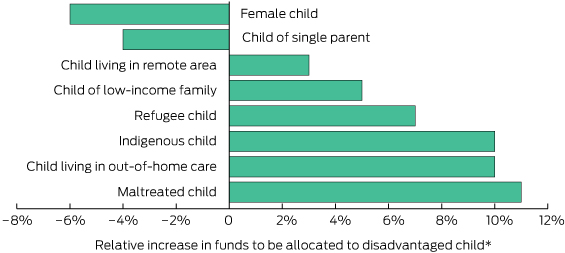
In our own research conducted in 2011, we used relative social willingness-to-pay methods13 and a postal questionnaire to survey the Australian public, randomly approached from a database of general public adults willing to participate in research (Dalziel K, Segal L. The structure of Australia’s health funding systems: who is missing out and how does it align with social preferences? 9th World Congress on Health Economics; 2013 Jul 7–10; Sydney, Australia). Ninety out of 429 people responded (21% response rate). Overall, our respondents were slightly younger, more likely to be single and more educated than the Australian population. In the survey, participants had a hypothetical $40 000 to allocate to a child with asthma to improve either the quality or length of life. Participants were then presented with scenarios in which they were asked to make similar decisions when the child with asthma also had a social disadvantage. The survey results indicated a willingness to increase the budget for children in some socially disadvantaged groups, such as Indigenous Australians, refugees, low-income earners and those in remote locations (Box). The apparent negative allocation preferences for girls and children of single parents are thought to represent an overcorrection made by respondents who did not wish to indicate preferential budget allocation on either basis.

These findings suggest that decisionmaker fears that positive discrimination would be unacceptable to the Australian population may be unfounded, and provide a starting point for quantifying the budgetary implications of seeking vertical equity in the health sector.

The need for evidence-based change

When change to health care structure and funding is being considered, it is important to ensure that new policies do not have a disproportionate effect on low-income and vulnerable Australians.14 The climate of change, however, also provides an opportunity to strengthen Medicare’s commitment to equity objectives in other ways — in particular, by targeting barriers to health care for groups identified as having special needs.15 A proactive approach to such problems should be firmly rooted in research to maximise the effectiveness and consistency of any changes.

Australia’s health system and the health of all Australians will benefit from evidence-based mechanisms to allocate unequal resources to those with unequal health. This is particularly urgent for groups such as Indigenous Australians, whose health outcomes lag well behind those of others,16 but it is also true for other groups. Their needs and the appropriate response to them require further research of the sort described here.

Survey results showing the public’s willingness to allocate additional hypothetical health care funds to Australian children with asthma if they also have a social disadvantage*


* The percentages indicate the relative increase in funds the public would be willing to allocate to a child with asthma in each disadvantaged group, relative to an average Australian child with asthma (Dalziel K, Segal L. The structure of Australia’s health funding systems: who is missing out and how does it align with social preferences? 9th World Congress on Health Economics; 2013 Jul 7–10; Sydney, Australia).

Abolishing the world’s worst weapons

Nuclear weapons abolition — a medical imperative

One could be forgiven for not noticing, but there has been groundbreaking activity going on that is headed in the direction of a ban on the world’s most destructive weapons. This year, 2015, could see the start of negotiations for a treaty to eliminate nuclear weapons, which were first used 70 years ago on the Japanese cities of Hiroshima and Nagasaki. The medical profession, including in Australia, has a history of extremely important advocacy on this issue that must be continued.

The recent developments are a series of international conferences focusing on the humanitarian impact of nuclear weapons, hosted by the governments of Norway (March 2013),1 Mexico (February 2014)2 and Austria (December 2014);3 the Vienna conference attracted 158 governments. Each of these conferences has concluded unequivocally that the humanitarian impacts of nuclear weapons are so catastrophic that no government or non-government organisation would have the capacity to respond to either the short-term or long-term effects of their use.3 Many government delegations at the conferences noted that the risk of nuclear weapons use is higher than is commonly understood. (As an indication of this risk, on 22 January this year, the hands of the Doomsday Clock of the Bulletin of the Atomic Scientists, which warns of our proximity to nuclear and other catastrophic perils, were moved from 5 minutes to midnight to 3 minutes to midnight4). The risk is increasing and there is an urgent need for nuclear disarmament.

These international fact-based gatherings have reaffirmed the central message of International Physicians for the Prevention of Nuclear War (IPPNW):5 if nuclear weapons are used again, health services will be unable to respond in any significant way.6 Whatever health care facilities survived the attack would be overwhelmed to the point of collapse, offering little more than primitive first aid.7

Recent research has added a further dimension and risk. The report, Nuclear famine: two billion people at risk?, released by IPPNW in December 2013 and based on research by climate scientists, concluded that, in the event of even a limited nuclear exchange, the particulate matter and smoke from burning cities would block sunlight and cause agricultural collapse, placing more than two billion people globally at risk of starvation.8

IPPNW’s Australian affiliate is the Medical Association for Prevention of War, which, in 2007, launched ICAN, the International Campaign to Abolish Nuclear Weapons. ICAN has played a key role in advocating a nuclear weapons ban treaty, and was the chosen civil society partner in Norway, Mexico and Austria.

The Australian Red Cross has also played a pivotal and leading role by helping secure the passage of a resolution of the International Red Cross and Red Crescent Movement in November 2011. The resolution stated that “the existence of nuclear weapons raises profound questions about the extent of suffering that humans are willing to inflict, or to permit, in warfare”, and urged laws to prohibit their use and eliminate them.9

As momentum builds unmistakeably towards a ban treaty, there is a renewed call to action for our profession. At the World Medical Association General Assembly in South Africa in October 2014, the Association referred to its International Council a new resolution calling for a ban on nuclear weapons, and urging national medical associations to educate the public and policymakers about this overwhelming public health threat. The resolution will be voted on at the next meeting of the Council in Oslo in April 2015 and at the General Assembly later in the year; it deserves the strongest possible support.

Although Australia does not own any of the world’s 16 300 nuclear weapons, successive Australian governments support “deterrence” by United States nuclear weapons — that is, a threat to use the weapons — and pay mere lip service to the goal of abolition.

Medical and humanitarian professionals have already played a crucial role in advocating for the removal of the global nuclear weapons threat. The emergence now of a strong majority of the world’s governments committed to the same goal represents unprecedented progress and opportunity. Medical voices are needed now as much as ever, to seize the opportunity while it lasts, and to help delegitimise and stigmatise these horrific devices. The elimination of the worst of all weapons of mass destruction, each one of which represents a medical and humanitarian disaster of nightmare proportions, is both necessary and possible.

Better access to mental health care and the failure of the Medicare principle of universality

Correction

Incorrect Appendix number: In Better access to mental health care and the failure of the Medicare principle of universality” in the 2 March 2015 issue of the Journal (Med J Aust 2015; 202: 190-194), the second sentence in the paragraph at the bottom of the second column on page 193 should read: “We drew on examples from within the two largest Australian capital cities (Appendix 4).”

Better access to mental health care and the failure of the Medicare principle of universality

Australia’s national health insurance scheme, Medicare (introduced in 1975 as Medibank), was envisioned to deliver the “most equitable and efficient means of providing health insurance coverage for all Australians”.1 Questions have been raised as to whether, 40 years after its introduction, Medicare is equitable, particularly in terms of access to mental health services.2,3 Investigations over more than 70 years in various parts of the world, including Australia, have consistently found greater levels of psychiatric disorder in areas with greater socioeconomic disadvantage.46

In November 2006, the Australian Government introduced the Better Access to Mental Health Care initiative (Better Access), consisting of new Medicare Benefits Schedule (MBS) items to improve access to psychiatrists, psychologists and general practitioners.7 Evaluation of the program, supported by Commonwealth government funding, highlighted the success of Better Access in increasing psychological service use. For example, the number of allied mental health services accessed almost doubled in the first year, and most users were new (68% in 2008 and 57% in 2009).8,9 The report by Harris and colleagues also commented: “Uptake rates for Psychological Therapy Services items … decreased as levels of socio-economic disadvantage increased”.8 Findings from Bettering the Evaluation and Care of Health data also suggested possible inequity, with less service provision going to more disadvantaged areas.3

Another concern is whether Better Access is reaching rural and remote communities as well as the metropolitan areas.3,10,11 Here, a primary driver may be provider availability, as the problem of securing specialist health care and other service delivery to non-metropolitan areas of Australia is well recognised.11

We obtained Medicare data on the Better Access program and related mental health care items, following a freedom of information request by one of the authors (R G) on behalf of Transforming Australia’s Mental Health Service Systems.

We aimed to determine whether adult use of mental health services subsidised by Medicare varies by measures of socioeconomic and geographic disadvantage. We hypothesised that services would be particularly inequitable where delivered by mental health professionals with higher gap payments. We conjectured that services provided by GPs, general psychologists and allied health practitioners would be relatively equitable, while services generally provided by psychiatrists and clinical psychologists would be less equitably delivered. We focused separately on item 291 (GP mental health care plan preparation by a psychiatrist), hypothesising that this item might differ in pattern from other psychiatry items.

Methods

We performed a secondary analysis of national Medicare data from 1 July 2007 to 30 June 2011. Data included all mental health services subsidised by Better Access and Medicare. Providers included GPs, psychiatrists, clinical psychologists and allied mental health practitioners.

Main outcome measures were service use rates and equity measures of concentration indexes and curves.

Data and linkage to area characteristics

Data included MBS items with associated postcode data but without other identifying information. The total number of services across all 4 years was 25 146 558. Unique records of data (consisting of unique sets of item number, consumer postcode and financial year) were suppressed to ensure confidentiality if the total of services in an area was less than 20. Based on the number of suppressed records, we estimated that a maximum of 3 084 023 service contacts could have been censored. However, the actual number of suppressed service contacts was likely to be about half this figure, and is unlikely to have caused any significant bias in analyses.

We grouped MBS items into the following categories (specific item numbers are available in Appendix 1 and Box 1):

  • GP mental health services created or significantly altered by Better Access;
  • consultant psychiatry items created or significantly altered by Better Access;
  • psychiatrist services in rooms. (CP+);
  • creation of a shared care plan by a psychiatrist (item 291);
  • psychological therapy services provided by a clinical psychologist; and
  • focused psychological strategies — allied mental health items:
    • general psychologist services;
    • occupational therapist services; and
    • social worker services.

Consumer residential postcodes were linked to area characteristics available from public census information from the Australian Bureau of Statistics. These characteristics were remoteness area category12 and Socio-Economic Indexes for Areas (SEIFA).13 If a postcode had been assigned to more than one remoteness category, then it was allocated to the remoteness category having the greatest proportion of the population in that postcode. The SEIFA measures were the Index of Relative Socio-Economic Advantage and Disadvantage, Index of Relative Socio-Economic Disadvantage, Index of Education and Occupation, and the Index of Economic Resources.

Local implications

Variations within closely located yet differing socioeconomic status regions were examined by looking at four local government areas in major capital cities. We chose two regions ranked in the top decile for socioeconomic advantage (City of Bayside in Melbourne and North Sydney Council in Sydney) and two regions from disadvantaged areas (City of Greater Dandenong in Melbourne and City of Blacktown in Sydney).14 Postcode areas bounded entirely within each catchment were used in the service rate calculations.

Statistical analysis

To measure inequity, we plotted concentration curves and determined concentration indexes.15 Concentration indexes lie between − 1 and + 1. Negative indexes and curves above the 45° equity line represented greater usage in lower socioeconomic regions. Positive concentration indexes corresponded to curves below the equity line, and represented greater usage in higher socioeconomic regions.

We followed a convention of using an index threshold of 0.2 (or − 0.2) as indicating a high level of inequality;16,17 an index of 0.2 would result from the richest half of the population accessing 50% more services than the poorest half. For further details on our statistical methods, see Appendix 2.15,16,18

The equity line, derived from raw population rates, may underestimate need in deprived areas if greater needs are associated with lower socioeconomic status. However, in the absence of accurate and contemporary information on such associations, we did not adjust for this influence. Hence, where the curve was below the line and the index was positive, provision was judged inequitable. Where the curve was above the line and the index was negative, the finding was more suggestive but not conclusive of equitable delivery.

SEIFA

Of the four SEIFA variables, the Index of Relative Socio-Economic Advantage and Disadvantage was preferred for these analyses based on performance in calculating concentration indexes most consistently representative in direction and magnitude of values from the other indexes.

Ethics approval

Monash University Human Research Ethics Committee reviewed the study protocol and granted an exemption from ethics review because the non-identifiable data satisfied the requirements of the National Statement on Ethical Conduct in Human Research.

Results

Data were associated with 98.6% of Australian postcodes. Activity rates by year and postcode characteristics are shown in Box 2 (for absolute numbers, see Appendix 3). Most rates almost doubled across the 4 years, whereas consultant psychiatrist items predating Better Access (CP+) did not increase. Increasing remoteness was consistently associated with lower activity rates. Strong trends indicated higher use rates in less socioeconomically disadvantaged areas for most consultant psychiatry items and for clinical psychologist services; trends for other items were typically less marked.

Concentration curves are presented in Box 3 and Box 4; note that the scale (and hence the derived index) represents the population, not postcodes as in Box 2 and Appendix 3, so the pattern of results differs slightly. For key medical items shown in Box 3, the trend could be compatible with equity for items provided by GPs and for item 291. For item 306 (consultant psychiatry, 45–75 minutes), the poorest 20% of the population used about 10% of these services, while the richest 20% used over 30% (ie, more than three times the use rate). Concentration curves for key psychology and allied health items are presented in Box 4, which shows inequity for item 80010 (clinical psychology). The poorest 20% of the population by area characteristics used about 10% of these services, while the richest 20% used over 25% (ie, more than 2.5 times the use rate).

Concentration indexes for individual items are presented in Box 1. Significant negative index values were found for GP and allied health items. For reasons given earlier, related to population need, our findings suggested but do not confirm equity; area-based rates (Box 2) suggested some inequity for GP and allied health items, although less than for longer and widely used items from psychiatrists and clinical psychologists. Also of note, there were a number of index values for consultant psychiatry items with magnitude above 0.2, showing high inequity in favour of more advantaged areas. Negative indexes below − 0.2 were most common for focused psychological strategy items serviced by general psychologists, occupational therapists and social workers. Compared with psychiatrist and clinical psychologist services, these allied health services demonstrated better provision in disadvantaged areas.

Our examination of specific areas illustrates the differences that might be found in local planning exercises. We drew on examples from within the two largest Australian capital cities (Appendix 4). In Melbourne, the Dandenong area has high socioeconomic disadvantage, while the Bayside area is at the opposite extreme. However, it was the Bayside area that had much higher service use rates, with the exception of item 291, even though illness rates are likely to be much higher in Dandenong. In Sydney, there was a similar pattern of higher service activity in the North Sydney Council area compared with the more disadvantaged Blacktown area, although higher activity in Blacktown for GP items was an important exception.

Discussion

Our findings confirm previous findings19 of inequity in services provided by psychiatrists. Better Access activity rates are typically greater in more advantaged areas. There is variability between provider disciplines and items; within Better Access, this association is most strongly observed with high-volume clinical psychology services. Activity rates for Better Access and related mental health care MBS items decline with increasing remoteness across all types, reinforcing findings from previous work.8,9,20

Examination of the latest national survey did not suggest that areas of higher socioeconomic status were characterised by high use rates of Better Access items among people without disorders,7 but this may not be how inequity manifests. Rather, among people with comparable levels of diagnosable mental health problems, it may be easier for the socioeconomically advantaged to pass through the filters to specialist care.21 In other words, the criteria for stepping up a level of care may be different, and the disadvantaged may need higher levels of distress or disturbance to secure entry to care.

These results are consistent with a multitier system, where people living in more disadvantaged and more rural areas will typically receive a service model in response to mental health needs that is characterised by lower volumes of services, provided possibly by less highly trained providers. Item 291 is something of an exception among Better Access items but at a very low absolute rate.

Medicare provision through Better Access does not then conform to the kind of equitable delivery that would merit characterisation as universality. While we are not offering specific solutions to such a complex issue, we note that our key hypotheses were formulated with consideration of the likely influence of copayments as a disincentive and structural deterrence to accessing care. These findings would be compatible with a situation in which higher-paid professionals practise in areas closer to home, and where this spatial distribution aligns with direct considerations of affordability, it reduces access by people from more disadvantaged areas.

Our study has some limitations. The Medicare data do not take into account the Access to Allied Psychological Services initiative or the public mental health services provided by states and territories. Including these would require further data sources and analyses.22 Regarding funding models to public mental health services in Australia’s most populated states, Victorian public mental health services adopted transparent resource distribution processes in the late 1990s,23 including a correction to state funding based on level of private activity. In New South Wales, a special commission of enquiry recommended introducing a resource distribution formula to take into account socioeconomic factors and substitutable private services; however, this has not yet happened.24

Our data span financial years 2007–08 to 2010–11; changes to the scheme from late 201125 may have led to some changes in usage.

Without controlling for area-based need disparities,5,22 it seems most likely that our analyses may have underestimated rather than overestimated inequity.

Our findings, confirming previously demonstrated inequity in private psychiatric service activity, show that the Better Access initiative is not providing universality or consistent equity of delivery in mental health care. We hope that the findings may contribute to debate and discussion around policy incentives and strategies that work towards universal and equitable delivery of mental health care for all Australians.

1 Concentration index calculated using Index of Relative Socio-Economic Advantage and Disadvantage ranking for areas and national Medicare data, 1 July 2007 to 30 June 2011

Provider group

Consultation time (min)

Item no.

No. of patients

Concentration index* (95% CI)


General practitioner

Not timed

2702

317 117

− 0.05 (− 0.08, − 0.02)


Not timed

2710

2 181 945

− 0.04 (− 0.07, − 0.01)


Not timed

2712

930 248

− 0.03 (− 0.06, − 0.001)


> 20

2713

3 019 386

− 0.08 (− 0.11, − 0.05)

Consultant psychiatry

> 45

291

22 258

− 0.08 (− 0.13, − 0.02)


30–45

293

963

− 0.18 (− 0.34, − 0.02)


> 45

296

303 240

0.03 (− 0.01, 0.06)


> 45

297

14 499

0 (− 0.07, 0.07)


> 45

299

285

0.34 (0.01, 0.7)


< 15

300

126 179

− 0.13 (− 0.23, − 0.03)


15–30

302

944 908

− 0.07 (− 0.14, − 0.002)


30–45

304

1 871 116

0.04 (0.002, 0.08)


45–75

306

2 572 228

0.21 (0.18, 0.25)


> 75

308

111 875

0.05 (− 0.01, 0.10)


< 15

310

0

na


15–30

312

210

− 0.20 (− 0.29, − 0.12)


30–45

314

1430

0.10 (− 0.07, 0.26)


45–75

316

62 523

0.22 (0.15, 0.28)


> 75

318

906

0.08 (− 0.04, 0.20)


> 45

319

264 437

0.22 (0.15, 0.28)

Psychological therapy services


Clinical psychologist

30–50

80000

39 262

− 0.07 (− 0.15, 0.01)


30–50

80005

1535

− 0.07 (− 0.31, 0.18)


> 50

80010

3 754 815

0.13 (0.10, 0.17)


> 50

80015

24 882

− 0.08 (− 0.15, 0)


> 60

80020

14 436

− 0.07 (− 0.27, 0.13)

Focused psychological strategies


General psychologist

20–50

80100

108 723

− 0.26 (− 0.33, − 0.18)


20–50

80105

9027

− 0.26 (− 0.42, − 0.10)


> 50

80110

6 325 499

− 0.01 (− 0.04, 0.03)


> 50

80115

194 844

− 0.14 (− 0.20, − 0.08)


> 60

80120

25 819

− 0.02 (− 0.08, 0.04)

Occupational therapist

20–50

80125

4236

− 0.20 (− 0.33, − 0.08)


20–50

80130

849

− 0.08 (− 0.22, 0.06)


> 50

80135

72 607

− 0.05 (− 0.14, 0.05)


> 50

80140

7326

− 0.06 (− 0.16, 0.04)


> 60

80145

422

− 0.11 (− 0.24, 0.03)

Social worker

20–50

80150

3850

− 0.04 (− 0.19, 0.12)


20–50

80155

2228

− 0.14 (− 0.43, 0.15)


> 50

80160

472 353

− 0.02 (− 0.06, 0.02)


> 50

80165

25 211

− 0.15 (− 0.23, − 0.07)


> 60

80170

331

− 0.25 (− 0.44, − 0.07)


* A positive concentration index indicates inequality of service use in favour of advantaged regions. † Concentration curve with significant areas on either side of equity line.

2 Medicare-subsidised mental health and related services: use rates per 1000 population per year, 1 July 2007 to 30 June 2011


FPS


Variable

Population

GP

CP

CP-291

CP+

PTS

Total

FPS-GenP

FPS-OT

FPS-SW


No. of MBS items


6 448 696

341 245

22 258

6 297 057

3 834 930

7 253 325

6 663 912

85 440

503 973

Use rate


Financial year


2007–08

21 249 199

55

4

0.1

74

30

60

56

0.5

3

2008–09

21 691 653

71

4

0.2

72

41

77

72

0.8

5

2009–10

22 031 750

79

4

0.3

71

48

92

84

1.2

7

2010–11

22 340 024

90

4

0.4

71

56

102

93

1.4

8

Region*


Major cities

15 104 517

79

5

0.3

92

52

92

85

1.2

6

Inner regional

3 991 501

76

3

0.3

37

32

81

74

0.6

6

Outer regional

1 897 121

50

1

0.2

13

14

46

42

0.7

4

Remote

267 159

25

0

0.0

4

5

11

10

0.0

1

Very remote

177 561

8

0

0.0

2

2

5

5

0.0

0

Socioeconomic disadvantage*†


Quintile 5

5 900 995

74

6

0.1

117

68

95

86

1.5

7

Quintile 4

4 480 536

74

4

0.3

74

44

88

82

0.7

5

Quintile 3

4 298 715

78

3

0.3

55

40

83

77

0.9

6

Quintile 2

3 508 187

77

3

0.4

44

29

76

70

0.9

5

Quintile 1

3 249 398

69

3

0.3

45

23

69

63

0.7

5


MBS = Medicare Benefits Schedule. GP = general practitioner mental health services created or significantly altered by Better Access to Mental Health Care services. CP = consultant psychiatry items created or significantly altered by Better Access. CP-291 = initial assessment for a GP shared care plan by a psychiatrist (MBS item no. 291). CP+ = all/most psychiatry items. PTS = psychological therapy provided by a clinical psychologist. FPS = focused psychological strategies: allied health items; GenP = general psychological services; OT = occupational therapy services; SW = social worker services. * Mean, 2007–2011. † Ranked by Index of Relative Socio-Economic Advantage and Disadvantage; quintile 1 = most disadvantaged.

3 Concentration curves for key medical items


IRSAD = Index of Relative Socio-Economic Advantage and Disadvantage. Item 2702 = general practitioner creation of a GP mental health treatment plan. Item 2710 = GP review of a GP mental health treatment plan. Item 291 = psychiatrist consultation for creation of a shared care plan, > 45 minutes. Item 306 = psychiatrist consultation in rooms, 45–75 minutes.

4 Concentration curves for key clinical psychology and allied health items


IRSAD = Index of Relative Socio-Economic Advantage and Disadvantage. Item 80010 = clinical psychologist consultation in rooms, > 50 minutes. Item 80110 = general psychologist consultation in rooms, > 50 minutes. Item 80135 = occupational therapist consultation in rooms, > 50 minutes. Item 80160 = social worker consultation in rooms, > 50 minutes.

Are potential organ donors missed on general wards? A 6-month audit of hospital deaths

In the decade to 2008, the deceased donor and organ transplant rates in Australia failed to increase in line with population growth, and there was little change in the number of patients needing organ transplantation.1 In response to this, the Australian Government set out the National Reform Programme, comprising nine measures to establish the world’s best practice in organ and tissue donation.2

An important part of the national approach is the DonateLife Audit, which aims to report on all actual and potential organ donation activity: donor identification, request and consent rates; reasons why donation does not proceed; and missed donation opportunities. Data are collected on all deaths of patients aged between 28 days and 80 years in the emergency department (ED) and intensive care unit (ICU) (or on the wards if discharged from the ED or ICU in the previous 24 hours) and deaths of any other patient when organ donation is considered.

Royal Prince Alfred Hospital has been contributing to the DonateLife Audit since its inception, and we believe that we miss very few potential organ donors from EDs and ICUs. The DonateLife Audit does not, however, consider whether potential organ donors on the general wards who have not been recently discharged from the ICU or ED have been missed.

The success of organ donation programs is defined by the rate of deceased organ donors per million population (dpmp). Australia’s rate increased from 9–12 dpmp in 2009 to over 16 dpmp in 2013.3 Despite this, there is a body of opinion in Australia that progress has been too slow and not reflective of the large increase in funding that the reform committed.4 Furthermore, the change has not been uniform, with New South Wales achieving only 14.2 dpmp in 2013.

The increased donation rate falls well short of the rates reported for the highest performing countries, such as Spain (over 35 dpmp).5 It has been suggested that not all potential donors are being identified in Australian hospitals and that changes in hospital practice are needed to further increase donation rates.4,6

We conducted an audit of hospital deaths to examine whether potential organ donors outside the DonateLife Audit areas of EDs and ICUs are being missed. The potential for tissue-only donation was not investigated.

Methods

The audit was conducted at Royal Prince Alfred Hospital, a metropolitan 700-bed tertiary referral and teaching hospital in NSW. Specialties include neurology and neurosurgery, patients include rural and out-of-catchment referrals and patients admitted through the ED, and there is a 50-bed intensive care floor. Hospital deaths between 1 July and 31 December 2012 were reviewed by two donation specialists medical (DSMs) (both intensive care specialists) and a donation specialist nurse (DSN).

The following groups of patients were excluded from further review as they are generally deemed unsuitable for organ donation: those who died when they were aged ≥ 80 years; those admitted to hospital under oncology, palliative care for cancer or haematology services (ie, those with an oncological diagnosis); and those who could not be resuscitated from cardiac arrest in the ED. Neonates who died when they were aged ≤ 28 days were excluded, in keeping with the DonateLife Audit.

Patients referred to the DonateLife team were categorised according to standard potential organ donor categories by the DSN (Box 1).7 The remaining patients were then assessed independently for suitability and likelihood of progression to organ donation by the two DSMs, using the hospital’s electronic medical records. Where there was disagreement, the DSN reviewed the case record and had the casting vote.

Patients were deemed not medically suitable (NMS) if they were aged > 65 years and had a non-neurological diagnosis, as such patients would have been highly unlikely to become brain dead and were over the age accepted in NSW in 2012 for donation after circulatory death (DCD). Patients who had active cancer, had septicaemia or were dying a circulatory death despite maximal medical therapy were also deemed NMS, as these conditions contraindicate organ donation. Patients who died with multiple organ failure (defined as presence of two or more organ failures) were analysed individually to establish whether non-failed organs might have been suitable for donation. Finally, patients were deemed NMS if a treatment limitation stating that they were not to receive mechanical ventilation had been made.

The remaining patient deaths, where we could not establish a clear reason to exclude the potential for organ donation, were reviewed in detail and assigned to potential organ donor categories by a panel of five organ donation specialists. The panel consisted of three DSMs, the DSN from Royal Prince Alfred Hospital and, to ensure that the study embraced the same medical standards of donor evaluation as the highest performing country, a medical donation specialist from Spain.

The Sydney Local Health District Ethics Review Committee confirmed that ethics approval was not required for publication of the audit data.

Results

During the study period, there were 427 patient deaths. Their distributions by age and location are shown in Box 2. Most deaths of patients aged ≤ 65 years who did not have cancer occurred in the ICU (39/48). Of patients aged < 80 years who died on general wards, only 17 had neurological diagnoses.

Excluded deaths

Exclusions and disposition categories are shown in Box 3. On initial review, 262 patients were excluded; more than half of them were excluded on age grounds and 78 because of a diagnosis of active cancer.

Twenty-eight patients were excluded on the basis of multiple organ failure, of whom 24 died in the ICU and were thus already assessed by the DonateLife Audit tool (which identified none as a potential organ donor). The four multiple organ failure patients who died on general wards included three with end-stage liver failure and other organ failures, and one with an inoperable intracerebral haemorrhage and multiple organ dysfunction. In no case of multiple organ failure was it considered that donation of a non-failed organ might have been possible.

Nine patients had a treatment limitation in place precluding mechanical ventilation. Three of them had neurological diagnoses but were aged > 70 years and thus unsuitable for consideration for DCD; these patients had low or no potential to progress to brain death (Category D, Box 1) and they all died on general wards late after hospital admission. Three patients died on general wards with end-stage respiratory disease for which mechanical ventilation was deemed inappropriate. One patient had a terminal illness with an advance care directive precluding mechanical ventilation, and one had end-stage liver failure and had been deemed too unwell to undergo liver transplantation. The other patient died in the ICU while receiving palliative care for a hypoxic brain injury many days after removal of mechanical ventilation.

Organ donation referrals

Twelve patients had been referred to the DonateLife team to be considered for organ donation, of whom three subsequently became organ donors (< 1% of patients who died in hospital). Of the other nine, DCD was planned for two patients, but this failed in both cases (death occurred greater than 90 minutes after withdrawal of mechanical ventilation); one was deemed NMS after the referral was made (and therefore consent was not sought); and six patients did not proceed to donation because consent was refused (in one case this was patient refusal on the NSW Roads and Traffic Authority [RTA] database).

Deaths reviewed by expert panel

Ten patients were reviewed in detail by the panel of organ donation specialists. Eight of them died on general wards. They were all aged > 65 years, above the 2012 cut-off age for consideration of DCD in NSW, and would therefore have had to progress to brain death to be considered realistic potential organ donors. All eight had neurological diagnoses; five were deemed Category D and three were deemed Category C (Box 1). The three deemed Category C might have become organ donors if they had received or had continued mechanical ventilation solely for the purpose of facilitating organ donation. The other two patients died in the ICU and were both aged < 65 years. One had end-stage pulmonary fibrosis and was considered by the panel to be a potential DCD donor (considered but rejected for lung transplantation, consent for organ donation not sought), and the other had respiratory failure and was deemed to have failed supportive treatment.

Comparison with DonateLife Audit

During the study period, 16 patient deaths were entered into the DonateLife Audit. When compared with our audit, these included all 12 patients referred to the DonateLife team, three from the group that underwent panel review and one from the group of excluded deaths. The audit did not identify any missed potential organ donors who died in the ED or ICU.

Discussion

To our knowledge, this is the first comprehensive audit of all deaths in an Australian hospital to evaluate potential for organ donation, including both donation after brain death (DBD) and DCD. Over 6 months at Royal Prince Alfred Hospital, we identified three patients who died outside the ED or ICU for whom there was a possibility of progression to brain death within 24 hours and the potential to become organ donors. Meanwhile, the DonateLife Audit did not identify any missed potential organ donors who died in the ED or ICU. Furthermore, for the three potential organ donors to have progressed to organ donation, medical interventions that are not in keeping with standard Australian practice would have been required.

The principal potential weakness of our study was its pragmatic nature. This meant that we might have excluded some potential organ donors.

The most common reason for which patients were excluded was age. Some of those we excluded on this basis might represent missed potential organ donors because the age cut-offs for organ donation have been increasing over the years, with those aged over 80 years increasingly considered for DBD and those aged over 65 years for DCD.8 In accordance with the DonateLife Audit, neonates under 28 days old were excluded, but it is possible for neonates to be considered for organ donation.

The second most common reason for exclusion was an oncological diagnosis. We excluded patients on the basis of a listed diagnosis of malignancy without further review. As some patients with low-grade, confined malignancies can be considered for organ donation,8 a small number of patients excluded due to malignancy might have been potential donors.

We excluded three patients due to septicaemia, and we excluded other patients who had septicaemia on the basis of multiple organ failure. However, organ donation can occasionally be considered in patients diagnosed with septicaemia that is deemed treatable in either the donor or the recipient and in patients who have received 24–48 hours of treatment for suspected septicaemia.8

We did not consider patients who died after failed cardiopulmonary resuscitation in the ED as potential organ donors. DCD is classified using the Maastricht classification (Box 4).9 In Australia, only patients in Categories 3 and 4 are regarded by the Australian and New Zealand Intensive Care Society as suitable for DCD.10 This is in contrast to the situation in some other countries where “uncontrolled” DCD (Category 2) is practised. In the Madrid region of Spain, for example, uncontrolled DCD accounted for 41% of deceased organ donors in 2012.11

Our audit confirmed that only a small number of patients who die in hospital are potentially suitable for organ donation. Of the 12 referred to the DonateLife team, only three progressed to organ donation, with refusal of consent (50%) being the principal reason that organ donation did not proceed.

Only three of the 10 additional patients whose cases underwent panel review were assessed as Category C potential organ donors. Two of them would have required initiation of mechanical ventilation in the ED solely for the purposes of organ donation, and one might have undergone a longer period of mechanical ventilation in the ICU to allow for possible progression to brain death. There was only one potential DCD organ donor (who was rejected for lung transplantation) who might have been referred to the DonateLife team.

It is not current Australian practice to perform tracheal intubation and mechanical ventilation solely for the purposes of facilitating organ donation. Patients who require this solely for organ donation therefore represent potential organ donors, but only if there was a change to medical practice. This would require a complex and open debate in the medical and general community.

The finding that most deaths of patients aged ≤ 65 years who did not have cancer occurred in the ICU confirms that it is unlikely that there is a large pool of potential DCD organ donors dying on the general wards. Furthermore, the small number of patients aged < 80 years who died on general wards with a primary neurological diagnosis suggests that there is also not a substantial pool of potential DBD organ donors dying outside the ED and ICU.

Although the deceased organ donor rate is increasing in Australia, it is substantially lower than the highest performing countries (eg, Spain5). For this reason, we believe that more should be done to identify potential organ donors. While the use of uncontrolled DCD organ donors is common in some Spanish hospitals, this makes up only about 4% of total Spanish deceased organ donors.5

Of more importance is the incidence of brain death, which in Spain is more than double that in Australia.12 It has been suggested that the higher rate of brain death, and thus organ donors, might at least partly be explained by a practice of actively seeking potential organ donors outside the ICU and possibly a low tendency in Spanish ICUs to transition away from active treatments and towards palliative care when survival seems unlikely.

We conducted this audit to identify whether there were patients dying in our general wards who might have had the potential to become organ donors if treated differently. We identified only three such patients. It is likely that the major changes in Australian medical practice that would be required to recruit these potential organ donors would result in only a small change in organ donor numbers at best, but at the expense of a potentially less benevolent approach to palliation at the end of life.

A significant and important difference between Australian and Spanish practices highlighted by this audit is the low rate of next-of-kin consent for organ donation in Australia compared with Spain (61% v 84% during the period 2012–2013).3,5 An increase in next-of-kin consent rate (for the patients referred to the DonateLife team for whom consent was sought [ie, 12 minus the one deemed NMS and one with refusal on the RTA database]) from the 50% seen in our audit to 84% would have increased our consented organ donor number from five to eight without the need to seek any additional potential or marginal organ donors across the hospital.

We believe our data show that the DonateLife Audit is a robust tool for monitoring identification of potential organ donors in Australia and that extending its scope beyond the ICU and ED would not achieve a substantial increase in identification of potential donors. It appears that the principal factors affecting the lower organ donation rate in Australia compared with countries such as Spain are the lower rates of brain death and consent. Maximising consent rates is likely to be the single most effective intervention to increase organ donor numbers within existing medical practice in Australia.

1 Potential organ donor categories7

Category A: Confirmed brain death (BD)

Category B: Probable BD (BD was not formally diagnosed but, based on chart review, the patient was likely to have fulfilled the criteria for BD)

Category C: Imminent BD (potential to develop BD within 24 hours of end-of-life decision making if supportive treatment had been continued)

Category D: Low or no potential to progress to BD

Potential donation after circulatory death: Medically suitable for organ donation and thought to be likely to progress to circulatory death within 90 minutes of withdrawal of cardiorespiratory support

2 Deaths by age and location (n = 427)*

Age

Intensive care unit (n = 102)

Ward (n = 283)

Emergency department (n = 33)

Neonatal intensive care unit and delivery suite (n = 9)


≤ 65 years

49 (48.0%)

57 (20.1%)

7 (21.2%)

9 (100.0%)

66–79 years

30 (29.4%)

92 (32.5%)

8 (24.2%)

0

≥ 80 years

23 (22.5%)

134 (47.3%)

18 (54.5%)

0


3 Patient deaths included in the audit and their disposition categories

4 Maastricht classification for donation after circulatory death9

Category 1: Dead on arrival to hospital

Category 2: Failed resuscitation in the emergency department or intensive care unit

Category 3: Withdrawal of treatment in the intensive care unit

Category 4: Cardiac arrest following determination of brain death but before planned organ procurement