

×

Factors associated with quality of care for patients with pancreatic cancer in Australia

The known Treating patients with pancreatic cancer is challenging, and socio-demographic factors influence whether patients receive specific treatment forms, such as surgery and chemotherapy. 

The new Our composite quality of care score was lower for patients from rural or socially disadvantaged areas; it was higher for patients who first presented to a hospital with a high pancreatic case volume. A higher score was significantly associated with improved survival. 

The implications Strategies should be developed which ensure that all patients with pancreatic cancer have the opportunity to receive optimal care from or in conjunction with high pancreatic case volume centres. 

In Australia, pancreatic cancer is the tenth most common cancer, and the fourth leading cause of cancer-related death.1 One-year survival is 20%, 5-year survival 6%.2 Treating pancreatic cancer presents distinctive challenges, and requires highly specialised care to achieve optimal outcomes.3 Studies in Australia and overseas have shown that fewer patients receive the recommended treatment than expected,4,5 that receiving recommended care is inconsistent,6,7 and that socio-demographic factors influence the treatment of patients with pancreatic cancer.7,8 Treating patients in non-specialised centres appears to at least partly explain these findings.9,10

Previous studies have tended to focus on individual types of treatment, such as surgery or chemotherapy. We took a more holistic approach and calculated an overall quality of care score for Australian patients diagnosed with pancreatic cancer. We examined variations in the score associated with patient and health service-related factors, and analysed the relationship between quality of care and survival.

Methods

This analysis was nested within a population-based study of patterns of care for patients in Australia with pancreatic cancer. Eligible patients were residents of Queensland and New South Wales diagnosed with pancreatic cancer between July 2009 and June 2011. Patients with histological confirmation of pancreatic adenocarcinoma were included, as were patients with presumed pancreatic cancer but without histological or cytological confirmation. Trained research nurses collected information about patient treatment from medical records in public and private facilities.4 Patients were excluded from this analysis if they died within one month of diagnosis or clinical staging data were unavailable.

We calculated a quality of care score based on the results of our previously reported Delphi process.11 Briefly, clinicians from a range of specialties involved in care for patients with pancreatic cancer were asked “What is important in the care of patients with pancreatic cancer?” A list of statements was prepared on the basis of a thematic analysis of the responses. The clinicians were asked to score each statement on a scale of 0 (“disagree”, “not important”) to 10 (“strongly agree”, “very important”). The mean score and the coefficient of variation (CV) were calculated for each statement.

Calculating the quality of care score

We calculated quality of care scores on the basis of the mean Delphi process scores, selecting statements about which there had been reasonable consensus in the Delphi process (CV ≤ 0.4) and when information for assessing whether the item of care had been delivered was available in our database. Eighteen items were included in the analysis (Box 1).

For each patient, we calculated a potential score by identifying the items that applied to their clinical situation and summing the mean scores from the Delphi survey for these items. For example, items related to surgical procedures were included only for patients who underwent attempted resection. We then identified items for which there was evidence that the specified care had been delivered and summed their mean Delphi scores as a score for care delivered. The proportional care score was calculated by dividing the care delivered score by the potential score, yielding a value between 0 and 1. The clinical information that determined eligibility and whether or not care specified by an item was delivered are shown in Box 1.

Measurement of potential determinants of care

Patient characteristics assessed included age, sex, Eastern Cooperative Oncology Group (ECOG) performance status, and Charlson comorbidity index.12 Based on their area of residence at diagnosis, each person was allocated a socio-economic index for areas (SEIFA)13 score and Accessibility/Remoteness Index of Australia (ARIA+)14 category. We grouped the SEIFA scores into quintiles, and collapsed the ARIA into three levels: major city, inner regional, and rural (which included the outer regional, remote and very remote categories).

Tumour-related factors included the stage of the tumour, categorised as potentially resectable or not, and as confined to the pancreas, locally advanced, or metastatic.

Health service-related factors included the type of specialist first seen, and the number of pancreatic cancer presentations (volume) for the facility to which the patient first presented.

Statistical analysis

The proportions of eligible patients who received each item of care were calculated; the statistical significance of differences between proportions according to socio-economic status and place of residence categories was assessed in χ2 tests.

We used linear regression analyses, with the proportional score as the outcome, to examine variation in the score attributable to patient-, tumour- and health service-related factors. Mean proportional scores for levels of each exposure variable were calculated and β coefficients reported (with 95% confidence intervals [CIs]). The β coefficients were interpreted as the difference between the mean score for patients in a particular category and that of patients in the reference category. Multivariable models included age, ECOG performance status, and comorbidity score as factors.

Survival time was calculated from the date of diagnosis until the death of the patient or the date of the final follow-up (February 2014). Patients were grouped in quartiles according to their proportional care scores; Kaplan–Meier graphs were generated and log-rank tests assessed differences in survival according to score quartile. We also performed the analysis with the proportional care score as a continuous variable; we report changes in survival associated with each 10 percentage point increase in score, using Cox proportional hazard models to adjust for patient-related factors and clinical stage. The association between the score and survival was further investigated by calculating adjusted hazard ratios for each care score item separately. Analyses were performed for the entire patient group and separately for patients with or without metastases identified at clinical staging. We used Stata 14 (StataCorp) for all analyses. P < 0.05 (two-sided) was deemed statistically significant.

Ethics approval

Access to medical records was approved under the Queensland Public Health Act and the NSW Privacy Act. Ethics approval was obtained from the QIMR Berghofer Medical Research Institute (reference, P1292), the Royal Brisbane and Women’s Hospital (on behalf of all public hospitals in Queensland; reference, HREC/10/QRBW/16), and the NSW Population and Health Services Research Ethics Committee (reference, HREC/10/CIPHS/45).

Results

A total of 1896 patients were eligible for inclusion in the patterns of care study. We were unable to locate medical records for 33 patients; 259 had died within one month of diagnosis, and staging information was not available for 33, so that 1571 patients (83%) were included in our analysis, including 867 men (55%). At clinical staging, 781 patients (49.7%) had non-metastatic disease and 790 (50.3%) metastatic disease. Most patients lived in major cities (1076, 68%); 338 (22%) lived in inner regional areas and 157 (10%) in rural areas. Almost three-quarters of patients (1151, 73%) died within one year of diagnosis. The median survival time was 6 months (11 months for patients without metastases; 4 months for those with metastases).

Younger patients and those with better ECOG performance status had higher care scores than older and less active patients with pancreatic cancer (Appendix 2). ARIA+ category, area level socio-economic status, age, ECOG performance status, institutional pancreatic cancer case volume, and specialist first seen were all factors that significantly influenced the care score (Box 2; Appendix 3). After adjusting for these factors, the care scores for patients living in rural areas were 11% lower (95% CI, 8–13%) than for those living in major cities. The care scores for patients living in more disadvantaged areas were up to 8% lower (95% CI, 6–11%) than for patients living in the least disadvantaged areas. Care score estimates for patients presenting to a low pancreatic cancer case volume hospital (fewer than ten presentations per year) were 13% lower (95% CI, 11–15%) than for those presenting to hospitals with more than 30 presentations annually. They were higher for patients for whom a hepatobiliary surgeon was the first specialist seen; scores for patients initially seeing a general surgeon were 10% lower (95% CI, 8–13%) (Box 2).

To further investigate the association between ARIA+ category and care score, models were then also adjusted for the pancreatic cancer case volume of the first hospital and specialist seen. The differences in the adjusted mean scores for major cities and rural areas (5% lower for rural patients; 95% CI, 3–8%) and between least and most disadvantaged areas (6% lower for most disadvantaged patients; 95% CI, 3–8%) were lower in this model.

For patients who had been clinically staged with non-metastatic disease, the factors most strongly associated with lower care scores were being seen initially by a general rather than a hepatobiliary surgeon (17% lower; 95% CI, 13–21%), living in a rural area rather than a major city (11% lower; 95% CI, 8–15%), and being at least 80 years of age (v aged less than 60 years: 16% lower; 95% CI, 13–20%). For patients diagnosed with metastatic disease, being seen at a lower volume facility (15% lower; 95% CI, 12–17%) and having a poorer ECOG performance status (11% lower; 95% CI, 7–15%) were the factors most strongly associated with quality of care.

Individual items of care were also examined. Less than one-third of patients received some items: 31% were presented to multidisciplinary teams (MDTs), received psychosocial support (19%), participated in clinical trials (7%), or were first seen by a hepatobiliary surgeon (19%). Most eligible patients were offered resection or received a valid reason why they were not (98%), had a tissue diagnosis (80%), saw a medical oncologist (86%), and were referred to palliative care (82%) (Box 1). There were significant differences for patients according to their ARIA+ category and area level socio-economic status; for example, 32 patients living in rural areas (41%) were referred to a hepatobiliary surgeon, compared with 53% of patients (290 of 548) in metropolitan areas (Appendix 4, Appendix 5).

Patients with scores in the highest quartile of proportional care scores had an estimated median survival time of 8 months, double that for those with scores in the lowest quartile. Median survival time for patients with non-metastatic disease in the highest and lowest score quartiles was 14 and 7 months respectively; for those with metastatic disease, it was 5 and 3 months (Box 3).

After adjusting for age, ECOG performance status, comorbidities, and clinical stage of pancreatic disease, each 10 percentage point increase in proportional care score was associated with a statistically significant 6% reduction in the risk of dying (hazard ratio [HR], 0.94; 95% CI, 0.91–0.97; Box 4). The reduction was greater for patients who were diagnosed with non-metastatic disease (adjusted HR, 0.91; 95% CI, 0.87–0.95) than for those with metastatic disease (adjusted HR, 0.95; 95% CI, 0.91–0.99).

Individual care score items that were statistically significantly associated with survival included having a diagnostic tissue sample collected (HR, 0.66; 95% CI, 0.57–0.77), being offered adjuvant chemotherapy (HR, 0.43; 95% CI, 0.33–0.56), being referred to a hepatobiliary surgeon if potentially resectable (HR, 0.82; 95% CI, 0.69–0.96), being presented to an MDT (HR, 0.86; 95% CI, 0.77–0.96), being offered psychosocial support (HR, 1.24; 95% CI, 1.09–1.12), pancreatic enzyme replacement therapy (HR, 0.83; HR, 95% CI, 0.73–0.94), and, if diagnosed with metastatic disease, referral to palliative care (HR, 1.42; 95% CI, 1.17–1.74) (Appendix 6).

Discussion

We found that the quality of care for patients with pancreatic cancer varied according to their age, where they live, and the pancreatic cancer case volume of the hospital to which they first presented. We also found that higher quality of care was associated with improved survival. This association was strongest for patients clinically staged with non-metastatic pancreatic cancer, for whom there is more scope for treatment that can increase survival.

Earlier studies found that receiving surgery, chemotherapy and palliative care was influenced by the age, education, place of residence, ethnic background, and marital status of patients.5,7,15 By applying a composite measure of care that included a broad range of factors, we found that age and ECOG performance status influenced its overall quality. While this is unsurprising, it is important to recognise that age alone is not a barrier to high quality care. Our more worrying finding is that quality of care varied according to the geographic classification and the area level socio-economic status of the patient’s place of residence. This is at least partly explained by differences in access to specialists and care in high case volume centres, suggesting that interventions which ensure that all patients are managed by high volume teams could improve the quality of care.

Our analysis of individual care items found that the proportion of people receiving care from specialist teams, as recommended, was particularly small: fewer than one-third of patients had been referred to an MDT, only half of potentially resectable patients had been referred to a hepatobiliary surgeon, and referral to a clinical trial was only rarely considered, even though these factors have consistently been found to influence the quality of care.9,16,17 These aspects of care were particularly poorly delivered to patients living in more rural areas. Distance causes particular challenges in Australia,1820 but they should not be insurmountable; it has been reported, for example, that a multi-level approach (such as telemedicine MDTs and formalising referral relationships between regional and metropolitan centres) can improve outcomes.21

Survival for patients with lower care scores was poorer, consistent with previous reports.2224 This association was stronger for patients diagnosed with non-metastatic disease, for whom there is more scope for influencing survival by ensuring that staging is adequate, that surgery is undertaken in high case volume centres, and that patients have access to adjuvant chemotherapy. For patients with metastatic disease, a focus on quality-of-life indicators is arguably more important; this could be explored in further investigations of care quality.

Some care items were associated with a greater hazard of dying when the care was received, including statements that patients should be “offered psychosocial support”, that “patients with metastatic disease should be referred to palliative care”, and that “patients with technically resectable disease should be offered resection or a valid reason for no surgery”. Receiving psychosocial and palliative care is more likely as the expected survival time shortens, and this probably explains these findings (reverse causation). The care item regarding resection was classed as having been delivered if a valid reason for the resection not being offered had been recorded. This applied to 28% of patients eligible for resection; the reasons for not attempting surgery included older age, comorbidity, and poor ECOG performance status, each of which were associated with poor survival. When these three care items were all omitted from the care score, the risk of death was 2% lower for each 10 percentage point increase in care score (data not shown).

Our study was comprehensive, reasonably large, and population-based, and was also the first Australian investigation to assess the overall quality of care with a single score. Nevertheless, it had some limitations. Firstly, different weights for the care items may have been obtained if another mix of specialists had participated in the Delphi process. Secondly, the Delphi study highlighted the importance of communication between patients and clinicians. This factor cannot be adequately captured in a medical record review and could therefore not be incorporated into our score, but may have influenced decisions regarding care. Thirdly, some patients may have been incorrectly classified as having resectable tumours, which would have affected their eligibility for certain care items and thereby the delivery of appropriate care. Finally, although we controlled for age, ECOG performance status and comorbidities, we may not have completely accounted for confounding patient-related factors.

In conclusion, our population-based study provides evidence that the geographical location of their place of residence, among other factors, influences the quality of care received by Australian patients with pancreatic cancer, and that survival can be improved by delivering optimal care. Systems of care need to be implemented which ensure that equitable treatment is provided for all Australian patients with pancreatic cancer.

Box 1 –
Statements about care for patients with pancreatic cancer deemed to be most important in our Delphi process, patient eligibility criteria, and definition of care received

Care statement

Weight*

Eligible patients

Number eligible

Number who received care

Care received


All patients with potentially resectable disease should be referred to a hepatobiliary surgeon§

9.3

Non-metastatic

781

401 (51%)

Any referral or consultation with hepatobiliary surgeon

All patients with technically resectable disease should be offered resection or valid reason for not doing so

9.2

Potentially resectable

519

509 (98%)

Surgery attempted or valid reason for not doing so

Surgery should be performed by surgeons who perform more than five pancreatic resections per year

9.0

Resection attempted

366

158 (43%)

Surgeon performed more than five resections per year

Tumour resectability should be assessed by an MDT at a tertiary hospital

9.0

Non-metastatic

781

229 (29%)

MDT prior to attempted surgery, or within 40 days of diagnosis if no surgery

All patients should have a triple phase/pancreas protocol CT scan for staging

8.9

All patients

1571

674 (43%)

Evidence of pancreas protocol CT

Entry into a clinical trial should be considered for all patients

8.8

All patients

1571

103 (7%)

Clinical trial discussed, considered, offered or participated in a trial

Surgery should take place in tertiary institutions where more than 15 resections are performed annually**

8.6

Resection attempted

366

152 (42%)

Attempted resection performed at hospital with more than 11 resections each year**

Each patient should be assigned a care coordinator and an individualised treatment/clinical plan

8.5

All patients

1571

345 (22%)

Evidence of a navigator, care plan or nursing referral

Tissue diagnosis should be obtained where possible

8.3

All patients

1571

1251 (80%)

Histology or cytology analysis completed

All patients should be presented to an MDT

8.3

All patients

1571

494 (31%)

Evidence of presentation to an MDT

Biliary obstruction should routinely be managed endoscopically in non-resectable patients

8.2

Non-resectable with biliary obstruction

416

346 (83%)

Evidence of endoscopic biliary stent, not bypass surgery

All patients should be offered adjuvant therapy after surgery, assuming performance status is adequate

8.1

Resection attempted

366

244 (67%)

Evidence of any adjuvant chemo- or radiation therapy

All patients should be offered psychosocial support

8.0

All patients

1571

301 (19%)

Evidence of referral to or consultation with psychological services

Pancreatic enzyme replacement therapy should be considered for all patients

7.9

All patients

1571

345 (22%)

Evidence of pancreatic enzyme replacement

All patients should see a medical oncologist

7.9

All patients

1571

1353 (86%)

Seen by a medical oncologist or valid reason why not

A specialist hepatobiliary surgeon should be the initial/primary specialist unless the patient has obvious metastases

7.3

Non-metastatic

781

146 (19%)

Hepatobiliary surgeon was the first specialist seen

All patients should be referred to a dietitian soon after diagnosis

7.3

All patients

1571

1000 (64%)

Evidence of referral to or consultation with dietitian

Patients with confirmed metastatic disease should be referred to palliative care

6.0

Metastatic

790

646 (82%)

Any evidence of palliative care consultation or referral


CT = computerized tomography; MDT = multidisciplinary team meeting. * Final mean average score of importance from Delphi process. † Patients eligible for care according to classification by clinical staging. ‡ Number and percentage of eligible patients who received the item of care. § Hepatobiliary surgeon: defined as a surgeon who had undergone recognised specialist hepatobiliary surgery training or who was recognised by peers as an experienced hepatobiliary surgeon. ¶ Includes all inpatient records and consultations. ** Only three hospitals from the patterns of care study performed 15 resections each year; this high volume classification was therefore amended, on the basis of Australian data and literature reports, to hospitals where 11 or more resections were performed each year.

Box 2 –
Associations between patient, tumour and health service-related characteristics and proportional care scores for all patients, and for patients with or without evidence of metastases at clinical staging

Adjusted β coefficient (95% confidence interval)*


All patients

Patients without metastases

Patients with metastases


Number of patients

1571

781

790

Age group

< 60 years

Reference

Reference

Reference

60–69 years

0.01 (−0.01 to 0.03)

0.01 (−0.02 to 0.04)

0.00 (−0.03 to 0.04)

70–79 years

−0.05 (−0.08 to −0.03)

−0.05 (−0.08 to −0.02)

−0.06 (−0.09 to −0.03)

≥ 80 years

−0.13 (−0.15 to −0.10)

−0.16 (−0.20 to −0.13)

−0.10 (−0.13 to 0.06)

P (overall; trend)

< 0.001; < 0.001

< 0.001; < 0.001

< 0.001; < 0.001

Sex

Women

Reference

Reference

Reference

Men

−0.01 (−0.02 to 0.01)

0.01 (−0.01 to 0.03)

−0.03 (−0.05 to −0.00)

P (overall)

0.34

0.40

0.03

Charlson comorbidity score

0

Reference

Reference

Reference

1

−0.01 (−0.03 to 0.01)

−0.00 (−0.03 to 0.02)

−0.01 (−0.03 to 0.02)

2

−0.01 (−0.03 to 0.01)

−0.01 (−0.04 to 0.02)

−0.01 (−0.04 to 0.02)

P (overall; trend)

0.64; 0.38

0.88; 0.63

0.89; 0.66

ECOG performance status

0

Reference

Reference

Reference

1

−0.01 (−0.03 to 0.01)

−0.01 (−0.04 to 0.02)

−0.01 (−0.04 to 0.02)

≥ 2

−0.06 (−0.08 to −0.03)

−0.06 (−0.09 to −0.03)

−0.05 (−0.08 to −0.02)

Not stated

−0.09 (−0.12 to −0.06)

−0.07 (−0.11 to −0.03)

−0.11 (−0.15 to −0.07)

P (overall; trend)

< 0.001; < 0.001

< 0.001; < 0.001

< 0.001; < 0.001

Residence (ARIA+ classification)

Major city

Reference

Reference

Reference

Inner regional

−0.06 (−0.08 to −0.04)

−0.03 (−0.06 to −0.00)

−0.08 (−0.11 to −0.05)

Rural

−0.11 (−0.13 to −0.08)

−0.11 (−0.15 to −0.08)

−0.09 (−0.13 to −0.06)

P (overall; trend)

< 0.001; < 0.001

< 0.001; < 0.001

< 0.001; < 0.001

Socio-economic status (quintiles)

1 (least disadvantaged)

Reference

Reference

Reference

2

−0.03 (−0.06 to −0.01)

−0.04 (−0.07 to −0.00)

−0.03 (−0.07 to 0.01)

3

−0.07 (−0.10 to −0.04)

−0.08 (−0.12 to −0.05)

−0.06 (−0.10 to −0.02)

4

−0.08 (−0.11 to −0.05)

−0.08 (−0.12 to −0.05)

−0.08 (−0.12 to −0.04)

5 (most disadvantaged)

−0.08 (−0.11 to −0.06)

−0.07 (−0.10 to −0.03)

−0.10 (−0.13 to −0.06)

P (overall; trend)

< 0.001; < 0.001

< 0.001; < 0.001

< 0.001; < 0.001

Clinical stage of disease

Confined to pancreas

Reference

NA

NA

Locally advanced

−0.02 (−0.04 to 0.01)

Metastatic

−0.02 (−0.04 to 0.00)

P (overall; trend)

0.26; 0.14

Pancreatic cancer case volume of first facility seen

> 30 per year

Reference

Reference

Reference

10–29 per year

−0.06 (−0.08 to −0.04)

−0.07 (−0.10 to −0.05)

−0.04 (−0.07 to −0.02)

< 10 per year

−0.13 (−0.15 to −0.11)

−0.10 (−0.13 to −0.07)

−0.15 (−0.17 to −0.12)

P (overall; trend)

< 0.001; < 0.001

< 0.001; < 0.001

< 0.001; < 0.001

First specialist seen

Hepatobiliary surgeon

Reference

Reference

Reference

Gastroenterologist

−0.09 (−0.11 to −0.06)

−0.12 (−0.15 to −0.09)

−0.03 (−0.07 to 0.01)

General surgeon

−0.10 (−0.13 to −0.08)

−0.13 (−0.16 to −0.10)

−0.05 (−0.09 to −0.01)

Other

−0.14 (−0.16 to −0.11)

−0.17 (−0.21 to −0.13)

−0.10 (−0.14 to −0.06)

P (overall)

< 0.001

< 0.001

< 0.001


ECOG = Eastern Cooperative Oncology Group; NA = not applicable. * Adjusted for age group at diagnosis (< 60, 60–69, 70–79, ≥ 80 years), ECOG performance status (0, 1, ≥ 2, not stated), and Charlson comorbidity index score (0, 1, ≥ 2). † Includes patients in outer regional, remote and very remote areas.

Box 3 –
Kaplan–Meier survival curves for all patients, patients with non-metastatic disease and patients with metastatic disease on clinical staging, by proportional care score (quartiles)
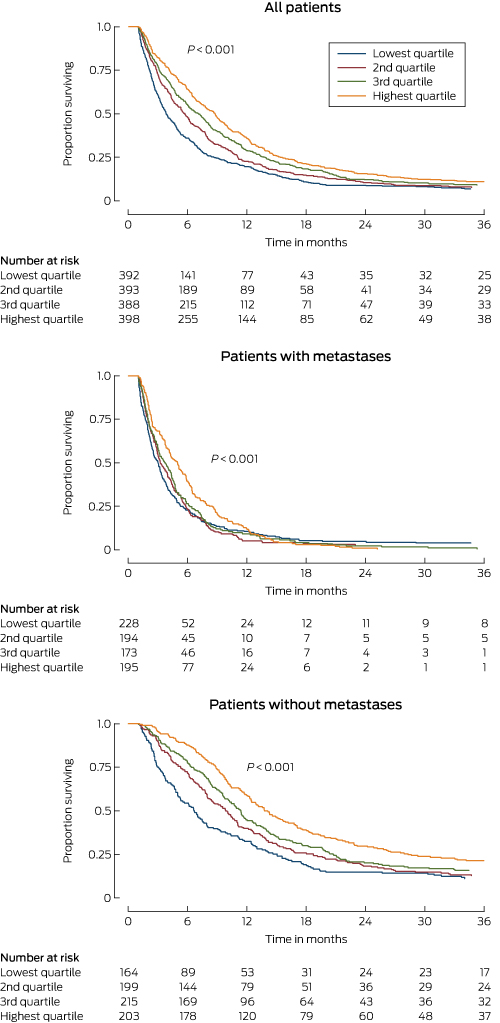

* Log-rank test of equality of survivor functions across proportional care score quartiles.

Box 4 –
Association between total care score and survival according to stage of pancreatic cancer at diagnosis

Number of patients

Hazard ratio (95% CI)*


Unadjusted

P

Adjusted

P


All patients

1571

0.90 (0.87–0.93)

< 0.001

0.94 (0.91–0.97)

< 0.001

Non-metastatic disease

781

0.87 (0.83–0.91)

< 0.001

0.91 (0.87–0.95)

< 0.001

Metastatic disease

790

0.95 (0.91–0.98)

0.006

0.95 (0.91–0.99)

0.013


* Reduction in the risk of dying associated with a 10 percentage point increase in care score. † Adjusted for age group, Eastern Cooperative Oncology Group performance status, Charlson comorbidity score, and clinical stage.

[Perspectives] Marie Vahter: the arsenic detective

Marie Vahter first came across the harm arsenic can do to the environment and health in her native Sweden during the early 1980s, when a large copper smelter was spewing the toxin into the air and sea. She did her PhD in toxicology, focusing her dissertation on the kinetics of inorganic forms of arsenic in relation to animal species. Today, she is a Professor in Environmental Medicine at the Karolinska Institutet, Stockholm, where she directs research into the immediate and long-term effects of early-life exposure to toxic metals such as arsenic, manganese, cadmium, and lead.

A rapid assessment of the impact of hazard reduction burning around Sydney, May 2016

Hazard reduction burning reduces the risks associated with bushfires,1 but produces fine particulate matter air pollution (particles of less than 2.5 μm diameter, PM2.5), which has recognised effects on health.2 In May 2016, hazard reduction burns around Sydney caused smoky conditions with high PM2.5 concentrations on several days. We describe a rapid assessment of the impact of smoke-related PM2.5 on all-cause mortality, and on hospitalisations for cardiovascular and respiratory conditions in the Sydney Greater Capital City Statistical Area (GCCSA) during May 2016.

Detailed methods are provided in the Appendix at mja.com.au. Briefly, air pollution impact assessment allows quantification of the local effects of a pollutant. It integrates scientific evidence of the pathological response to air pollution with local information about exposure and incidence of disease. We analysed public air pollution data from the New South Wales Office of Environment and Heritage (OEH), population and mortality data from the Australian Bureau of Statistics, and hospitalisation data from the NSW Ministry of Health.

Smoky days were identified in OEH monitor data and verified by satellite images. Smoke-related PM2.5 levels were estimated for each monitor as the difference between the average PM2.5 concentration on smoky days and on other days in May 2016. Smoke-related PM2.5 concentrations were interpolated from monitor locations to Statistical Areas Level 2, and a population-weighted mean concentration for all smoky days in May was calculated for the Sydney GCCSA.

To estimate the effect on health, the population-weighted mean PM2.5 concentration and baseline incidence rates (baseline death and hospitalisation rates) were combined with the short term concentration–response coefficients recommended by the World Health Organization.3 These coefficients are generally similar to or lower than many fire smoke-specific estimates4 and are routinely used for health impact assessments of population exposure to particulate matter.

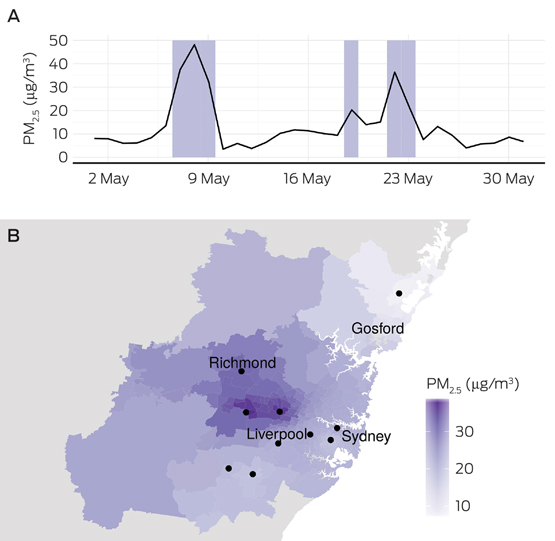
The Box shows the spatial and temporal distribution of smoke-related PM2.5 in the study region. Six days were identified as being clearly smoky; the mean smoke-related PM2.5 concentration over these days was 24 μg/m3 (SD, 6). As review of satellite data identified smoke around Sydney on several other days in May, this was probably a conservative estimate.

We estimated that 14 premature deaths (95% confidence interval [CI], 5–23), 29 cardiovascular hospitalisations (95% CI, 5–53) and 58 respiratory hospitalisations (95% CI, 0–124) were attributable to smoke from hazard reduction burning on the six smoky days. The breadth of the CIs for our estimates only reflect imprecision in the concentration–response coefficient employed.

Exposure to PM2.5 elicits measurable pathophysiological responses, including inflammation, changes in blood coagulability, oxidative stress, reduced endothelial function, and autonomic reactivity.5 Although not common, these responses can precipitate serious clinical outcomes (including cardiac arrest and premature death) in people with pre-existing illness. Our study highlights the potential scale of the public health impact when smoke affects a population of nearly 5 million people for several days.

Our estimates are based on standard methods, the health profile of the Sydney population, and conservative assumptions about the relationship between smoke concentrations and health outcomes. Further work evaluating the sensitivity of the results to these assumptions, currently underway, will allow more precise estimates.

We do not suggest that hazard reduction burning should be stopped. The risks from air pollution must be evaluated in the wider context of the effects of bushfire and of community safety. However, managing smoke should be integral to planning of hazard reduction programs. Close collaboration between health, environment and fire management agencies is essential for achieving the best overall outcomes for community wellbeing.

Box –
A. The average of daily mean PM2.5 concentrations at all monitors in Sydney, May 2016.* B. Statistical Area 2-level smoke-related PM2.5 concentrations across the Sydney Greater Capital City Statistical Area


* Shaded boxes = clearly smoky days.

After-hours medical deputising services for older people

Older people need GPs who know them well

Medical deputising services are invaluable, responding to large numbers of after-hours calls, particularly for older people at home and in residential aged care (RAC). Without these services, emergency departments and ambulance services would be much busier than they are now. The article in this issue of the MJA by Joe and colleagues1 reviews 357 112 bookings logged by one such service, the Melbourne Medical Deputising Service (MMDS), over a 5-year period (2008–2012).

The proportion of general practitioners using deputising services increased from 38% in 2005–06 to 48% in 2014–15.2 The data presented by Joe et al show a concomitant increase in the number of home and nursing home visits by the MMDS for those over 70 years of age, with the booking rate rising over the 5-year period from 33 to 40 per 1000 people over 70 years of age for home visits, and from 121 to 168 per 1000 people for RAC visits.

The reasons for this increase are undoubtedly complex, and require further examination. They include the increase in the size of the population of older people, and government initiatives that encourage GPs to provide after-hours services, either directly or through deputising services. The annual collection of data on 100 000 GP consultations in Australia known as BEACH has revealed a GP workforce that is “more feminised, older … and worked fewer hours per week”.3 Other factors might include the dangers of after-hours visiting, stretched GP workforces, and a trend among GPs toward a better work–life balance.

Deputising services differ from ordinary general practice. There is no requirement for their doctors to have a college fellowship, and only about half of the doctors in the MMDS do so.4 There is little continuity of care. Older people have high rates of dementia and may not be able to fully communicate their history. It takes time to trawl through medical notes in RAC facilities. This potentially reduces the quality of service compared with attendance by the patient’s own GP, who knows them and their medical history well. On the other hand, the deputising service keeps track of their locum service doctors, and should know whether something has gone amiss.

The article by Joe et al notes that over 80% of calls were from or on behalf of patients in RAC. These patients represent less than 5% of the older population, and they present with levels of complexity and disability that have qualified them for entry to RAC on the basis of the ACAT (Aged Care Assessment Team) criteria. The authors of the study ask why there are so few community call-outs, but it might also be interesting to consider why there are so many RAC call-outs.

Only 48% of the BEACH GP sample in 2014–15 had visited an RAC facility in the previous month.3 Barriers to GP visits include the poor level of GP remuneration, increased time seeing the patients,5 difficulty in finding staff (or indeed the patient), and staff with training below the levels of registered or enrolled nurse who are unable to hand over the patient history in a manner that makes medical sense.6 Handover comments such as “Mrs Smith is a bit behavioural today” are very difficult to interpret clinically.

Nurses with the ability to attend to complex needs are currently few in number in RAC, particularly at night. Nurses with lower levels of training may follow protocols that require at least a phone call to a medical practitioner if certain parameters are exceeded (eg, blood pressure). This call is even more likely in some areas, where hospitals require a medical practitioner review before receiving an ambulance patient from RAC.

RAC providers argue that changes in the Aged Care Funding Instrument, which funds RAC, will result in a decrease of 11% in income, with over 50% of survey respondents stating they would be likely to reduce the number of nursing staff.7 The New South Wales Nurses and Midwives’ Association has called for an approach that also takes the patient’s needs into account:8

We should be looking to establish a needs-based system to determine staffing ratios, consistent with those found in public hospitals to ensure our health care system is equitable, and does not discriminate on the basis of age.

When a patient’s usual GP is unavailable, the deputising service may be called, resulting in the large number of visits found by Joe and her colleagues. The service doctors are not equipped to care for these complex elderly patients in an optimal manner; they do not necessarily have a postgraduate qualification, they do not know the patient, and they are not supported by staff who are well trained and familiar with the medical conditions of each patient. We need to examine the reasons for calls to medical deputising services, and whether they are associated with excess morbidity and mortality. It is a problem that might be partly ameliorated by systems such as Hospital in the Home.9 Urgent change is needed if we believe that our elders should receive at least the same quality of medical care as the rest of our community.

[Comment] Research in planetary health: a call for abstracts

Since the publication of the Rockefeller–Lancet Commission Report on Planetary Health,1 interest in planetary health has grown. Planetary health has been defined as the health of human civilisation and the state of the natural systems on which it depends.1 Planetary health research focuses on quantifying the human health effects of accelerating environmental change. To catalyse innovative ideas among the disparate yet integrally related fields, The Lancet will publish a booklet of outstanding abstracts in planetary health research, in conjunction with the annual meeting of the Planetary Health Alliance on April 10–11, 2017, in Washington, DC, USA.

Shingles vaccine free for the elderly

Seventy-year-old Australians can now get the shingles vaccine for free.

Shingles is a painful rash, which can blister and is caused by the same virus that causes chickenpox.

One in three adults is at risk of developing the virus in their lifetime which has a particularly debilitating effect on older people.

Related: Shingles patients at increased stroke risk

Minister for Health Sussan Ley announced the expansion of the National Immunisation Program on Wednesday and a catch-up program available for adults aged 71 to 79 years.

“This new program is an important reminder that vaccinations don’t stop at childhood,” Ms Ley said.

“Regardless of how healthy and fit you feel, as you age you are at increased risk of contracting serious illnesses.”

The shingles vaccine is the first adult vaccine for a new disease added to the National Immunisation Program, which now provides free vaccines for eligible people for 17 infectious diseases.

A fact sheet for immunisation providers can be found here.

Three facts about the expansion of the National Immunisation Program

  • Zostavax can be given at the same time as influenza vaccine, using separate syringes and injection sites.
  • Persons with a history of a previous episode of herpes zoster (HZ) can be given zoster vaccine. The safety and immunogenicity of zoster vaccine in persons with a history of HZ has been studied in one small clinical trial; the vaccine was well tolerated and immunogenic.
  • Zoster vaccination of persons who have previously received varicella vaccine is not recommended at this time. There have been limited studies of the safety and immunogenicity of zoster vaccine in this setting, and the currently available data are insufficient to suggest a benefit from vaccination.

Source: The Australian Immunisation Handbook 10th ed. 

Latest news

[Seminar] Gout

Gout is a chronic disease of deposition of monosodium urate crystals, which form in the presence of increased urate concentrations. Although environmental factors contribute to hyperuricaemia, renal and gut excretion of urate is central to regulation of serum urate, and genetic factors are important. Activation of the NLRP3 inflammasome and release of interleukin 1β have key roles in initiation of acute gout flares. A “treat to target serum urate” approach is essential for effective gout management; long-term lowering of serum urate to less than 360 μmol/L leads to crystal dissolution and ultimately to suppression of flares.

Too much gluten a disease risk

High consumption of gluten is emerging as a risk factor in the development of coeliac disease.

While much attention to now has been focused on when gluten in introduced into a child’s diet, a Swedish study suggests researchers should instead turn their attention to how much gluten they eat.

Sweden is considered a high-risk country for the development of coeliac disease – a gluten intolerance for which there is no known cure. The only effective treatment is to follow a gluten-free diet.

Lund University researcher Carin Andren Aronsson was keen to investigate why such gluten intolerance occurs, and examined the records of 8700 children across four countries (Sweden, Finland, Germany and the United States) who are part of The Environmental Determinants of Diabetes in the Young project.

“Our findings indicate that the amount of gluten triggers the disease,” Ms Aronsson reported, adding that differences in dietary habits between children from different countries should also be examined.

She found that Swedish children up to two years of age with a high gluten intake of more than five grams a day had twice the risk of developing coeliac disease compared with those who ate less.

Further, she discovered that Swedish children had a higher risk of developing the auto-immunity that gives rise to coeliac disease than children in other countries studied, including Finland, Germany and the United States.

But the researcher dismissed the idea that breast feeding, frequently a point of speculation, had a role to play.

“There was no apparent connection between the duration of the period of breast feeding and the risk of developing coeliac disease,” Ms Aronsson said.

She were equally unequivocal that when gluten was introduced into a child’s diet was not significant.

“The timing alone of the introduction of gluten in the diet is not an independent risk factor for subsequent development of gluten intolerance,” she said.

Ms Aronsson said she intended to expand her study to include children from more countries, with data retrieved over a longer time span.

Adrian Rollins

Impact of the Australian National Cervical Screening Program in women of different ages

The known Following the 1991 introduction of the Australian National Cervical Screening Program, the incidence of cervical cancer declined, but trends for histological types in different age groups have not been reported. 

The new Squamous cell cancer rates in women aged 25 years or more fell by more than 50%, but have now plateaued among women aged 25–69 years. Screening has had little impact on adenocarcinoma rates in any age group, and there was no decline in cervical cancer rates for 20–24-year-old women. 

The implications Our findings support the planned 2017 transition to HPV-based screening starting at age 25, which may also reduce adenocarcinoma incidence. 

The National Cervical Screening Program (NCSP) has been very successful in reducing the overall burden of cervical cancer in Australia by facilitating the detection and treatment of pre-cancerous lesions.1 However, in response to new evidence about the optimal age range for screening, new technologies, and the implementation of a successful national human papillomavirus (HPV) vaccination program, a major review of national cervical screening policy (the “renewal”) was recently undertaken.2 Recommended changes to the NCSP include a change from cytology-based screening every 2 years to primary HPV testing every 5 years (including partial HPV genotyping and the referral of HPV 16/18-positive women to colposcopy) and raising the age for starting screening from 18–20 years to 25 years.3,4

Concerns have been expressed about the safety of raising the screening age,5 although the change is consistent with international guidelines6 and with evidence that screening is of limited effectiveness in women under 25 years of age.7 It should also be noted that this change to the starting age is being undertaken in the context of high HPV vaccination coverage in young women in Australia, and of observed reductions in the rates of both high grade cervical abnormalities and of vaccine-included type infections (ie, infections with HPV 6, 11, 16 and 18), including in women who are potentially at higher risk.811

Earlier studies have examined how overall rates of cervical cancer have changed in Australia since the introduction of the NCSP,12 but no Australian study has analysed the effect by age group and histological subtype of cancer. Routine screening reports include incidence data classified according to either age or histological type, but not both, and do not include statistical analyses of trends.1 The aim of our study was to examine changes in the incidence of cervical cancer in Australia since the introduction of the current NCSP, taking both age and histological subtype of cervical cancer into account, in order to characterise the impact of the current program before the proposed changes to the NCSP are introduced.

Methods

Data sources

National cervical cancer incidence data for the period 1982–2010 were obtained from the Australian Institute of Health and Welfare. Age-specific rates were calculated, using population estimates from the Australian Bureau of Statistics.13 Three-year average rates were calculated for cervical cancer overall and separately for histological subtypes. The main analyses focused on squamous cell carcinoma (SCC) and adenocarcinoma, but trends for rarer subtypes (adenosquamous and other cancers) were also explored.

Statistical analysis

Standardised rate ratios (SRRs) compared the incidence in each overlapping 3-year period after the introduction of the NCSP with the 3-year average immediately preceding its inception (1988–1990). SRRs and 95% confidence intervals (CIs) were calculated by standard methods14 across all ages, for the target screening group (20–69-year-old women), and for the age groups 25–49, 50–69 and ≥ 70 years. Incidence rate ratios were calculated for the 20–24 years age group (as a single [non-composite] age group it could not be standardised). Joinpoint regression was undertaken to assess whether trends had been consistent over time and to estimate the annual percentage change in incidence. Joinpoint analysis fits the simplest trend model (fewest changes in trends) consistent with the data. To avoid overfitting, we restricted analyses to a maximum of two joinpoints (three trends) across the study period, with the a priori hypothesis that rates declined after the beginning of the NCSP, but allowing for the possibility that this decline had slowed during the second decade of the program, as suggested by visual inspection of the overall rates.

Statistical analysis was performed in SAS 9.3 (SAS Institute) and Joinpoint 4.2.0.2 (Surveillance Research Program, National Cancer Institute [USA]).

Ethics approval

Ethics approval was not required for the study, as only aggregated data were analysed.

Results

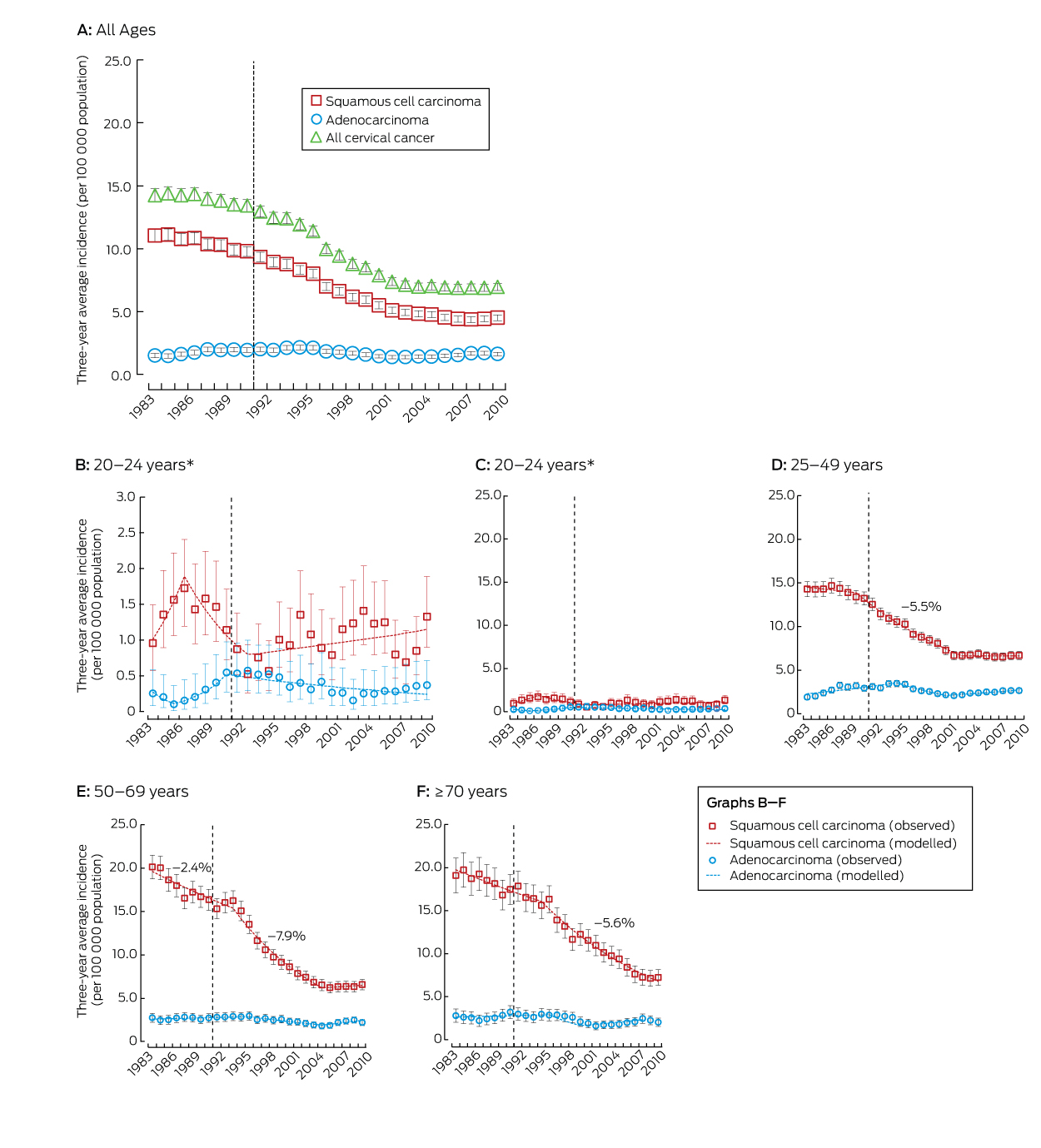
During 1982–2010, 26 236 cases of cervical cancer were registered in Australia (SCC, 18 626; adenocarcinoma, 4460; adenosquamous, 1080; other types, 2070). Since 1988–1990, the incidence of cervical cancer has declined, both overall and in all age groups examined, except for women aged 20–24 years. The reductions in incidence between 1988–1990 and 2008–2010 were primarily driven by declines in the rates of SCC (by 50%, 61% and 57% in women aged 25–49, 50–69 and 70 years or more respectively) (Box 1).

Joinpoint analysis indicated that the reduction in the incidence of SCC in women aged 25–49 years occurred mostly during the period 1990–2002 (Box 2, Box 3), without significant change outside this period. For women aged 50–69 years, SCC incidence was dropping prior to the introduction of the NCSP, with a stronger decline between 1994 and 2004, but without change from 2005 (Box 2, Box 3). The change from a decline to a plateau in the incidence of SCC around 2002–2004 was statistically significant for both age groups (P < 0.001). For women aged 70 years or more, the incidence of SCC declined before the introduction of the NCSP, but more rapidly from 1995 (Box 2, Box 3). For women aged 50–69 or 70 years or more, SCC incidence was thus dropping before the NCSP, but the subsequent rates of decrease were greater; these changes in trend were statistically significant (P < 0.001). There were no significant trends in SCC incidence in women aged 20–24 years before the inception of the NCSP, although point estimates suggest an increase until 1986, followed by a decline from 1987 to 1992, then a small, non-significant increase in SCC incidence from 1993. There were similarly no statistically significant trends in the overall incidence of cervical cancer in women aged 20–24 years before or after the start of the NCSP.

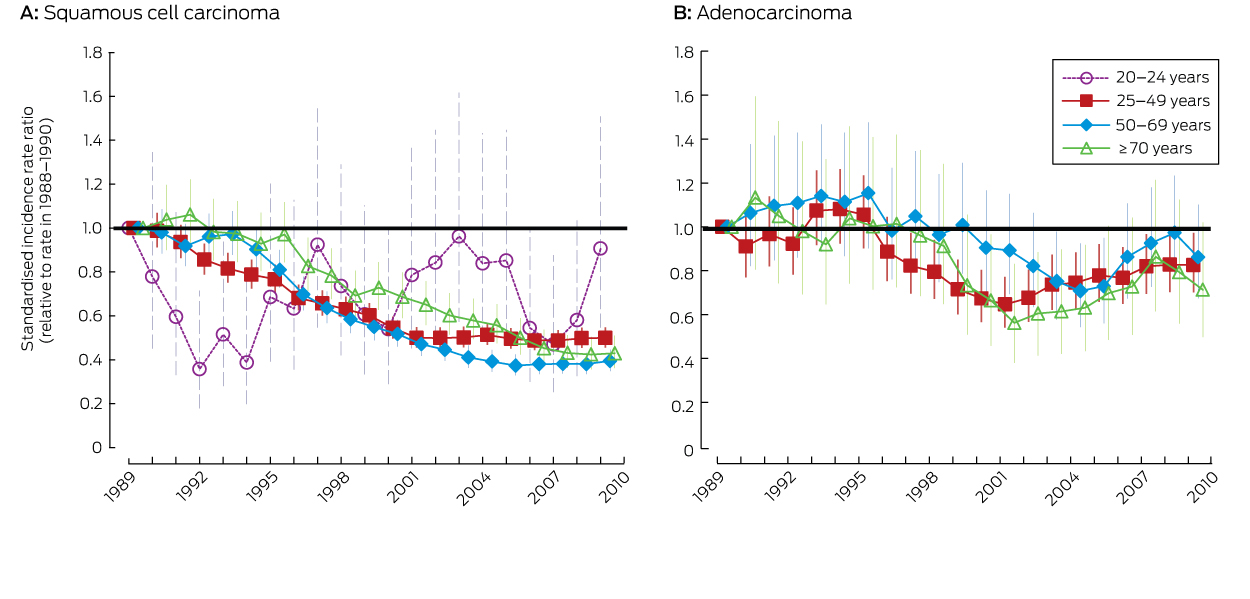
The incidence of adenocarcinoma across all ages was 18% lower in 2008–2010 than during 1988–1990. The difference was statistically significant for women aged 25–49 years, but not for other age groups (Box 1). However, there was no consistent downward trend for any age group (Box 4).

Rates of adenosquamous cancer were low, but the relative reduction and timing of the change in its incidence since 1988–1990 were similar to those for SCC in women aged 25–49 and 50–69 years (Appendix, Figures 1 and 2); case numbers among women aged 20–24 years were too small for analysis. The rate of other cervical cancer types appeared to decline across the entire period 1982–2010, without any change that could be related to the beginning of the NCSP, although absolute rates were small and the decline was not significant for women aged 20–24 or 70 years or more (Appendix, Figure 1 and Table 1). Prior to the start of the NCSP, other cervical cancers comprised a larger proportion of cervical cancers in women aged 20–24 years than for other age groups, although their incidence was still very low; they are now extremely rare in this age group (Appendix, Tables 2 and 3).

Discussion

Our analysis confirmed that SCC and overall cervical cancer rates have declined dramatically in women aged 25 years and over since the inception of the NCSP in Australia, but neither has declined in women aged 20–24 years. The overall decline among women aged 70 years or more, who are outside the target age range for screening, was understandably delayed compared with those for women aged 25–49 and 50–69 years, but the overall reduction is now comparable with that in the two younger age groups. While some women continue to be screened after age 69, their number is much smaller than for women in the target age range,1 and screening seems unlikely to explain a reduction in incidence of the magnitude measured. This suggests that the benefits of screening have extended beyond the screening end age in Australia, consistent with case–control data from England and Wales.15

Trends in the incidence of adenocarcinoma since the introduction of organised screening have been less uniform, consistent with findings in other settings of a limited impact of cytology-based cervical screening on adenocarcinoma rates.16,17 This difference has been attributed to the facts that cells from precursor lesions in the endocervical canal are more difficult to sample, and that glandular cells are more difficult to interpret than squamous cells.1

A reduction in the incidence of types of cervical cancer other than SCC was also observed, but appears unconnected with the NCSP, as it occurred throughout the entire study period. It could reflect improvements in clinical follow-up that may have led to improved identification of endometrial cancer that might previously have been misclassified as cervical cancer.

Our findings are timely, given the renewal of the NCSP and the changes in screening policy that will take effect in 2017. After considering the balance of benefits and harms, as recommended by the Australian Screening Framework,18 the Medical Services Advisory Committee (MSAC) recommended that from 2017 women under 25 years of age no longer be screened.3 Our findings support this recommendation: although women aged 20–24 years have been included in the NCSP for more than 20 years, there has been no significant impact on the incidence of either SCC or of cervical cancer overall in this age group. These women also now have a substantially lower risk of cervical cancer because of HPV vaccination. Women under 25 years of age in 2017 will have been offered HPV vaccination at school before they were 15 years old, and the three-dose vaccine uptake rate in these women exceeds 70%.19 The prevalence of vaccine-included HPV types is already very low among women under 25, even among unvaccinated women and woman at potentially higher risk.911 High grade cytological abnormality rates have fallen in this age group,8 even though uptake of vaccination in cohorts where this reduction has already been reported was less than 70%, and its efficacy may have been reduced by prior exposure to the virus because these women were vaccinated as young women or older adolescents. Both direct protection and indirect protection for unvaccinated women via herd immunity is likely to be even greater in younger birth cohorts:9 direct protection because females vaccinated as younger adolescents have higher vaccination coverage and lower rates of HPV exposure prior to vaccination; indirect protection because more of the population has since been vaccinated, and because boys are now offered vaccination.20

While screening women under 25 years of age does not appear to substantially affect the incidence of cervical cancer among 20–24-year-old women, it is possible that it might reduce cancer rates among women aged 25–29 years by detecting and treating pre-cancerous lesions before the age of 25. This possibility could not be directly assessed in our study, but data from a UK case–control study suggest that being screened between the ages of 22 and 24 years does not reduce the risk of cancer for women aged 25–29 years.7 An important change to the NCSP from 2017 is that women will receive explicit invitations to attend screening, receiving the first close to their 25th birthday. A switch from a reminder-based to an invitation-based program was a key recommendation of the MSAC,3 and modelling indicates this change will have an important impact on the effectiveness of the program in young women, and on the program overall.21 A wide range of program designs were modelled, and it was estimated that inviting women at age 25 would reduce cervical cancer incidence across all ages by about 2% compared with an otherwise identical program without invitations (in which case screening would probably commence more gradually between the ages of 25 and 29 years).21

An alternative explanation for our finding that the incidence of SCC and of cervical cancer overall in women aged 20–24 years did not decrease after the start of the NCSP is that the impact of the program has been limited by falling screening participation in this age group. However, while their 2-year participation rates have fallen since reporting began (1996–1997), there have been similar falls in participation rates for women aged 25–29 and 30–34 years, among whom cancer rates have declined.22 Additionally, participation by women aged 20–24 years has mainly fallen since 2006–2007, and this would be unlikely to have affected our findings, because the reductions in cancer incidence in other age groups predominantly occurred within the first 10–15 years of the organised screening program, with little change in rates in recent years.

Another possibility is that screening women aged 20–24 years has suppressed a rise in cervical cancer that would otherwise have followed a hypothetical increase in risk behaviour among young women (eg, first intercourse or more sexual partners at a younger age). The results of sexual behaviour surveys are inconclusive as to whether such an increase has occurred, and therefore about whether it would affect our findings. Data from a national population-based survey of sexual behaviour indicate that the median age at first vaginal intercourse was the same for women aged 20–24 years before and immediately after the start of the NCSP (ie, women born 1965–1974) as it was for women who were 20–24 years old during the remainder of period covered by our analysis (ie, women born 1975–1990).23 However, this study also reported a difference between these cohorts in the proportion of women who reported first intercourse before the age of 16 years (a rise from 12.7% to 18.2%).23 There are no data on the number of sexual partners before the age of 20 years that would allow a comparison of these cohorts. Although we cannot exclude an increase in risk behaviour, it seems unlikely that it would fully explain the observed stable incidence of cervical cancer among 20–24-year-old women because, given the magnitude of the reductions in rates in other age groups, it presupposes that a major increase in risk behaviour coincided with the period of the NCSP.

A limitation of our analysis is that cervical cancer incidence rates reported here were not adjusted for hysterectomy rates, as data for this factor were not available for the entire study period. This limitation is common to all routine reports on cervical cancer incidence in Australia,8 but it means that the denominator does not perfectly reflect the true population at risk of cervical cancer. We may therefore have underestimated the incidence of cervical cancer in older women. However, this limitation would not affect our findings for women aged 20–24 years, and would probably have only a small impact on our findings for those aged 25–49 years. Reductions in rates for older women may have been overestimated if part of the drop was attributable to rates of hysterectomy increasing since the mid-1990s, but survey data suggest that they did not.24,25 Further, as the overall reductions in cancer incidence were substantial, they are unlikely to be fully explained by changes in hysterectomy rates.

The current NCSP has been highly successful in reducing the incidence of squamous cervical cancer in Australia, by at least 50% in women aged 25 years or more. However, its effectiveness has been limited among women under 25, and in reducing adenocarcinoma rates. Further, as participation in screening has plateaued (and is falling in some age groups), cervical cancer incidence also appears to have plateaued, if at a lower level than before the program. The National HPV Vaccination Program and the renewed NCSP have the potential to mitigate these limitations. HPV vaccination will provide protection for younger women, while both HPV vaccination and HPV-based screening are expected to reduce adenocarcinoma rates.26 It is estimated that the renewed NCSP will reduce cervical cancer incidence and mortality by at least a further 20%,3,4,21 assuming that active invitations and recalls are effective in achieving high participation rates. In the longer term, the combination of HPV vaccination and the renewed NCSP is predicted to reduce cervical cancer incidence by about 70% below what would have been expected without program change and vaccination,4 and will therefore further reduce the burden of cervical cancer among women in Australia.

Box 1 –
Cervical cancer incidence (per 100 000 women) and standardised rate ratios (SRRs) comparing the 3-year average incidence of cervical cancer during 2008–2010 with the 3-year average incidence immediately prior to inception of the National Cervical Screening Program (1988–1990), by histological cancer type and age group

Squamous cell carcinoma


Adenocarcinoma


All cervical cancer


1988–1990

2008–2010

SRR (95% CI)

1988–1990

2008–2010

SRR (95% CI)

1988–1990

2008–2010

SRR (95% CI)


All ages

9.9

4.5

0.46 (0.43–0.49)

2.0

1.6

0.82 (0.72–0.93)

13.5

7.0

0.51 (0.49–0.54)

20–69 years

13.2

6.1

0.46 (0.43–0.50)

2.7

2.3

0.84 (0.73–0.96)

18.0

9.3

0.52 (0.49–0.55)

20–24 years*

1.5

1.3

0.91 (0.55–1.51)

0.4

0.4

0.91 (0.35–2.40)

2.6

1.8

0.70 (0.46–1.05)

25–49 years

13.4

6.7

0.50 (0.46–0.55)

3.2

2.7

0.83 (0.70–0.97)

18.9

10.3

0.55 (0.51–0.59)

50–69 years

16.7

6.6

0.39 (0.35–0.45)

2.6

2.2

0.86 (0.67–1.10)

21.7

10.0

0.46 (0.42–0.51)

≥ 70 years

16.8

7.2

0.43 (0.36–0.51)

2.8

2.0

0.71 (0.50–1.02)

22.7

11.4

0.50 (0.43–0.58)


* Results presented as age-specific incidence rates and age-specific incidence rate ratios. † Results presented as age-standardised incidence rates and standardised rate ratios, using the Australian 2001 Standard Population.13

Box 2 –
Three-year average cervical cancer incidence (with 95% CIs), by age and histological type, 1982–2010


The dashed line represents the start of the National Cervical Screening Program in Australia. Rates for all ages and for the age groups 25–49, 50–69 and ≥ 70 years were standardised, using the Australian 2001 Standard Population.13 The annual percentage changes in incidence rates are included for periods when the change was significant at P < 0.05. * Results for the age group 20–24 years are depicted twice; the vertical axis scale in panel C is the same as for the other age groups, to assist comparison, while panel B uses a compressed vertical axis for clearer display.

Box 3 –
Annual percentage change in the 3-year average incidence of squamous cell carcinoma, by age

Age group/period

Annual change in incidence (95% CI)

P


20–24 years

1983–1986

23.1% (–14.2% to 76.6%)

0.24

1987–1992

–13.4% (–26.3% to 1.7%)

0.08

1993–2009

2.2% (–0.4% to 4.8%)

0.09

25–49 years

1983–1989

–0.8% (–1.7% to 0.2%)

0.12

1990–2002

–5.5% (–5.9% to –5.2%)

< 0.001

2003–2009

–0.01% (–1.0% to 0.9%)

0.99

50–69 years

1983–1993

–2.4% (–3.1% to –1.7%)

< 0.001

1994–2004

–7.9% (–8.7% to –7.1%)

< 0.001

2005–2009

0.9% (–1.8% to 3.6%)

0.5

≥ 70 years

1983–1994

–1.9% (–2.6% to –1.1%)

< 0.001

1995–2009

–5.6% (–6.1% to –5.1%)

< 0.001


Box 4 –
Incidence rate ratios (with 95% CIs) comparing the 3-year average cervical incidence with the 3-year average immediately before the start of the National Cervical Screening Program (1988–1990), by histological type and age


Data for the age groups 25–49, 50–69 and ≥ 70 years are presented as standardised rate ratios, using the Australian 2001 Standard Population.13 Data for the 20–24 years age group are presented as age-specific incidence rate ratios.

The renewal of the National Cervical Screening Program

Australia has a good record in reducing cervical cancer rates — but strategies must change with new knowledge

It is an unfortunate fact that cervical cancer remains common and deadly throughout the world. It is estimated that each year 500 000 women develop cervical cancer, and that 250 000 women die of the disease.1 In Australia, cervical cancer also continues to be deadly, but the numbers of affected women are substantially lower than overseas, primarily as the result of an integrated and coordinated national screening strategy.2

Before 1991, Australian women underwent opportunistic screening for cervical cancer, usually annually. From 1991, a national, coordinated approach was implemented, the National Cervical Screening Program (NCSP), which included Pap tests (cervical smears) for women aged 18–70 years every 2 years. This approach has resulted in a significant reduction — nearly 50% — in the incidence of cervical cancer as a direct consequence of the diagnosis and treatment of pre-invasive cervical disease.3

Despite this success, the sensitivity and specificity of the Pap test are relatively low, each being estimated at 60–70%.4 Alternative strategies that either supplement or replace the Pap test have therefore been evaluated, including liquid-based cytology, computer-assisted smear analysis, and testing for the human papillomavirus (HPV).

Persistent infection with a high risk or oncogenic HPV is necessary (although not sufficient) for developing cervical cancer. Almost all women with cervical cancer test positive for HPV DNA, and the cervical cancer risk attributable to HPV is greater than that of smoking for lung cancer.2 More than 100 HPV genotypes have been identified, of which 40 infect the moist environment of the lower genital tract. Fifteen are regarded as high risk or oncogenic types, and infections with HPV types 16 and 18 account for 70% of invasive cervical cancers.5 The virus is transmitted by skin-to-skin or mucosa-to-mucosa contact; while the most common mode of transfer is penetrative vaginal intercourse, HPV can also be transmitted to the cervix following infection of the introitus or lower genital tract, and oral and anal sex may also facilitate transmission.5

Lower genital tract HPV infection is very common in sexually active young adults. During intercourse, micro-abrasions of the lower genital tract epithelium allow the virus to be deposited onto the basement membrane, from where it is internalised, in a complicated process, by the host keratinocyte. Such infections are largely hidden from the infected person’s immune system, and the innate immune system is not activated. Unlike most other infections, there are no constitutional symptoms, local signs or regional adenopathy that signify that an infection has occurred. Amplification and replication of the virus in the maturing keratinocyte leads to a productive infection when the keratinocyte is shed. In a persistent infection, the circular, double-stranded HPV DNA is more likely to be integrated into the host cell genome. During the process of integration, disruption of the E2 open reading frame (ORF) triggers deregulation of the E6 and E7 ORFs. The E6 oncoprotein binds and degrades the p53 protein, and the E7 protein inactivates the retinoblastoma gene; the result is genetic instability, inhibition of apoptosis, and uncontrolled cellular proliferation.6

With the advent of recombinant DNA technology, two prophylactic vaccines, one bivalent (against HPV 16 and 18) and the other quadrivalent (for HPV types 6, 11, 16 and 18) became commercially available. In Australia, this allowed the vaccination of young girls (from 2007) and boys (from 2013) under the National HPV Vaccination Program, and has resulted in a dramatic reduction in the incidence of HPV infections.7 In the United States, the Food and Drug Administration has recently approved a 9-valent vaccine with even broader coverage that may prevent as many as 90% of cervical cancers.8

While the NCSP has been very successful, the significant false negative rates associated with the Pap test, our greater understanding of the aetiology and natural history of cervical cancer and its precursors, and the ability to detect HPV in clinical samples has motivated a “renewal” of the NCSP. The Australian Medical Services Advisory Committee has made several recommendations for this renewal,7 including:

  • HPV testing to be performed every 5 years;

  • liquid-based cytology triage of HPV-positive patients;

  • screening to commence at age 25;

  • an exit test for women aged 70–74 years.

Change can sometimes be difficult to accept, but the public and clinicians can be reassured that the data underpinning the renewed NCSP are evidence-based, and that the changes (together with widespread HPV vaccination) will further reduce the number of cervical cancers, by at least 15%.9 An HPV test every 5 years is more effective and as safe as a Pap test every 2 years, but will save more lives and require fewer tests. Raising the age for the first screening test to 25 years and increasing the time interval between screens is already recognised as safe and cost-effective. The approach of the renewed NCSP is further supported by the analysis by Smith and Canfell of the incidence of cervical cancer in Australia during 1982–2010, published in this issue of the MJA.10