

×

Costs to Australian taxpayers of pharmaceutical monopolies and proposals to extend them in the Trans-Pacific Partnership Agreement

Intellectual property (IP) provisions being pursued by the United States in the 12-country Trans-Pacific Partnership Agreement (TPPA) negotiations have generated widespread alarm since the initial US proposals were leaked in 2011.15 Subsequent leaks of composite drafts of the IP chapter have shown ongoing resistance by most countries to many of the US proposals that would delay access to generic medicines.6,7 But while the most recently leaked draft suggests some modifications in the US position,7 major concerns related to medicines access remain unresolved.

This article focuses on three particular problems for Australia that remain in the 2014 draft. These are provisions that would further entrench secondary patenting and evergreening, lock in extensions to patent terms, and extend data protection for certain medicines. If agreed by negotiating countries, these provisions would future-proof existing low standards that are antithetical to promoting access to, and affordability of, medicines. These will not only extend monopolies over expensive new treatments, but will also make subsequent reform efforts increasingly difficult.

For each of the problems identified, we examined existing public domain data, drawn primarily from the 2013 Pharmaceutical Patents Review (PPR) and submissions to it, to identify the costs to Australian taxpayers of existing patent and data protection provisions, as well as those likely to accrue to taxpayers if the Australian Government accedes to US ambitions on these matters.

Secondary patents and evergreening

The pharmaceutical industry uses a practice known as evergreening to extend monopoly periods for medicines. Secondary patents are patents of very low inventiveness based on an original inventive patent for a new molecule. Evergreening patents are secondary patents held by the owner of the original patent. Evergreening presents a particular problem in countries with low patentability standards, such as Australia and the US.8,9

US researchers examined patents granted for two HIV drugs (ritonavir and lopinavir/ritonavir) and found that Abbott owned 82 secondary patents and had a further 26 pending applications in the US, all of which involved small variations on the original patents for these drugs.9 They found that these evergreening patents could delay generic competition for 19 years beyond the date from which generic entry would have been anticipated.9 This problem is largely due to low standards for patent grant, together with barriers to the challenge and revocation of questionable patents.

A study in Australia found an average of 49 secondary patents for each of the 15 highest-cost drugs over a 20-year period.10 One-quarter of these secondary patents were evergreening patents.

Evergreening delays generic market entry and imposes large unnecessary costs on the health care system — and on consumers. When a patent on a medicine expires and the first generic version is listed on the Pharmaceutical Benefits Scheme (PBS), a statutory reduction of 16% is applied to the PBS price and it is moved from the F1 to the F2 formulary. There, it becomes subject to the application of price disclosure,11 which further lowers prices over time.

Generic medicines manufacturer Alphapharm (a subsidiary of US-based Mylan) stated in its public submission to the PPR that:

In the case of Plavix (clopidogrel) the cost to the PBS of a near 3-year delay in the generic market entry caused by the grant of an interim injunction over an evergreening patent that was subsequently revoked has been estimated to be about $60 million. However, the total cost to the PBS attributable to the revoked patent has been estimated to be about $644 million (p. 6).12

The Australian Generic Medicines Industry Association analysed the costs to the health system for 39 PBS-listed medicines for which generic competition was delayed after the patent on the active pharmaceutical ingredient expired, as a result of secondary patenting.13 In the 12 months to November 2012, the cost of delayed generic launch was calculated at $37.8–$48.4 million. This estimate does not include subsequent price reductions due to price disclosure.

An illustration of how this affects consumers comes from the patents associated with an antidepressant, venlafaxine (Efexor). Two additional patents support the extended-release form, Efexor-XR. One of these was so broad that it delayed generic entry by two and a half years. By the time this patent was eventually declared invalid, the delay to generic market entry had cost Australian taxpayers $209 million.14

Pfizer also successfully patented desvenlafaxine (marketed as Pristiq), the active metabolite of venlafaxine. Not only was a patent granted for desvenlafaxine, it was also given a term extension until August 2023. There is no evidence that Pristiq offers any clinical benefit over venlafaxine.15,16 But the cost to taxpayers of doctors prescribing Pristiq in preference to off-patent Efexor-XR has been estimated at more than $21 million per year.14

The problem of evergreening in Australia is likely to be entrenched further by the provisions of the TPPA. A footnote to draft TPPA article QQE1 sets the current very low inventiveness approach in stone, making it difficult, if not impossible, to prevent further evergreening.17 Australia is supporting a provision that commits countries to make patents available for “any new uses, or alternatively, new methods of using a known product” (Art. QQE1.4(a)),7 as this is current Australian practice. But acceding to this provision in the treaty text will limit Australia’s options for much needed patent reform in future.

Patent term extension

Australia is obliged to provide 20-year patents under the World Trade Organization’s Agreement on TRIPS (Trade-Related Aspects of Intellectual Property Rights). In 1998, patent term extension provisions were introduced, allowing up to 5 years for delays in processing patent applications or in the regulatory approval process. These provisions were later locked in by the obligations of the Australia–US Free Trade Agreement (AUSFTA).3

The PPR found that about 58% of new molecules listed on the PBS from 2003 to 2010 received extensions of term. Of the term extensions granted since 1999, 47% received the full 5 years.18 The cost of these extensions to the PBS in 2012–13 was estimated at about $240 million in the medium term and about $480 million in the longer term.18

The PPR found that, contrary to claims by the pharmaceutical industry, there was no evidence that the public investment in extensions of term had led to a commensurate increase in investment in research and development.18 The PPR concluded that patent term extension was not in Australia’s interests, and recommended reducing the maximum length of extensions or the maximum effective patent life.

The most recent draft TPPA IP text includes provisions for term extensions for delays in the processing of patents and in the regulatory approval process.7 While the leaked text indicates opposition by Australia to the former, and the latter is consistent with the AUSFTA, patent term extension has been widely reported as an area where the US has little support from other countries. Moreover, the Therapeutic Goods Administration (TGA) regulatory approval process for medicines is subject to a statutory time limit of 255 working days, after which the TGA forfeits 25% of the evaluation fee (Therapeutic Goods Regulations 1990 [ss. 16C; 43AA]). Thus, the routine granting of extensions to compensate for rare delays in the marketing approval process makes little sense.

Earlier leaked TPPA negotiating documents show that the US was seeking to mandate patent term extensions not just for new molecules, but also for new uses and new methods of using existing products.6 This extension of scope for term extensions seems to have been dropped from the 2014 draft,7 a likely result of opposition by other countries. No evidence presented to the PPR indicated that extending the scope of patent term extensions would be in the national interest.18

Data protection

Data protection refers to preventing or delaying the reliance, by a generic manufacturer, on clinical trial data produced by the originator to support marketing approval of its product. Under the Commonwealth Therapeutic Goods Act 1989 (s. 25A), the TGA may not consider an application for a generic medicine where that application relies on undisclosed evidence of safety and efficacy submitted in support of the originator product for 5 years from the date of first registration. Data protection confers a monopoly that is distinct from that provided by the patent system, and is effective even where a patent has not been granted, or has expired. Unlike a patent, data protection cannot be subject to legal challenge.

We are not aware of any analyses of the financial impact of data protection on the Australian health system, but studies in other countries have shown that its introduction leads to increased costs. Oxfam International found that data protection introduced in Jordan in 2001, together with other TRIPS Plus measures, delayed generic entry for 79% of medicines launched between 2002 and 2006.19 A later, more comprehensive study found that between 1999 and 2004 there was a 17% increase in total medicines expenditure in Jordan, equating to additional costs of US$18 million in 2004.20 The study concluded that data protection had the most significant effect on this price increase.

In addition to its effects on medicines expenditure, data protection also presents a potential barrier to compulsory licensing — a TRIPS-compliant strategy that countries may use to bypass patents where this is necessary for public health purposes.21

Proposals for the TPPA include 5 years of data protection for new products, an additional 3 years for data produced to support new uses of existing products, and a longer period of data protection for biologics (possibly up to 12 years).7 Biologics are produced through biotechnology processes involving living organisms; these include many new cancer, anti-rheumatic and multiple sclerosis medicines.

In the 2014 TPPA draft, data protection is limited to undisclosed data and data required by regulatory agencies, representing a narrowing of the scope in comparison with earlier drafts.7 However, extending data protection to new uses of existing products and allowing longer periods of protection for biologics are likely to lead to significant delays in the market entry of cheaper generics and biosimilars in Australia. Additional periods of 3 years of data protection for new indications were previously rejected by Australia in the AUSFTA negotiations.3

The PPR found that “data protection appears to have little impact on the levels of pharmaceutical investment in a country” (p. 160).18 It concluded that there was no evidence to indicate that current data protection provided insufficient incentives to innovate and bring biologic products to market, and recommended against extending data protection for biologics. In the US, the Federal Trade Commission also concluded that lengthy data protection for biologics was not warranted.22

A useful example of the costs of delaying market entry of competitors for biologics is adalimumab (Humira), a drug for rheumatoid arthritis and other autoimmune conditions. This drug represented the third-highest cost to government in 2013–14, costing Australian taxpayers $272.7 million.23 When the first biosimilar version is listed on the PBS, it will trigger a 16% statutory price reduction on all versions of the product. This means savings to taxpayers of $43.6 million in the first year (based on 2013–14 expenditure data), and with flow-on effects resulting from price disclosure likely to lead to further savings in subsequent years.

Conclusions

Pharmaceutical monopoly protections already cost the Australian health system hundreds of millions of dollars each year. US ambitions for the TPPA IP chapter in the most recently leaked draft would expand and entrench costly monopolies in Australia, with no evidence of any countervailing benefit to the Australian public.

The PPR warned that the current Australian patent system was not well designed to serve Australia’s interests. The government’s stated concern about the need to ensure the sustainability of the PBS can hardly be credible if it ignores this warning in the final stages of the TPPA negotiations.
Knowing when to stop antibiotic therapy

Empirical antibiotic therapy that turns out to be unnecessary, on review, can (and should) be stopped immediately

After 50 years of widespread antibiotic use, we have reached the point where experts are seriously predicting “a postantibiotic era” and the World Health Organization has declared antibiotic resistance “a threat to global security”.1 No one can doubt the enormous benefits of antibiotics in curing or preventing serious sequelae of infections that were once the main causes of death and chronic illness, and enabling modern medical therapies that involve significant immune suppression.

These benefits are dramatic, and toxic side effects are apparently few. This makes it tempting — even now, when we know the risks — to prescribe antibiotics empirically at the first hint of infection, even viral infection,2 lest it progress to serious sepsis (and potential medicolegal or professional embarrassment3). Although unnecessary antibiotic use is sometimes driven by patients’ expectations, they can be modified by public education.4

During the first 30 years of the antibiotic era, the release of each new antibiotic was almost always followed by the emergence of resistance in some previously susceptible bacteria, but there were always new antibiotics in the pipeline, until recently. Now the pipeline has dried up and the incidence and spectrum of resistance among most common pathogens have reached alarming levels.1 How have we come to this point, and what can we do to avoid the “end of the antibiotic era”?

How can we improve our use of antibiotics?

We still argue about how to optimise antibiotic use, but there are some (more or less) undisputed facts:

  • the incidence of antibiotic resistance is, broadly, proportional to the total amount of antibiotics used,5 notwithstanding many confounding variables;
  • individual antibiotic exposure rapidly alters normal gut microflora, which can take months to recover, risking overgrowth or acquisition of (and, potentially, infection with) multiresistant bacteria, Clostridium difficile or yeasts and spread to hospital, household or nursing home contacts6 — and the broader the spectrum and the longer the course, the greater the risk;
  • infections with antibiotic-resistant bacteria are more difficult to treat and are associated with higher mortality — antimicrobial resistance is estimated to cost the United States health system US$21–34 billion per annum;1 and
  • all antibiotics have some specific adverse side effects such as allergy (or, rarely, anaphylaxis) or dose-related haematological, gastrointestinal, renal or hepatic toxicity.

Surveys of antibiotic use in hospital and community settings show that a third to a half of all prescriptions are discordant with widely available antibiotic guidelines.7,8 Individual decisions to prescribe are often driven by the prescriber’s experience, confidence and tolerance of risk, rather than by objective clinical indications.2 Antimicrobial stewardship programs are designed to support and share responsibility for logical, evidence-based antibiotic prescribing decisions in the context of inevitable clinical uncertainty, and they can reduce unnecessary — and overall — antibiotic use, without adverse patient outcomes.9,10

In seriously ill patients with suspected bacterial sepsis, initial empirical therapy often means high-dose, broad-spectrum “cover”, justified by evidence that the mortality increases rapidly with every hour’s delay in starting effective therapy.11 For example, recommended empirical therapy for patients with neutropenia who develop fever is to give piperacillin–tazobactam or a fourth-generation cephalosporin.12 The need for immediate, effective therapy in severe sepsis is often extrapolated to milder (suspected) infections, with non-specific symptoms, for which therapy may not be necessary or could be delayed until test results are available to guide it.

Whether to treat and the appropriate choice of empirical therapy are not straightforward decisions, even with the help of prescribing guidelines. However, starting empirical therapy does not mean the patient is committed to a fixed treatment course. Too often, initial therapy is continued without review, even when diagnostic tests indicate an alternative diagnosis (non-infective condition or viral infection) for which no antibiotic is needed or a narrower spectrum agent would suffice. For example, Streptococcus pneumoniae isolated from a blood culture from a patient with severe community-acquired pneumonia is an indication to change from commonly prescribed empirical therapy — ceftriaxone plus azithromycin — to benzylpenicillin alone.12

Duration of treatment and resistance

There is a common misconception that resistance will emerge if a prescribed antibiotic course is not completed. Premature cessation of antibiotic therapy will not increase the risk that resistance will emerge. For most infections, the recommended duration of therapy (5–14 days, depending on syndrome) is based on expert opinion and convention, rather than solid evidence. However, for many syndromes associated with bacteraemia, there is no difference in outcome when shorter courses are used.13,14 In practice the optimal duration of therapy depends on clinical syndrome, the causative organism, whether source control is possible and the patient’s response to therapy.14 For example, only 3–5 days of treatment is needed for meningococcal meningitis, compared with 10–14 days for pneumococcal meningitis.12 Additional studies are needed to validate shorter courses of antibiotic therapy for many other infections.

Resistance is much more likely to occur with long antibiotic courses, which are rarely indicated except when the site of infection is relatively inaccessible (in biofilm in sites such as a cardiac valve or foreign body or in an abscess); these infections often cannot be cured without surgical removal of the source or drainage of pus. There is no risk — and every advantage — in stopping a course of an antibiotic immediately a bacterial infection has been excluded or is unlikely; and minimal risk if signs and symptoms of a mild infection have resolved.

The effect of fasting diets on medication management

To the Editor: Fasting diets have been used by humans for millennia for religious and medical purposes and are now gaining popularity for wellbeing and weight loss purposes. With increasing use of short- and long-term courses of medication to manage a multitude of conditions, a question that needs to be asked is will fasting diets impact on medication regimens?

The 5 : 2 diet, where calorie intake is unrestricted 5 days a week and limited to 500 calories for women and 600 calories for men 2 days a week, is becoming increasingly popular due to widespread publicity. In humans, there is some evidence that intermittent fasting (mainly alternate day fasting rather than the 5 : 2 regimen) could lead to weight reduction, decreased insulin resistance and prevention of type 2 diabetes.1,2

It is possible that patients who are taking medication and intermittently fasting each week could encounter adverse effects or therapeutic failure. Medications of concern generally fall into two categories: those for which absorption may be significantly altered by administration on an empty stomach, and those for which increased gastrointestinal3 or other4 adverse effects may result when taken on an empty stomach (Box).

For example, the bioavailability of telaprevir when taken while fasting is 27% of that when taken with a standard meal.5 As telaprevir needs to be taken three times a day for 12 weeks for treatment of chronic hepatitis C, treatment failure may result with intermittent fasting.

On a similar note, while the absorption of warfarin is not adversely affected by fasting, it is possible that an altered diet (particularly a diet that is high in vitamin K-containing foods) in patients taking warfarin may lead to volatility in international normalised ratio.6

Caution is warranted for patients with diabetes who wish to embark on these fasting diets, despite the appeal in terms of weight loss and reduced insulin sensitivity.2 Glibenclamide, glimepiride and insulin carry a high risk of hypoglycaemia if continued as normal when fasting.7

We urge all health professionals to consider the possible impact of fasting diets on medications and investigate further where required. Information regarding potential clinical significance of the diet may be evaluated via the full product information for individual medications and through community and hospital pharmacies.

Medications that warrant further investigation in patients undertaking fasting regimens*

Medications for which adverse effects may be increased if taken while fasting

Medications for which there may be clinically significant alterations in absorption if taken while fasting


Corticosteroids, mycophenolate, tacrolimus

Itraconazole capsules, posaconazole

Doxycycline, metronidazole, sodium fusidate, tinidazole, sulfamethoxazole–trimethoprim

Atazanavir, darunavir, tenofovir, etravirine, ritonavir, saquinavir, valganciclovir, telaprevir, boceprevir

Clomipramine, fluvoxamine, paroxetine, venlafaxine

Acitretin, isotretinoin, tretinoin

Amantadine, bromocriptine, levodopa

Albendazole (for systemic infections only), griseofulvin, ivermectin, mebendazole, praziquantel

Baclofen, betahistine, cyproheptadine, dapsone, lithium, sodium valproate, tiagabine

Mefloquine, artemether–lumefantrine, atovaquone

Imatinib

Ivabradine, labetalol


Cinacalcet, spironolactone


* This list is not exhaustive.

Infliximab therapy in two cases of severe neurotuberculosis paradoxical reaction

Clinical record

Patient 1

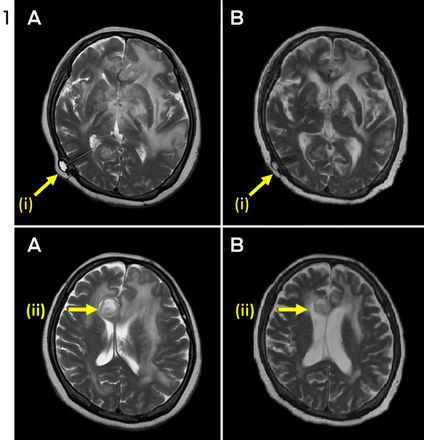
A 60-year-old HIV-negative woman presented with a week’s history of fever, vomiting and confusion, followed by progressive personality change. On admission, she was noted to have urinary retention, left oculomotor nerve palsy and an upgoing right plantar response. A magnetic resonance image (MRI) of the brain showed leptomeningeal enhancement with gyral swelling and subtle cortical T2 signal hyperintensity in the right frontal lobe, suggesting meningoencephalitis. Cerebrospinal fluid (CSF) cultures grew fully susceptible Mycobacterium tuberculosis. Antituberculous therapy was started with isoniazid, rifampicin, ethambutol and pyrazinamide, plus dexamethasone. CSF cultures tested negative by Week 1. Over the next month, she had ongoing fevers and fluctuating conscious state. High CSF pressures necessitated ventriculoperitoneal (VP) shunting. An MRI 3 months into therapy showed numerous granulomas, microabscesses and infarcts. Her condition failed to improve with a further course of dexamethasone, and an MRI at 5 months showed increasing size and number of granulomas, with worsening oedema and midline shift (Figure 1, A). She was given a trial of three doses of infliximab 10 mg/kg, 1 month apart, resulting in marked improvement in neurological status and radiological findings (Figure 1, B). She regained movement of her limbs, opened her eyes spontaneously and was able to articulate a few words. After completing 2 months of four-drug therapy, she received isoniazid and rifampicin for 10 months, with ongoing improvement. She was left with mild cognitive deficit and required some assistance with activities of daily living.

Patient 2

A 32-year-old HIV-negative woman presented with delirium and back pain. A chest radiograph suggested miliary tuberculosis. A computed tomography brain scan was unremarkable. Results of CSF molecular testing were positive for M. tuberculosis complex, and cultures from CSF, blood and a laryngeal swab grew fully susceptible M. tuberculosis. Isoniazid, rifampicin, ethambutol, pyrazinamide and prednisolone 50 mg were commenced. One month into therapy, she developed headache in the context of weaning from prednisolone. An MRI showed multiple rim-enhancing nodules in the CSF spaces, with leptomeningeal enhancement and enhancing lesions in the right cerebellum and hemipons. CSF cultures tested negative.

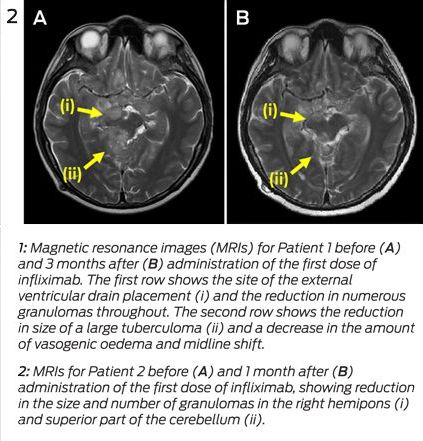
The prednisolone dose was increased to 60 mg, with little response, then converted to dexamethasone 12 mg/day. One month later, while steroid tapering, she developed diplopia. An MRI showed worsening tuberculomas with increasing oedema (Figure 2, A). Dexamethasone was reinitiated at 12 mg/day. Three months into therapy, she developed obstructive hydrocephalus requiring VP shunting. Over the following weeks, she developed peripheral visual field loss. After 4 months of tuberculosis therapy, a trial of infliximab 5 mg/kg was initiated. The steroid dose was tapered over the next week without worsening of symptoms, and she was discharged. One month later, an MRI showed moderate improvement (Figure 2, B). Two further doses of infliximab were given over the subsequent 6 weeks, with complete resolution of visual symptoms. She completed 2 months of four-drug therapy, followed by 10 months of isoniazid and rifampicin. The course was complicated by a seizure at Month 8, necessitating antiepileptic therapy, but she made an otherwise full neurological recovery.

A paradoxical reaction (PR) in tuberculosis (TB) is the worsening of disease after starting TB therapy, usually despite microbiological response. It may represent an inflammatory response to the release of antigen from dying bacilli.1 Such disease exacerbation has also been observed in people with HIV when antiretrovirals are started,2 and in individuals with TB when tumour necrosis factor alpha (TNF-α) antagonists are discontinued.3 A PR may manifest with new pulmonary lesions or lymphadenopathy3 and can be life-threatening, especially in patients with neurotuberculosis.1 Management involves high-dose corticosteroids, but in intractable cases success has been reported with TNF-α blockade.1,35

Our two patients had severe neurotuberculosis PRs unresponsive to dexamethasone, which abated after administration of the anti-TNF-α antibody infliximab. Before these two cases, there was only one report of therapeutic use of infliximab for TB PR in an individual without prior history of TNF-α antagonist use.1 Our two cases add weight to this approach being safe and effective in patients with steroid-refractory TB PR. The previously reported patient had steroid-refractory neurotuberculosis that did not respond to a trial of cyclophosphamide. Radiological and neurological parameters improved only after infliximab was given.1 In that case and ours, cultures tested negative soon after antituberculous therapy was started, suggesting that ongoing disease was due to an immunologically mediated PR rather than inadequate microbiological control.

These cases highlight the potentially devastating effects of central nervous system (CNS) TB, which, despite contemporary therapeutic approaches, still results in permanent disability or death in half of those treated.6 Much of this morbidity can be attributed to the inflammatory response. A key inflammatory cytokine is TNF-α, which plays an integral role in granuloma formation to contain TB infection. However, in mouse models of neurotuberculosis, TNF-α has been shown to increase blood–brain barrier permeability, resulting in increased CSF leukocytosis and CNS inflammation.7

Attenuation of the inflammatory response with routine administration of corticosteroids in patients with neurotuberculosis has been shown to reduce mortality.6 However, in cases of PR, outcomes are often poor despite steroids. There is growing evidence that medications with anti-TNF-α activity may have a role in controlling this inflammatory response, without compromising microbiological response.1,35

Thalidomide, a potent TNF-α inhibitor, was administered to two patients with steroid-refractory neurotuberculosis, with apparent improvement.8 While also showing promise in rabbit models and a small pilot study, it was poorly tolerated and failed to show clinical benefit when used as adjunctive therapy for childhood TB meningitis in a randomised trial.9

There are accumulating data on the role of the anti-TNF-α monoclonal antibodies infliximab and adalimumab and the soluble TNF-α receptor etanercept. They have potent anti-inflammatory properties and are well tolerated, but have been associated with increased risk of TB in those taking them for autoimmune conditions.10 TB developing in patients receiving TNF-α antagonists is more likely to be extrapulmonary or disseminated,11 and early reports suggested that it was more refractory to treatment.12 However, as experience with these agents grew, it became apparent that the poor response could be a PR to the TNF-α antagonist withdrawal. As the immunosuppressive effect of the TNF-α antagonist wanes, the recovering immune system can generate an intense inflammatory reaction against mycobacterial antigens. Two patients with steroid-refractory disease were successfully treated with reintroduction of the offending TNF-α antagonist.4,5

Our report supports an additional role for TNF-α inhibition in severe PRs in immunocompetent individuals. Given that TNF-α antagonists appear to be safe in TB PR, further studies of their role in management are warranted.

Lessons from practice

  • Central nervous system tuberculosis remains a potentially devastating disease that, despite contemporary therapeutic approaches, still results in permanent disability or death in half of those treated.
  • A paradoxical reaction is an inflammatory reaction that can cause disease progression and complications after initiation of antituberculous therapy.
  • High-dose corticosteroids are recommended but if these are ineffective, there is mounting evidence for the use of tumour necrosis factor alpha antagonists such as infliximab.

An economic case for a cardiovascular polypill? A cost analysis of the Kanyini GAP trial

There is increasing global interest in the use of frequently indicated medications in fixed-dose combination for the prevention of cardiovascular disease (CVD).1,2 Evidence of the effectiveness of such polypills as a strategy in improving adherence to recommended treatment and potentially lowering costs is growing.3,4 Although there are combination blood pressure-lowering and cholesterol-lowering medications, a more comprehensive cardiovascular polypill (containing generic aspirin, a lipid-lowering and two blood pressure-lowering agents) is not currently available in Australia. At a feasible cost of less than $1 per day5 compared with a minimum cost in Australia of $1.70 per day for individual generic therapies (http://pbs.gov.au/info/about-the-pbs), prima facie evidence exists for extensive savings from such a strategy in Australia.

The cost-effectiveness of polypill-based strategies compared with individual medications has yet to be tested in real-life settings, although cost-effectiveness has been shown in different patient groups and health care settings using modelled projections.5,68 For instance, based on a modelled analysis of high-risk primary care Dutch participants, polypill use after opportunistic screening was cost-effective among people aged over 40 years.8 Similarly, a polypill strategy was found to be cost-effective and potentially cost-saving in older patients after myocardial infarction.7

This analysis is based on the Kanyini Guidelines Adherence with the Polypill (GAP) pragmatic randomised controlled clinical trial and linked health service and medication administrative claims data from Medicare Australia. Kanyini GAP was pragmatic in that it was conducted within the primary care setting, with the study drug dispensed through community pharmacies, to test the effectiveness of a polypill-based strategy in real-world practice.9 In the trial, the polypill improved patients’ adherence to treatment and there was no difference in mean blood pressure and cholesterol levels.3 The results were consistent with a larger sister trial, the UMPIRE (Use of a Multidrug Pill in Reducing Cardiovascular Events) study. Conducted in Europe and India, UMPIRE found that a polypill strategy yielded improvements in self-reported adherence, along with statistically significant but small additional reductions in blood pressure and cholesterol, compared with non-polypill treatment, in the polypill arm.4 A unique design feature of Kanyini GAP was that all medications, including the polypill, were dispensed at an out-of-pocket charge consistent with prevailing Medicare subsidies (around $35 per medication per month for general patients).

Methods

A within-trial cost analysis of the polypill strategy versus usual care was conducted from the Australian health system perspective (ie, government plus patient costs). Kanyini GAP was carried out within Indigenous and non-Indigenous urban, rural, and remote primary care settings across Australia (randomisation from January 2010 to May 2012; median follow-up, 19 months; maximum follow-up, 36 months).3

Data on health service and medication expenditure throughout Kanyini GAP were obtained via individually linked Australian Medicare records for study participants who consented to linkage. Two separate Medicare datasets were analysed: the Medicare Benefits Schedule (MBS), which records government and patient costs of general practitioner and specialist visits and diagnostic tests; and the Pharmaceutical Benefits Scheme (PBS), which records the total government and patient costs of all medications dispensed outside hospital. The PBS data do not include polypill costs, as it is not marketed in Australia. As no difference was found in safety or clinical outcomes between treatment groups in the Kanyini GAP trial, we assumed no differences in hospital-related expenditure.

The primary outcome was mean MBS and PBS expenditure per patient per year. The base year for the analysis was 2012.10 This study was approved by human research ethics committees in all relevant jurisdictions (Sydney South West Area Health Service; Aboriginal Health and Medical Research Council of New South Wales; Cairns Base Hospital; Princess Alexandra Hospital Centres for Health Research; Central Australia; Northern Territory Department of Health and Menzies School of Health Research; Monash University). Each participant provided written informed consent.

Statistical analysis

Multivariable analysis was conducted to accommodate potential differences between treatment groups, given these analyses were restricted to the subset of trial participants consenting to Medicare linkage.11 Non-significant demographic, socioeconomic, health and treatment-related covariates (P > 0.10) were removed via backwards stepwise elimination. To account for the empirical distribution of MBS and PBS cost data,1114 generalised linear models were used to estimate the primary outcome, and the marginal difference between treatment groups was compared (Wald test). Deb–Manning–Norton programs for Stata 12.1 (StataCorp) were used.12

Results

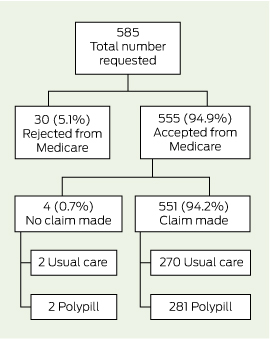
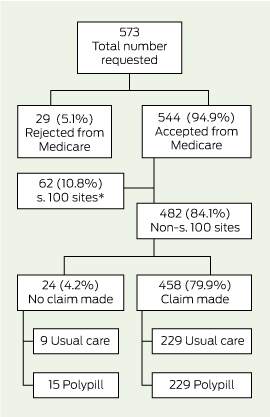
Box 1 and Box 2 detail the flow of patients through this analysis. Consent for linkage with MBS and PBS data was obtained from 93.9% (585/623) and 92.0% (573/623) of trial participants, respectively, and data were provided for 94.9% of participants (MBS, 555/585; PBS, 544/573). With regard to PBS data, 10.8% (62/573) of consenting participants were receiving medications under the special rural and remote access provisions of section 100 of the National Health Act 1953 (Cwlth) and were removed from this analysis, as these data were not captured by Medicare at an individual patient level (Box 2). There was no differential availability of linked data between treatment groups.

The MBS and PBS expenditures by the Australian health system (government plus patient costs) per patient per year, excluding the cost of the polypill, are presented in Box 3. The adjusted analysis predicted a mean cost saving for pharmaceutical expenditure of $989 (95% CI, $648–$1331) per patient per year (P < 0.001) to the health system. No significant differences were found in MBS expenditure.

Discussion

Our study showed that participants receiving polypill-based care had significantly lower pharmaceutical expenditure than usual care, with no difference in health service expenditure. The overall potential savings are dependent on the reimbursement price of the polypill. Under current Australian guidelines, fixed-dose combinations such as the polypill are reimbursed at no greater than the sum of the costs of the generic components,15 which was $1.70 per day at the time the trial was conducted. At this maximum price, and based on an average of 264 days per year on polypill treatment as observed in the treatment arm of the Kanyini GAP study,3 the annual savings to the health system would be $540 (ie, $989 − $1.70 × 264 days) per patient.

The Kanyini GAP trial found that the polypill was safe and effective in improving combination preventive treatment use by patients.3,4 Using primary care expenditure data, our within-trial analysis provides evidence of significant cost savings through the introduction of a CVD polypill, showing its economic dominance over conventional individual therapies. The ACE Prevention project, an Australian economic modelling study,5 also indicated dominance, estimating that a polypill at $200 per person per year was cost saving and resulted in a large population health impact, even when provided to patients at lower risk than those in the Kanyini GAP trial. If we had applied this lower cost in our analysis, we would have estimated annual health system savings of $789 per patient.

Challenges remain before large cost savings can be realised in Australia. First, no polypill has had regulatory approval in Australia to date. While several cardiovascular combinations have been approved, these are simple two-component combinations approved on the basis of straight substitution among patients receiving recommended medications (among whom the benefits are smallest),3,4 and have probably increased costs as a result of not being subject to automatic price reductions.16 Another challenge will be appropriate scale-up while maintaining overall cost savings — large investments will be required in order to bring about practice change for this relatively new way of treating patients.

One limitation with using PBS data is that over-the-counter and very low-cost medications priced at below the government copayment level are not captured. However, this potentially leads to an underestimate of the cost savings as it is likely to include some of the individual cardiovascular medicines in usual care, such as aspirin. Additionally, subsequent reductions in the cost of usual care associated with the expiry of patents for atorvastatin and rosuvastatin since conducting the Kanyini GAP trial may have an impact on the translation of such cost savings into contemporary practice.

This is the first study using individual patient-linked administrative data to evaluate the cost offsets associated with a CVD polypill compared with current practice. Given that over 600 000 Australians at high risk of CVD are currently prescribed antiplatelet, blood pressure and lipid-lowering medication, and a similar number are on partial treatment,17,18 this polypill has the potential to not only help to reduce the large gaps that exist in Australia between recommended and actual treatment for patients with CVD,18 but also to free up considerable amounts of pharmaceutical expenditure.

1 Medicare Benefits Schedule expenditure

2 Pharmaceutical Benefits Scheme expenditure


* Patients receiving medications under the special rural and remote access provisions; individual-level data not captured by Medicare.

3 Health system expenditure (government plus patient costs) per patient per year of follow-up*

Scheme

Usual care

Polypill

Marginal difference


Medicare Benefits Schedule


No. of participants

270

281

Unadjusted expenditure, mean (95% CI)

$1772 ($1581 to $1963)

$1760 ($1602 to $1917)

$13 (− $236 to $261)

Adjusted expenditure, mean (95% CI)

$1767 ($1583 to $1951)

$1770 ($1615 to $1926)

$40 (− $202 to $281)

Pharmaceutical Benefits Scheme


No. of participants

229

229

Unadjusted expenditure, mean (95% CI)

$2438 ($2100 to $2775)

$1443 ($1285 to $1601)

$995 ($622 to $1368)†¶

Adjusted§ expenditure, mean (95% CI)

$2448 ($2141 to $2754)

$1446 ($1291 to $1602)

$989 ($648 to $1331)†¶


* 2012 A$, estimated with generalised linear model (gamma family, log link). † In favour of polypill. ‡ Adjusted for sex, Australian rural and remote area index (http://www.aihw.gov.au/rural-health-rrma-classification), adherence at baseline, history of cardiovascular disease and prior medication use. § Adjusted for sex, Australian rural and remote area index, health care concession status–income interaction, adherence at baseline, history of cardiovascular disease and prior medication use. ¶ P < 0.001.

Cytomegalovirus disease in immunocompetent adults

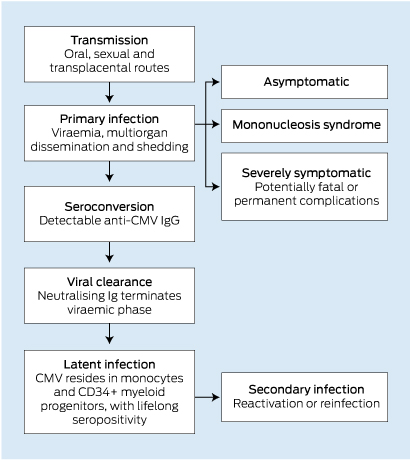
Cytomegalovirus (CMV) is an internationally ubiquitous human herpes virus with a worldwide seroprevalence ranging from 45% to 100%.1 A national serosurvey in 2006 estimated that 57% of Australians between the ages of 1 and 59 years were seropositive.2 While primary CMV infection is common in the general community, it is usually asymptomatic or causes a mild mononucleosis-like syndrome.3 The viraemic phase is generally self-limiting in healthy adults, and is followed by a lifelong bloodborne latent phase within peripheral monocytes and CD34+ myeloid progenitor cells4 (Box 1).

However, in certain circumstances CMV infection is capable of producing severe, life-threatening disease, including a wide range of potential clinical manifestations, owing to systemic haematogenous dissemination and a very broad tissue tropism6 (Box 2). Typically, severe CMV disease occurs in the context of an immature, suppressed or compromised immune system, and can lead to death or permanent major sequelae.7 As such, severe CMV infection is a well recognised cause of morbidity and mortality in neonates and immunocompromised adults, such as pharmacologically immunosuppressed transplant recipients and patients with AIDS.7

CMV disease in immunocompetent adults

While CMV is a well recognised pathogen in neonates and immunocompromised adults, the burden of CMV disease in immunocompetent adults is less well understood. This is because severe CMV disease is of considerably lower incidence in this population. However, it is far from non-existent; over 380 published case reports document instances of severe tissue-invasive CMV infection in immunocompetent adults. Similarly to CMV disease in immunocompromised individuals, these cases show a wide range of manifestations, including colitis,9 vascular thrombosis,10 pneumonia11 and myocarditis.12

The most comprehensive evaluation of severe CMV infection in immunocompetent adults to date included a systematic meta-analysis of case reports and reviews documenting 290 instances, across all manifestations.8 This study found that CMV infection most commonly involved the gastrointestinal tract (primarily colitis), followed by the central nervous system (including meningitis, encephalitis and myelitis) and then haematological abnormalities (including haemolytic anaemia and thrombocytopenia). CMV disease of the eye, liver, lung and vasculature were also documented, among other conditions. The authors ultimately concluded that the incidence of severe manifestations of CMV infection in immunocompetent individuals appeared to be significantly more common than previously appreciated.8

It should be noted that the definition of immunocompetency in this analysis, like most published reviews and case reports, excluded only individuals with profound loss of immune function, including patients who had AIDS, pharmacologically immunosuppressed transplant recipients and chemotherapy recipients. However, many case reports of CMV disease in “immunocompetent” adults document comorbidities that may be associated with a degree of immune dysfunction, such as diabetes mellitus or renal failure. Indeed, studies have also shown an increased risk of CMV-related morbidity and mortality in “immunocompetent” critically ill patients.13 It is therefore highly feasible that partial immune dysfunction may represent a currently overlooked risk factor for severe CMV disease. As such, further studies are needed to evaluate the risk of CMV disease in these populations. Nonetheless, this possibility reinforces the importance of considering CMV as a potential infectious agent even in patients with a low degree of immune dysfunction.

Diagnostic challenge of CMV disease

Although uncommon, severe CMV infection in immunocompetent adults often poses a significant diagnostic challenge, and a number of case reports have documented considerable delay to diagnosis.1416 Some patients with CMV colitis, in particular, have had protracted hospitalisations and have undergone surgery to investigate persistent and undiagnosed disease.

The diagnostic difficulty in CMV disease arises from three factors. First, the low incidence of severe CMV disease in immunocompetent individuals warrants a lower index of clinical suspicion for CMV infection at initial presentation. Second, CMV disease can present with a wide array of potential clinical manifestations, owing to broad tissue tropism. Third, certain presentations of CMV disease strongly mimic other diseases, potentially causing diagnostic confusion and delay in diagnosis. Indeed, case studies have documented initial misdiagnoses of colon carcinoma,14 ischaemic colitis,15 inflammatory bowel disease,16 dengue fever17 and lung cancer,18 among others.

Notable case studies

Siegal and colleagues documented the case of an 82-year-old man presenting with a 2-day history of diarrhoea and epigastric pain.15 Non-contrast computed tomography (CT) showed faecal impaction and thickening of the wall of the distal colon, with generalised large-bowel dilatation. Despite repeated negative results from assays for Clostridium difficile toxin, antibiotics were administered. There was no clinical improvement. Sigmoidoscopy and biopsy during the second week of admission showed acute inflammation and lymphoid aggregates, but did not lead to a diagnosis. The patient was treated with mesalamine for suspected ulcerative colitis, with minimal effect. A positive faecal occult blood test result raised the suspicion of ischaemic colitis. However, repeat sigmoidoscopy and biopsy at 1 month after admission showed mucosal ulceration with viral inclusions diagnostic of CMV infection, and treatment with intravenous (IV) ganciclovir was commenced. The authors concluded that CMV should be considered as a potential aetiological agent of severe colitis in immunocompetent individuals when other differentials have been excluded.15

A case study by Falagas and colleagues highlighted the diagnostic difficulty posed by CMV disease in non-immunocompromised adults.14 In this instance, a 57-year-old, HIV-negative man with chronic renal failure presented with acute abdominal pain, diarrhoea, and per rectal bleeding. Colonoscopy showed a large polypoid mass in the hepatic flexure, suspicious for colorectal carcinoma, although a colonic biopsy specimen did not show neoplastic changes. The results of subsequent CT scanning, stool examination and a C. difficile toxin assay were normal. Recurrent symptoms prompted an exploratory laparotomy and right hemicolectomy on Day 9 of admission, at which time histological analysis showed intranuclear inclusions diagnostic of CMV disease. The patient commenced a 2-week course of IV ganciclovir, and his symptoms subsequently abated. The authors concluded that the endoscopic findings of CMV colitis may resemble colon carcinoma and should be considered as a differential diagnosis, even in patients without severe immunosuppression.14

Yu and colleagues published a case report of a 39-year-old woman with a 6-week history of fever of unknown origin who was referred to a tertiary hospital.19 Her liver enzyme levels were elevated, and an abdominal CT scan was consistent with acute hepatitis. Results of serological screening for hepatitis A, B and C viruses, Epstein–Barr virus and HIV were negative. The result of a CMV-polymerase chain reaction (PCR) analysis was positive, and other causes (including drug-induced and autoimmune) were excluded. The severity and progressive nature of the disease necessitated urgent living-donor liver transplantation. A biopsy specimen from her explant liver showed widespread hepatic necrosis and stained positive for CMV protein. Initially, no antiviral therapy was commenced. The patient’s postoperative course was characterised by a rising serum bilirubin level and CMV antigenaemia. A liver biopsy specimen taken on Day 14 after the operation showed moderate degenerative changes and stained positive for CMV protein, at which point IV ganciclovir therapy was initiated, leading to improvement in her clinical condition and liver function. The authors concluded that CMV should be investigated as a potential cause of severe hepatitis, regardless of the patient’s immune status, after more common aetiologies have been excluded.19

Clinical implications

Delayed diagnosis of CMV disease in immunocompetent adults creates the potential for numerous adverse outcomes. Delay in initiation of targeted therapy leads to increasing morbidity and mortality as a result of disease progression. Prolonged hospitalisation is associated with health risks such as nosocomial infection and venous thromboembolism. Patients may also receive unnecessary radiation exposure from repeated CT imaging and be exposed to risks associated with surgical interventions. In addition, financial costs associated with extended hospitalisation and the potential for numerous investigations, surgery and intensive care unit admission are substantial. These consequences of diagnostic delay are of particular note, given the availability of non-invasive diagnostic testing for CMV infection, including serological tests, CMV-PCR and viral culture.20

Treatment of CMV disease in immunocompetent adults

While ganciclovir or valganciclovir are currently recommended as first-line treatment for severe CMV disease in immunocompromised adults, few studies have appropriately evaluated the use of these antiviral agents for the treatment of severe CMV disease in immunocompetent adults. These agents may have major side effects, including myelosuppression and potential carcinogenicity. However, untreated CMV disease is associated with considerable morbidity and mortality, and published case studies and reviews provide consistent case-based evidence of rapid clinical improvement after commencement of therapy in this clinical setting.3,11,17,2123 Furthermore, a recent study found ganciclovir to be a safe and effective treatment for CMV-associated pneumonia in immunocompetent children.24 Therefore, the continued use of antivirals for the treatment of very likely or proven CMV disease in immunocompetent adults appears justified at present. While formal studies evaluating the efficacy and utility of these therapies in the context of immunocompetency would be beneficial, such studies would be difficult to pursue, given the low incidence of severe CMV disease in this population.3

Conclusion

Although severe CMV disease primarily occurs in neonates or severely immunocompromised adults, the burden of disease in immunocompetent adults appears to be greater than previously understood. This may be partly owing to underrecognised risk from immune dysfunction associated with comorbidities such as renal failure or diabetes mellitus. It also appears that diagnostic delay is more likely in this clinical setting, especially for instances of CMV colitis, creating the potential for a range of adverse outcomes. Severe CMV disease in immunocompetent adults is likely to remain a diagnostic challenge in many circumstances. However, earlier consideration of CMV as a potential aetiological agent in individuals with atypical or refractory disease, regardless of immune status, may facilitate early non-invasive diagnosis and the initiation of appropriate directed antiviral therapy.

1 Overview of primary and secondary cytomegalovirus (CMV) infection and disease4,5

2 Non-exhaustive list of recognised potential manifestations of cytomegalovirus disease7,8

Direct effects


Gastrointestinal

Cardiovascular

Colitis

Myocarditis

Enteritis

Venous thrombosis

Gastritis

Neurological

Hepatitis

Meningitis

Pancreatitis

Encephalitis

Cholangitis

Myelitis

Respiratory

Retinitis

Pneumonitis

Uveitis

Haematological

Urological

Thrombocytopenia

Nephritis

Leukopenia

Prostatitis

Anaemia


Disseminated intravascular coagulation


Myelodysplastic change


Indirect effects


Atherosclerosis acceleration

Accelerated AIDS progression

Graft dysfunction and rejection

Increased opportunistic infections

Death due to intravenous use of α-pyrrolidinopentiophenone

Intoxication with synthetic cathinones (psychoactive designer drugs) can involve cardiovascular, autonomic, neuromuscular and neuropsychiatric features. We report a case of cardiac arrest and subsequent death in a 44-year-old man after intravenous use of one such drug — α-pyrrolidinopentiophenone. We believe this is the first death associated with this drug to be reported in Australia. Currently, no specific antidote exists for cathinone exposure.

Clinical record

A 44-year-old man with a history of substance misuse injected himself with a powder named “Smokin’ Slurry Scrubba” that he and his girlfriend had purchased over the counter from a shop. Soon after injecting the powder, the man stripped off all his clothes, jumped over a barbed-wire fence and smashed a window. He was restrained and pinned to the floor by security staff while emergency services were called, during which time he suffered a cardiac arrest.

Cardiopulmonary resuscitation (CPR) was commenced by bystanders. On arrival of ambulance paramedics, the patient was confirmed to be in asystolic cardiac arrest and the paramedics continued CPR. Spontaneous circulation was restored after a further 3 minutes of advanced cardiac life support protocol. He was intubated at the scene by the paramedics. The total duration of cardiac arrest was estimated to be 16 minutes. His vital signs immediately after the arrest were: Glasgow Coma Scale (GCS) score, 3; blood pressure, 65/20 mmHg; heart rate, 85 beats/min; tympanic temperature, 39.7°C. An adrenaline infusion was started at 30 µg/min to treat persistent systemic hypotension.

On arrival at the emergency department, about 1 hour after the cardiac arrest, the patient’s temperature had climbed to 39.9°C and he was still hypotensive (blood pressure, 83/45 mmHg). On physical examination, he had a GCS score of 3, and his pupils were dilated (right, 5 mm; left, 6 mm) and unreactive to light. A venous blood gas and serum analysis using samples taken on arrival at the emergency department showed a severe metabolic and respiratory acidosis with evidence of hyperkalaemia, rhabdomyolysis, ischaemic hepatitis, elevated lactate level and acute renal failure (Box 1). An electrocardiogram showed a sinus tachycardia of 126 beats/min with normal intervals and no ischaemic changes, and results of a non-contrast computed tomography scan of his brain were reported as normal. A total of 5 litres of cooled crystalloid solution was given intravenously. Within an hour of arrival at the emergency department, the patient’s temperature had normalised to 37.2°C and his blood pressure had stabilised while on the adrenaline infusion. Other initial treatment included intravenous calcium gluconate and sodium bicarbonate for treatment of hyperkalaemia. He began to respond to painful stimuli and required sedation.

On arrival at the intensive care unit, about 6 hours after the cardiac arrest, the patient’s pupils had become equal and reactive at 2 mm diameter. Repeated blood analysis revealed abatement of his lactic acidosis, but worsening of his rhabdomyolysis (Box 1). An echocardiogram taken at this time was normal. Results of a qualitative urine drug screen (Roche Diagnostics immunoassay) using a sample taken on the patient’s arrival at the intensive care unit were positive for benzodiazepines but negative for amphetamines, cannabis, cocaine and opioids. There was also evidence of disseminated intravascular coagulation — an international normalised ratio of 2.5 (reference interval [RI], 0.8–1.1), an activated partial thromboplastin time of 82.2 s (RI, 25.0–37.0 s) and a plasma fibrinogen level of 1.4 g/L (RI, 2.20–4.30 g/L) — but no clinical evidence of bleeding. Due to the increasing creatine kinase levels, the patient was started on continuous venovenous haemodiafiltration in an attempt to mitigate further renal damage.

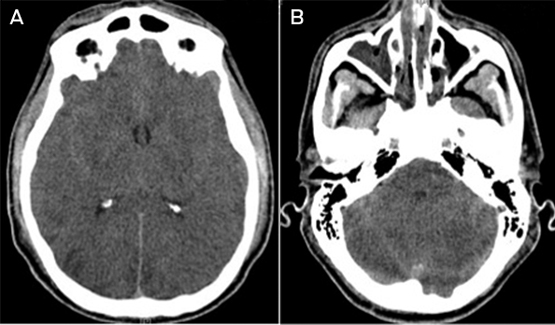
About 24 hours after the cardiac arrest, the patient developed signs of raised intracranial pressure with fixed dilated pupils and haemodynamic instability; he did not respond to noxious stimuli and he had lost brain stem reflexes. A non-contrast computed tomography scan of his brain showed diffuse cerebral oedema with tonsillar herniation and multiple areas of cerebral infarction (Box 2). About 43 hours after the cardiac arrest, the patient was declared brain dead by clinical criteria, and supportive care was withdrawn.

The only physical findings of note on postmortem examination were cerebellar tonsillar herniation and pulmonary oedema. There was no evidence of trauma. Coronial analysis of antemortem and postmortem blood samples (using liquid chromatography mass spectrophotometry) revealed the qualitative presence of α-pyrrolidinopentiophenone (α-PVP). No other common drugs of misuse were detected.

The formal conclusion of a subsequent coronial inquest was that the patient had died from cardiac arrest and cerebral oedema, which were the results of α-PVP toxicity. The possibility of physical restraint and positional asphyxia contributing to his death was raised but these factors were considered not to be the primary cause of death.

Discussion

To our knowledge, this is the first death due to α-PVP use reported in Australia. Assessing all the evidence, our patient died from the expected complications of exposure to α-PVP.

α-PVP is a synthetic cathinone designer drug that is misused for its stimulant and psychoactive effects. It is an analogue of pyrovalerones1 such as 3,4-methylenedioxypyrovalerone (MDPV). Synthetic cathinones such as α-PVP are widely sold on the internet; they are commonly referred to as “bath salts”, “legal highs” or “research chemicals”, and often labelled “not for human consumption” in an effort to evade regulatory control.2 Synthetic cathinones are also structural analogues of cathinone, the naturally occurring β-ketone amphetamine analogue found in the Catha edulis (Khat) plant.

As structural analogues of β-ketone amphetamines, cathinones are expected to have amphetamine-like effects. Many cathinones have been shown to be inhibitors of monoamine transporters, but selectivity of cathinones for serotonin, noradrenaline and dopamine transporters varies considerably in vitro.3 Pyrovalerone-cathinones (eg, MDPV) are potent and selective dopamine and noradrenaline uptake blockers, but are not effective releasers of monoamines. The potency of these drugs on the noradrenaline and dopamine transporters is associated with their stimulant and psychoactive effects.

Synthetic cathinones are most commonly nasally insufflated (snorted) or ingested, but rectal insertion, inhalation, and intravenous and intramuscular injection have also been described.2,4 Desirable effects of cathinones reported by users include increases in energy, empathy and libido.

The effects of synthetic cathinones (as a group) are said to begin to occur within 15–45 minutes of exposure and the desired effects last from 2 to 7 hours.4 However, the undesirable effects can last from hours to days. Clinical features of synthetic cathinone intoxication include cardiovascular, autonomic, neuromuscular and neuropsychiatric symptoms and signs (Box 3).2,4,5

No specific antidote exists for cathinone exposure, and there are limited published data on specific management strategies. Current practice is based on experience treating patients intoxicated with other sympathomimetic drugs, for which supportive care is the mainstay of treatment.4 Benzodiazepines are recommended for control of agitation and seizures, and for treatment of hypertension and tachycardia, and passive or active cooling is recommended for treatment for hyperthermia that is not resolved with anxiolysis and sedation.4,5 In Australia, poisons information centres can be contacted for further advice.

While there have been a few media reports of violence, aggression and deaths related to use of α-PVP, few cases have been reported in peer-reviewed journals. One article describes the deaths of five patients for whom α-PVP was detected in postmortem blood, but this does not necessarily mean that α-PVP intoxication was the cause of death or that α-PVP was the only drug present.6 Another article describes a case of parenteral MDPV overdose, confirmed by a quantitative assay of MDPV in the patient’s blood, in which the clinical course was very similar to that of our patient.7

Our patient probably died as a consequence of the complications of α-PVP exposure. The time of death and clinical course fit with the features of autonomic hyperarousal: psychomotor agitation, delirium, tachycardia and hyperthermia, and subsequent cardiac arrest, rhabdomyolysis, renal failure, hepatic injury, anoxic brain injury and death. These features have also been described as “excited delirium syndrome”.8 Excited delirium syndrome as a diagnostic entity is controversial and widely debated in the medical literature. The role of excessive stimulation of the sympathetic nervous system in subsequent cardiac death after drug exposure has also been widely debated. It has been postulated that overstimulation of the heart by catecholamines leads to increased contractility, blood pressure and heart rate, resulting in increased oxygen demand, followed by myocardial ischaemia, fatal cardiac arrhythmias and sudden death.

The single biggest factor influencing death from α-PVP intoxication as the outcome in this case was the route of exposure to the drug — that is, intravenous injection. From toxicokinetic first principles, this results in faster and higher blood concentrations of drugs compared with ingestion and nasal insufflation as routes of exposure.

Synthetic cathinones have been present in notable quantities in Australia since the mid 2000s. While the exact prevalence of use in Australia is difficult to determine, the availability and popularity of synthetic cathinones has increased over the past decade, as evidenced by surveys of regular drug users, wastewater analyses and drug seizures by the Australian Federal Police.9

Our patient tested negative for amphetamines when a urine drug screen was performed. Testing for α-PVP was only available through coronial investigation. This highlights that medical professionals in Australia need to be aware of the limitations of commonly available drug screens, which might not detect new psychoactive substances.

1 Results of a venous blood gas analysis for a 44-year-old man after he had a cardiac arrest due to α-pyrrolidinopentiophenone toxicity

Component

1 h after arrest

6 h after arrest

Reference interval


pH

6.62

7.21

7.35–7.43

Partial pressure of carbon dioxide (mmHg)

90

42

32–45

Bicarbonate (mmol/L)

8.8

16.1

22–32

Lactate (mmol/L)

29.0

4.9

< 2.0

Potassium (mmol/L)

6.2

3.3

3.6–5.1

Urea (mmol/L)

13.4

12.4

2.9–7.1

Creatinine (µmol/L)

201

169

60–110

Alanine transaminase (U/L)

1 976

1 913

< 45

Aspartate transaminase (U/L)

1 818

2 457

< 45

Creatine kinase (U/L)

2 763

24 660

< 200

Myoglobin (µg/L)

43 190

10–92


2 Non-contrast computed tomography scans of the brain of a 44-year-old man after he had a cardiac arrest due to α-pyrrolidinopentiophenone toxicity


Scans taken 24 hours after cardiac arrest showing diffuse cerebral oedema with tonsillar herniation and multiple areas of cerebral infarction (A, level of the basal ganglia; B, level of the mid posterior fossa).

3 Clinical features of synthetic cathinone intoxication

System

Effects


Cardiovascular

Tachycardia, vasoconstriction, systemic hypertension, arrhythmias, cardiovascular collapse, myocardial infarction,

Autonomic

Sympathetic hyperstimulation (autonomic hyperarousal), mydriasis, hypertension, hyperthermia

Neuromuscular

Seizures, stroke, tremors, muscle spasm, cerebral oedema

Neuropsychiatric

Agitation, hallucinations, panic attacks, paranoia, anxiety, insomnia, anorexia, depression, suicidal ideation, violence (self-mutilation, suicide and homicidal activity)

The transition from hospital to primary care for patients with acute coronary syndrome: insights from registry data

In Australia, acute coronary syndrome (ACS) accounts for about 75 000 hospital separations annually, and in 2010 cost more than $8 billion.1 Those who survive are at high risk of recurrent events; in 2010, more than 25 000 Australian hospital separations were associated with repeat ACS2,3 at a cost of more than $600 million (direct costs only).1 Between 2000–01 and 2008–09, the largest expenditure increase, by health care sector, was for hospital-admitted patient services, where cardiovascular disease expenditure increased by 55%, from $2907 million to $4518 million.4 A recent report projected that by 2020 there will be around 102 363 separations associated with ACS in Australia, and about half of these will be due to repeat events.1 These statistics highlight the growing importance of secondary prevention as more people survive initial events. Further, it underscores the need for a health system that has an inbuilt process for commencing prevention during acute admissions, and the need to ensure an effective transition from hospital to primary care.

Favourable modification of coronary risk factors is responsible for at least a 50% reduction in mortality from cardiovascular disease.5,6 Further, participation in secondary prevention programs leads to improved clinical, behavioural and health service outcomes, including fewer hospital readmissions, better adherence to pharmacotherapy, enhanced functional status, improved risk profile, less depression, and better quality of life.79 However, only a minority participate,10 systematic follow-up is fragmented,11 and questions remain about how well the health system facilitates transition from hospital to primary care. Overall, with ACS dominating expenditure and gaps in secondary prevention widely documented, addressing the delivery of care at the point of hospital discharge is a priority.

Modern cardiology has seen significant advancements in diagnosis, revascularisation, pharmacotherapy and overall more successful treatment of acute illness.12 This ultimately means that more people are surviving their initial ACS event and are having shorter hospital stays, which has resulted in more people returning to the community and resuming their everyday lives.13 However, one-quarter of survivors will be readmitted to hospital within 1 year of the index event, and a significant number of readmissions will end in death.2,3 Consequently, the demand for effective, continuing post-hospital preventive care is intensifying; the foundations of this are built during the acute episode.14

The purpose of this article is to provide insights from registries, and their implications for secondary prevention in Australia.

Gaps in secondary prevention: data from Australian ACS registries

Three large-scale Australian ACS registries — namely, SNAPSHOT ACS, the Cooperative National Registry of Acute Coronary care, Guideline Adherence and Clinical Events (CONCORDANCE) and the Acute Coronary Syndrome Prospective Audit (ACACIA) registry — have provided contemporary data about secondary prevention and resource gaps.

The SNAPSHOT ACS audit provides recent data pertaining to pre- and inhospital ACS care in Australia and New Zealand.12 The audit involved the collection of detailed information about 4398 consecutive patients admitted to 483 public and private hospitals across the two countries over 2 weeks in May 2012.12 The ACACIA registry enrolled 3402 ACS patients from 39 hospitals across Australia (25% rural, 75% metropolitan).3 CONCORDANCE is an ongoing (prospective) clinical initiative that provides continuous real-time reporting on the clinical characteristics, management and outcomes of hospitalised ACS patients to clinicians, hospital administrators, sponsors, interested stakeholders and government.15 CONCORDANCE currently includes about 5200 patients from more than 40 hospitals.

As a group, the Australian ACS registries provide detailed and contemporary information about inhospital care. All three registries show suboptimal rates of pharmacotherapy and cardiac rehabilitation referral. The proportion of patients prescribed at least four of the five indicated pharmacotherapies at discharge was 68% in CONCORDANCE16 and 65% in SNAPSHOT ACS.12 In terms of cardiac rehabilitation, 58% were referred in CONCORDANCE17 and 46% in SNAPSHOT ACS.12

A recent article resulting from SNAPSHOT ACS reported that only 27% (628/2299) of Australian and New Zealand patients admitted to hospital for ACS received a combination of guideline-recommended medications, referral to rehabilitation and basic lifestyle advice before hospital discharge.11 The authors suggested that a greater focus on inhospital delivery of preventive care is needed to provide the essential foundation for lifelong secondary prevention.11

However, it should also be noted that registries have limitations, such as the reliance on inhospital documentation, and they may not be able to determine individual contraindications.

The challenges in implementation of secondary prevention

There are well known limitations in the implementation of secondary prevention after ACS. Despite proven effectiveness and clear recommendations in best-practice guidelines,18 there is poor use of effective medications, cardiac rehabilitation and adherence to lifestyle recommendations.19 In the recent AusHEART survey of more than 5000 Australian general practice patients, 1548 had clinically expressed cardiovascular disease, and only half of these were following recommended treatments.20 Valid national data on participation in cardiac rehabilitation and exercise therapy are not available, but estimates from local and international reports indicate that less than 30% of eligible patients participate in such programs.10,21 Compliance with lifestyle change is no better. It was recently reported that among 18 809 patients from 41 countries who had experienced ACS, only 30% of patients adhered to diet and exercise recommendations, and about two-thirds of smokers had quit smoking 6 months after their event.22

Overall, it is difficult for a coherent strategy to emerge when the volume of evidence describing and reporting disparate models of delivery continues to expand.13 In reality, about 70% of Australian secondary prevention programs continue to follow the traditional cardiac rehabilitation model of structured and group-based exercise with education sessions.19 These programs are associated with well documented barriers, including the need for transport, poor health provider support, limited time frames and minimal individualisation. Thus, policymakers, health professionals and researchers are confronted by the need for increased services to improve access and equity, but often with significant challenges coupled with finite and declining resources.13

Opportunities for improved access to and uptake of secondary prevention

A recent blueprint for reform summarises the outcomes of a national summit that aimed to improve implementation of secondary prevention in Australia.23 The report identifies stakeholder consensus for an approach where each patient’s acute episode of care, particularly at discharge and follow-up, is patient-centred. The report also highlights the current challenges associated with the existence of a divide between hospital and general practice care. That divide is apparent in terms of a definition of prevention and rehabilitation, patient communication, service provision, funding and data collection. The summit report also summarises opportunities for improved implementation of secondary prevention.23 Although not exhaustive, the published opportunities present practical suggestions that cover a range of issues, including public health support, better coordination and use of existing strategies, workforce, quality assurance and technology, as follows:

  • Increased delivery of comprehensive secondary prevention in primary care
    • Provision of connected care through a case-management approach, improved communication, and greater provider education relating to secondary prevention, behaviour change techniques and self-management strategies.
    • This model of care should be coupled with specific incentive programs similar to those already available for diabetes and asthma management.
    • Possible development of a role for cardiac care coordinators, who would ideally be recognised by Medicare. These coordinators could collaborate with the person with ACS and other members of the care team to achieve mutually agreed clinical targets, good health and wellbeing.
  • Increased focus on and awareness of the need for lifelong secondary prevention
    • Potential for widespread media and public awareness campaigns to raise the profile and understanding of ACS as a chronic condition requiring lifelong management.
    • Requires linking with and engagement of state and federal governments, Medicare Locals, consumers and private health funds to facilitate sustainability.
  • Better integration and use of existing services
    • Better use of existing initiatives, such as cardiac rehabilitation, chronic disease management plans, private health insurance programs, and other initiatives including the Home Medicines Review, Heart Foundation programs (eg, Heartmoves) and Quitline.
    • Better use and awareness of these existing programs may require development of a comprehensive inventory, database or website, and could be the domain of a national preventive agency, ideally in collaboration with state governments, Medicare Locals and non-government organisations, but could otherwise be housed by an established non-government organisation such as the National Heart Foundation.
  • Data monitoring and quality assurance
    • Identification of performance measures to enable cross-national comparison is needed for post-hospital care. This should incorporate measures of service delivery as well as health outcomes, including hospital readmissions and coronary heart disease deaths.
    • This could occur via an online registry and/or electronic medical records and data linkage.
  • Embracing new technologies
    • New technological developments have seen a rapid rise in devices and trials aimed at managing cardiovascular disease risk factors, medication adherence and providing coordinated care.
    • Ongoing development and testing of technological advances may facilitate greater access to secondary prevention.
    • Examples of e-health approaches include the use of text messaging, telephone-delivered care, development of websites and smartphone apps and remote monitoring and remote delivery of programs.

The increasing role of primary care in ACS management

ACS requires lifelong management, and primary care is ideally positioned to provide this care to patients.23 There is a need to go beyond giving patients a discharge summary and advising them to make an appointment. In one study, about 20% of patients did not have a discharge summary forwarded to their general practitioner, and 68% of GPs rated the information in the summaries they received as “very good” to “excellent”.24

In Australia, there has been a substantial shift in the payment system for GPs towards incentives that encourage evidence-based care of patients with chronic diseases in line with a disease management framework that emphasises systematic, coordinated care and self-management. The Australian Government’s commitment to a National Primary Health Care Strategic Framework provides an opportunity to establish primary care systems and funding models to enable people who are at high risk of a cardiovascular event to be identified early for preventive care.25 The National Heart Foundation maintains that a well developed primary care framework for secondary prevention will increase referral and access rates to secondary prevention services, enhance continuity of care and improve coordination of services between hospitals and the community.26

Conclusion

Despite guideline advocacy, uptake of proven secondary prevention strategies for heart disease is suboptimal. Australian registries provide contemporary data that reinforce the evidence–practice gaps in secondary prevention. Trial and cohort data highlight the need to commence prevention early if we are to narrow the divide between hospital and the community, thereby achieving better individual, provider and system-level outcomes. Patients often leave hospital without systematic follow-up and with an unclear picture of how and if they will be managed and supported on the next phase of their chronic disease journey. Potential opportunities to bridge the divide include development of an incentive scheme in primary care, development of a cardiac care coordinator role to work in concert with treating doctors and patients, better use of existing services, effective data monitoring and embracing new technologies.

Optimising pharmacotherapy for secondary prevention of non-invasively managed acute coronary syndrome

Despite a trend towards greater use of coronary revascularisation, half of all patients who experienced an acute coronary syndrome (ACS) in Australia in 2012 had their conditions managed non-invasively — that is, they did not receive coronary angiography with subsequent coronary stenting or bypass surgery.1 The evidence base and international guidelines for the management of patients with ACS are extensive,24 but some research suggests that patients whose ACS is treated conservatively may not receive the same level of evidence-based care as those whose ACS is managed invasively.5

This article reviews the optimal pharmacological management of non-invasively managed ACS, and briefly reviews the evidence to support the prescription of each class of drug.

Antithrombotic therapy

As coronary thrombosis is the major cause of ACS, antithrombotic treatment regimens are now routine.

Aspirin

Aspirin in a dose of 75–325 mg daily is recommended in all guidelines for all patients after an ACS, regardless of whether revascularisation has occurred.24 Its low cost and high effectiveness make it an attractive agent to reduce the risk of recurrence of coronary thrombosis. In post-ACS patients, aspirin has been shown to reduce major vascular events by 25%, with an absolute risk reduction of 35 vascular events per 1000 patients treated over 2 years.6 Prescribing levels well in excess of 95% for post-ACS patients have been reached in Australia.1

A limitation with aspirin therapy, even in low doses, is an increase in the risk of gastrointestinal side effects. A recent meta-analysis calculated that the odds ratio for the risk of major gastrointestinal bleeding in aspirin versus non-aspirin users was 1.55 (95% CI, 1.27–1.90).7 Observational studies suggest that bleeding complications are fewer with lower doses of aspirin,8 but randomised allocation to low-dose (75–100 mg) versus standard-dose (101–325 mg) aspirin in combination with clopidogrel showed no differences in bleeding at 30 days.9 Enteric-coated versions of aspirin may have fewer adverse gastric effects than buffered aspirin, but it remains unclear whether it is the enteric coating or the lower dose that decreases the risk of gastric complications.10 Co-prescribing a proton pump inhibitor (PPI) reduces the risk of gastrointestinal bleeding, but the long-term cost-effectiveness of the combination with aspirin remains doubtful.11

P2Y12 inhibitors and dual antiplatelet therapy

Dual antiplatelet therapy (DAPT; aspirin and a P2Y12 inhibitor drug) is now recommended for conservatively managed post-ACS patients in all guidelines.24 The CURE study, conducted nearly 15 years ago, showed a clear role for DAPT in conservatively managed ACS; patients treated with DAPT (clopidogrel and aspirin) had fewer subsequent coronary events than patients treated with aspirin alone.12 At 12 months, the CURE trial’s end point of myocardial infarction or cardiovascular death was reduced by 20% (relative risk reduction, 0.80; 95% CI, 0.72–0.90; P < 0.001). This benefit came with a moderate increase in major bleeding (relative risk, 1.38; P = 0.001). All subsequent guidelines based on the CURE trial data recommend DAPT for conservatively managed ACS.

The ideal duration of DAPT after an ACS episode without percutaneous coronary intervention (PCI) remains unclear. While there are ongoing trials to examine the optimal duration of DAPT in patients treated with PCI,13,14 the relevance of these trial results to conservative management is not clear.

International guidelines recommend the combination of clopidogrel with aspirin for 12 months, as this was the treatment period examined in the CURE trial.24 Post-hoc review of the events curves in the CURE study showed that the major benefit of clopidogrel plus aspirin over aspirin alone was in the first 6 weeks after commencement of treatment, and there have been no comparative studies to evaluate shorter or longer periods of therapy. The benefits of longer-term DAPT over aspirin have not been confirmed.15

Concerns about resistance to clopidogrel in some patients have led to extensive research into clopidogrel resistance. “Clopidogrel resistance” is more correctly defined as high on-treatment platelet reactivity and, according to some estimates, up to 30% of patients are non-responders or poor responders to clopidogrel by this criterion.16,17 However, recent studies have shown that dosing based on platelet responsiveness to clopidogrel is unhelpful.18,19

Like aspirin, clopidogrel can increase the risk of gastrointestinal bleeding, and concomitant use of PPIs with clopidogrel has been closely examined, as several observational studies suggested that PPIs may interfere with the action of clopidogrel via competition for the cytochrome P450 pathway in the gut transport of the prodrug.20 However, a well conducted randomised trial of omeprazole showed no clinically significant interaction with clopidogrel,21 and the most recent meta-analyses have shown that an interaction between PPIs and clopidogrel is not significant for most patients. The earlier observations of adverse effects of the combination may have been due to PPI users being older patients, who are at increased risk of adverse cardiovascular events.22

Newer oral agents that inhibit the P2Y12 receptor (ticagrelor, prasugrel) have recently become available. Dosages for the three agents are summarised in Box 1.

Both ticagrelor and prasugrel are more effective in reducing subsequent coronary events, but carry a higher bleeding risk than clopidogrel. Most guidelines recommend that the newer agents are preferred for most ACS (both ST-elevation myocardial infarction and non-ST-elevation myocardial infarction) unless the risk of bleeding is excessive.24

Prasugrel was more effective than clopidogrel in the TRITON-TIMI 38 trial in reducing coronary events.23 However, this definitive trial of prasugrel only included patients for whom the coronary anatomy was known, and a coronary angiogram may not be available for patients whose ACS is managed conservatively. Prasugrel was ineffective for conservatively managed ACS.24 Because of bleeding risk, care is required in older patients (> 80 years), and those who weigh under 60 kg or have renal impairment.

Ticagrelor was also shown to be more effective than clopidogrel at preventing stroke, myocardial infarction or death, as demonstrated in the PLATO trial.25 It also has an increase in overall bleeding risk, but as the trial evidence supporting its use did not require prior coronary angiography, it has the advantage as the preferred agent for initial treatment, particularly in the patient whose ACS is likely to be managed conservatively.26

Warfarin and new oral anticoagulants

Post-ACS vitamin K antagonists were evaluated in the 1990s and were shown to achieve a reduction in re-infarction, and are even more effective in reducing the risk of stroke but with an increased risk of bleeding.27 Based on this experience, two of the new oral anticoagulants (NOACs) have been tested in patients who had experienced a coronary event. Rivaroxaban was shown to reduce recurrences, but at an increased risk of bleeding.28 Apixaban did not reduce recurrent ischaemic events and caused increased bleeding.29

Anticoagulants for atrial fibrillation after ACS

Atrial fibrillation (AF) requiring an oral anticoagulant is a common comorbidity in patients with recent ACS being treated with DAPT. Patients with non-invasively managed ACS, AF and a zero CHA2DS2-VASc (congestive heart failure, hypertension, age ≥ 75 years, diabetes mellitus, stroke, vascular disease, age 65 to 74 years, sex) score can be managed with aspirin or DAPT.30 However, patients with a moderate or high risk of stroke need to be considered for triple antithrombotic therapy (DAPT for their coronary disease and an anticoagulant for their AF), and this carries an increased risk of bleeding. Registry data have quantified this risk, showing that the combination of antiplatelet agents with warfarin increases the risk of bleeding by 1.50 for aspirin and by 1.84 for clopidogrel over warfarin alone.31

There are no trials to guide therapy for patients with non-invasively managed ACS and AF, but a randomised study of participants requiring anticoagulation and antiplatelet therapy after PCI demonstrated that double therapy with clopidogrel and warfarin was associated with significantly less bleeding than triple therapy with aspirin, clopidogrel and warfarin, without any increased risk of thrombotic events.32 To date, there are no data to guide the use of the NOACs with the newer P2Y12 inhibitors, which are becoming standard care for patients after ACS.

Lipid-modulating medications

Statins

Statin therapy is an essential part of the post-ACS regimen. Meta-analyses of trials in patients who have had a coronary event have shown that subsequent coronary events can be reduced by 25%–30%,33 with an absolute reduction of 48 major vascular events per 1000 treated for each 1 mmol/L reduction in low-density lipoprotein (LDL) cholesterol level.34 Commencement of the statin in hospital enhances adherence over subsequent months.35 Lower-potency statins are less effective,36 and a high-dose potent statin is more effective than a moderate-dose less potent statin,37 and equally safe.38 High-dose (80 mg) simvastatin was associated with a higher than acceptable incidence of myopathy in a trial of post-ACS patients and should be avoided.39 While rosuvastatin has been shown to be effective in high-risk non-ACS cohorts, there is no specific trial to support its use after ACS. The target LDL cholesterol level for post-ACS patients is below 1.8 mmol/L.40 It remains unclear whether a patient who achieves a reduction of LDL cholesterol to target levels with 80 mg of atorvastatin should be prescribed a lower-dose statin to reduce side effects.

Many patients experience side effects while taking statins, but analysis of randomised trials has shown that major side effects are equally seen in participants treated with placebo and statins, apart from a small increase in type 2 diabetes.41 While myopathy is uncommon, symptoms of myalgia are common and quite often lead to early cessation of statin therapy.

Non-statin lipid-modulating therapies

Ezetimibe has the potential to lower LDL cholesterol levels, either alone or in conjunction with statins,42 but to date, there are no data to demonstrate any clinical benefit. The outcome of the IMPROVE-IT trial will be awaited with interest to see if lowering LDL cholesterol levels by non-statin therapy is effective.43

PCSK9 inhibitors have been shown to be highly effective in lowering LDL cholesterol levels among patients with hyperlipidaemia resistant to statins, and they have an acceptable safety profile,44,45 but the relevance of this to reducing risk among patients after ACS remains to be established.

Triglyceride-lowering medications

There is no clear-cut benefit for lowering triglyceride levels in patients after ACS. Trials of gemfibrozil46 and bezafibrate47 have not been sufficiently persuasive to establish fibrate therapy in post-ACS patients, and a large trial with fenofibrate did not achieve its primary end point in patients with high-risk type 2 diabetes.48

High-density lipoprotein cholesterol-raising medications

Trials of high-density lipoprotein (HDL) cholesterol-raising drugs have been disappointing. While cholesteryl ester transfer protein inhibitors can raise HDL cholesterol levels, they have not been shown to improve outcomes. A large torcetrapib trial in patients with stable coronary heart disease demonstrated an increased mortality.49 A large dalcetrapib study in patients with ACS showed an effective raising of HDL cholesterol levels, but no effect on outcomes.50 A preliminary study of anacetrapib showed that it could lower LDL cholesterol levels as well as raise HDL cholesterol levels,51 but a large outcomes study with anacetrapib is yet to be reported.

Alternative approaches to raising HDL cholesterol levels have been explored, so far without success. Niacin in patients with low HDL cholesterol levels receiving intensive statin therapy raised HDL cholesterol levels, but showed no additional benefit over statin therapy.52 Niacin combined with the anti-flushing agent laropiprant caused an unacceptable increase in risk of myopathy in patients taking simvastatin.53 The challenge in HDL cholesterol management may be to target the functionality of the HDL cholesterol, rather than simply the level.54

Other therapies

Omega 3 fatty acids

Fish oil-derived omega 3 fatty acids have been shown to moderately reduce total and sudden post-ACS deaths, but it is not clear if this is by a triglyceride-lowering effect or other mechanisms.55

β-Adrenergic blockers

β-Blockers are recommended for long-term post-ACS management in most guidelines.24 This is sound advice for most patients in the early post-ACS period, but the recommendation for long-term use of β-blockers is based on evidence obtained from clinical trials conducted in the 1980s.56 At that time, the definition of ACS was based on criteria quite different from the modern definition, which is based on subtle changes in troponin.57 In the 1980s, the definition of a myocardial infarction for a patient to be included in a post-myocardial infarction trial required major electrocardiogram changes and a doubling of cardiac enzymes.58 When the post-infarction oral β-blocker trials were conducted,5961 many modern treatments, such as early intervention with PCI, the near-universal use of statin therapy and the widespread use of DAPT, had not been introduced to cardiology. The relevance of 30-year-old evidence derived from patients with extensive myocardial infarction to the treatment of patients in the modern era is doubtful.62

Recent evidence has shown no benefit of β-blockers on mortality in patients with hypertension63 or stable coronary heart disease,64 casting further doubt on the assumption that routine, long-term use of β-blockers in stable post-ACS patients is essential. In contrast, research among patients with left ventricular (LV) dysfunction or cardiac failure after myocardial infarction shows clear evidence of benefit for β-blockers.65,66

ACE inhibitors and angiotensin receptor blockers

Angiotensin-converting enzyme (ACE) inhibitors have a role in patients with cardiac failure and significant LV dysfunction.67 The use of ACE inhibitors in the absence of post-coronary LV dysfunction has been extensively studied, and meta-analysis of clinical trials in this group of patients shows a statistically significant but modest benefit, with 10 lives saved for 1000 patients treated over 4.4 years.68 A recent large observational registry study did not replicate the benefits of ACE inhibitors seen in clinical trials, and failed to demonstrate any improvement in survival among patients treated with ACE inhibitors.69 Angiotensin receptor blockade as an alternative to ACE inhibition has been trialled in post-ACS patients, but the evidence base for angiotensin receptor blockers (ARBs) is not as extensive as it is for post-infarction ACE inhibitors.70

Aldosterone blockade

Spironolactone and eplerenone have shown benefit in patients with cardiac failure and LV dysfunction.71,72 Eplerenone is approved for authority use on the Australian Pharmaceutical Benefits Scheme for patients with heart failure with an LV ejection fraction of 40% or less occurring within 3 to 14 days after an acute myocardial infarction. If spironolactone or eplerenone are prescribed for the post-ACS patient, meticulous monitoring of potassium levels is required, particularly for patients taking concomitant ACE inhibitors.73

Calcium-channel blockers

Calcium-channel blockers have not been shown to benefit prognosis for the post-infarction patient, and are not recommended as part of routine management. Verapamil and diltiazem are contraindicated in post-infarction patients with LV dysfunction.74,75 Amlodipine has been shown to be safe in the presence of LV dysfunction.76

Antiarrhythmic drugs

Antiarrhythmic drugs are not recommended, as they have not been shown to improve prognosis for patients who have had a myocardial infarction.77

Nitrate therapy

Nitrates are indicated for patients with symptomatic angina, but do not have a role for patients without angina after myocardial infarction.78

Diuretics and digoxin

Diuretics are useful for symptomatic relief of cardiac failure but have not been convincingly shown to improve prognosis for patients after ACS.79 The need for ongoing diuretic therapy should be reviewed at the time of hospital discharge, as unnecessary diuretic therapy can cause hypovolaemia and electrolyte disturbances.

Digoxin does not have a clear role except as an alternative to β-blockers for rate control of AF.80

Conclusions

Recommendations for optimal pharmacotherapy in the post-ACS patient are summarised in Box 2. Most patients will recover without symptoms or LV dysfunction. Patients in this category should be routinely prescribed DAPT and a high intensity statin. The DAPT should be continued for 12 months and the aspirin and statin indefinitely. All patients should be taking a β-blocker when they leave hospital, but the evidence for long-term continuation in the modern era is minimal, and further trials are needed to clarify the ideal duration of β-blocker therapy. While ACE inhibitors or ARBs are recommended in some guidelines, the evidence for their routine use in the patient free of cardiac failure or LV dysfunction is questionable.

Patients who have documented LV dysfunction after their ACS should have the same treatment as above, but in these patients the evidence for β-blockers and ACE inhibitors or ARBs is strong and they should be prescribed. The preferred β-blocker should be one of the agents shown to be effective in clinical trials of cardiac failure or LV dysfunction. There is good evidence that aldosterone antagonists are effective in patients with LV dysfunction.

Symptomatic patients with angina or dyspnoea or cardiac failure should be treated as above and have appropriate treatment for their angina or symptoms of cardiac failure.

1 P2Y12 inhibitor antiplatelet drugs and dosages

Drug

Loading dose

Maintenance dosage


Clopidogrel

300 mg or 600 mg

75 mg daily

Prasugrel

60 mg

10 mg daily

Ticagrelor

180 mg

90 mg twice daily

2 Recommended treatment for patients whose acute coronary syndrome has been conservatively managed

Clinical scenario

Drug


Asymptomatic patient without left ventricular (LV) dysfunction

Aspirin 100–150 mg per day indefinitely

P2Y12 inhibitor for 12 months

High-dose statin indefinitely

β-Blocker (long-term duration uncertain)

Consider angiotensin-converting enzyme (ACE) inhibitor or angiotensin receptor blocker

Asymptomatic patient with LV dysfunction

As above

Substitute a β-blocker shown to be effective in LV dysfunction (bisoprolol, carvedilol, nebivolol)

Add ACE inhibitor or angiotensin receptor blocker

Consider aldosterone antagonist (spironolactone or eplerenone)

Symptomatic patient

As above

For angina symptoms, prescribe standard anti-anginal therapy, consider referral for angiography or revascularisation

Prescribe a diuretic for dyspnoea

Lithium-induced thyrotoxicosis in a patient with treatment-resistant bipolar type I affective disorder

Clinical record

In June 2012, a 19-year-old woman presented to an emergency department with a 2-week history of headaches, lethargy, 2 kg weight loss and tremor. Her medical history included treatment-resistant bipolar type I affective disorder, subclinical hypothyroidism and polycystic ovarian syndrome. Her medications included lithium carbonate 1250 mg daily, quetiapine 1000 mg daily, chlorpromazine 200 mg daily, cyproterone acetate/ethinyloestradiol 2 mg/35 µg daily, cholecalciferol 1000 IU daily, and lorazepam 1 mg at night for insomnia as needed. She had not been given an iodine-containing contrast medium, and she reported that she had not been taking thyroxine and that she had not ingested excessive amounts of iodine or kelp. She had no history of ocular symptoms. Her paternal grandmother had had a thyroidectomy.

In April 2010 (several months after commencing lithium therapy), she had developed subclinical hypothyroidism. Results of serum tests showed an elevated thyroid-stimulating hormone (TSH) level of 5.94 mIU/L (reference interval [RI], 0.4–3.5 mIU/L) and a normal free thyroxine (FT4) level of 12.8 pmol/L (RI, 9.0–19.0 pmol/L). This had resolved spontaneously within months.

On presentation at the emergency department, the patient was afebrile and tachycardic with a heart rate of 120 beats/min. She had a small, diffuse, non-tender goitre without bruit. Lid lag and tremor were evident. Results of a general examination were otherwise unremarkable.

Results of initial serum tests showed hyperthyroidism — an elevated FT4 level of 63.6 pmol/L (RI, 12.0–22.0 pmol/L) and a suppressed TSH level of 0.01 mIU/L (RI, 0.4–4.0 mIU/L). Results of thyroid antibody tests were negative (and remained so on repeat testing until February 2013). Results of serial thyroid function tests and thyroid antibody tests are summarised in the Table. The patient’s renal function and results of a full blood examination were normal. A technetium thyroid scan showed no significant tracer uptake, a result that is consistent with thyroiditis.

The patient was prescribed propranolol therapy (10 mg three times a day). She continued taking lithium therapy and was discharged 2 days later. Within 2 days of discharge, her thyroid function had improved markedly and her serum lithium level was 0.75 mmol/L, which is within the therapeutic range (0.50–1.20 mmol/L). In August 2012, repeat thyroid function tests showed hypothyroidism, so she was prescribed thyroxine 50 µg daily. The treating psychiatrist later prescribed clozapine therapy. In December 2012, she was taking clozapine 150 mg in the morning and 200 mg at night, and weaning from lithium was initiated.

Long-term lithium therapy is frequently used to treat psychiatric conditions and has been associated with a variety of thyroid abnormalities. The effects of lithium on the thyroid gland are largely inhibitory. Lithium hinders the action of thyroid-stimulating hormone (TSH) and interferes with thyroid hormone synthesis through the inhibition of adenylate cyclase. Lithium decreases thyroid iodine release, reduces iodide organification and increases thyroid iodide content.1

Lithium prolongs the retention of radioiodine in the thyroid gland. In patients treated with lithium, elevated and diffuse uptake on a radioiodine scan can be misinterpreted as a sign of Graves disease. However, this was not the case in our patient, who had a technetium scan. Other explanations for low tracer uptake on the technetium scan include recent iodine ingestion or surreptitious or inadvertent thyroxine ingestion. Our patient had not been ingesting iodine and her thyroglobulin levels were high, not low, which excluded the possibility of thyroxine ingestion. The decline in free thyroxine was more rapid than expected, given the usual half-life of thyroxine. This may be partly due to the shortened half-life of free thyroxine in the context of hyperthyroidism, but laboratory error is also possible.

In patients treated with lithium, goitre is the most common thyroid abnormality.2 Reported prevalence ranges from 4%3 to 51%.4 Goitre is thought to be due to the inhibitory effects of lithium causing increased TSH concentrations. Hypothyroidism and subclinical hypothyroidism are also common. In a study of 274 patients who were taking long-term lithium therapy, the prevalence of hypothyroidism was 10.3%.5 In the same study, only one case of thyrotoxicosis was observed. In another study, no cases of thyrotoxicosis were observed over 768 patient-years,6 suggesting that lithium-induced hyperthyroidism is extremely rare.

Results from a retrospective review of medical records suggest that a significant proportion of patients with lithium-associated thyrotoxicosis have — as seen in our patient — transient, painless thyroiditis.7 Of 19 patients with lithium-associated thyrotoxicosis, 13 were diagnosed with silent thyroiditis, five with Graves disease and one with toxic nodular goitre. In patients receiving lithium, there was an increased relative prevalence of silent thyroiditis versus Graves disease and a greater than expected incidence of silent thyroiditis. A possible explanation for our patient’s presentation may have been a coincidental episode of painless silent thyroiditis unrelated to lithium therapy.

Most cases of lithium-associated thyroiditis occur while patients are taking lithium7,8 and while the serum lithium level is in the therapeutic range.7 In a review of 11 cases of lithium-associated silent thyroiditis, the duration of therapy before the development of thyrotoxicosis ranged from 6 days to 15 years.8 However, in some cases, thyrotoxicosis occurred 4 days to 5 months after withdrawal of lithium therapy.7,8 A review of cases of lithium-induced thyroiditis from 1978 to 1995 showed that most patients subsequently developed hypothyroidism, as seen in our patient; in the remainder, thyroiditis remitted spontaneously.7 This was independent of the decision to continue or withdraw lithium therapy. Thus, the decision to discontinue lithium therapy in the context of thyroid dysfunction should be made with attention to the severity of the underlying psychiatric disorder.

The mechanism of lithium-induced thyrotoxicosis is not well understood. Some authors have suggested that lithium, by expanding the intrathyroidal iodide pool, may precipitate thyrotoxicosis in patients with a genetic predisposition to Graves disease or thyroid nodules.9 Autoimmunity may play a significant role in lithium-induced thyroiditis. In a case–control study of patients with primary affective disorders, eight of 40 who were receiving lithium tested positive for thyroid antibodies, compared with three of 40 who were receiving drugs other than lithium. Patients receiving lithium had significantly reduced numbers of suppressor and/or cytotoxic T cells, and increased B cell activity was seen in patients receiving lithium and those receiving drugs other than lithium.10 Painless thyroiditis may also be the result of a direct toxic effect of lithium on the thyroid, as occurs in amiodarone-induced toxic thyroiditis.7 This seems the likely mechanism in our patient, in whom results of tests for thyroid antibodies remained negative.

Lithium-induced thyroiditis can usually be managed conservatively, with regular monitoring of thyroid function. The role of steroids is unclear and the potential for exacerbation of psychiatric disease must be considered. While cholestyramine sometimes has a role in treating thyroiditis, its role in lithium-induced thyroiditis is unclear. Patients with lithium-induced Graves disease should be treated with carbimazole, and radioiodine therapy and thyroidectomy should be considered. In patients with toxic nodular goitre, thyroidectomy may be indicated.2

Lessons from practice

  • Lithium has profound effects on thyroid physiology — goitre, hypothyroidism and subclinical hypothyroidism are common.
  • Although the mechanisms are unclear, there is increasing recognition that lithium is associated with thyrotoxicosis and induction of autoimmunity.
  • In cases of lithium-induced thyroiditis, conservative management with regular follow-up is indicated because most patients subsequently develop hypothyroidism.
  • Thyroid function tests and tests for thyroid antibodies should be performed before lithium therapy is started and performed regularly during lithium therapy.

Table


Serum level (RI)


Date

TSH (mIU/L)

FT4 (pmol/L)

FT3 (pmol/L)

Tg (µg/L)

TPO Ab (kIU/L)

Tg Ab (kIU/L)

TSH R Ab (IU/L)

Lithium (mmol/L)


15 Oct 2008

1.43 (0.4–3.7)

14.2 (7.3–22.1)

4.6 (2.5–7.3)

< 35 (< 35)

< 40 (< 40)

30 Apr 2010

5.94 (0.4–3.5)

12.8 (9.0–19.0)

< 35 (< 35)

< 40 (< 40)

06 Aug 2010

2.75 (0.4–3.5)

14.3 (9.0–19.0)

3.5 (2.6–6.0)

< 35 (< 35)

< 40 (< 40)

1.26 (0.5–1.2)

22 Mar 2012

3.24 (0.4–3.5)

10.9 (9.0–19.0)

0.64 (0.5–1.2)

13 Jun 2012

0.72 (0.5–1.2)

14 Jun 2012*

0.01 (0.4–4.0)

63.6 (12.0–22.0)

1180 (< 55)

< 35 (< 35)

< 40 (< 40)

< 1.0 (< 2.0)

18 Jun 2012

0.01 (0.4–3.5)

27.8 (9.0–19.0)

13.0 (2.6–6.0)

1570 (< 30)

< 35 (< 35)

< 40 (< 40)

< 1.0 (< 1.0)

0.75 (0.5–1.2)

21 Aug 2012

6.05 (0.3–4.2)

7.0 (12.0–25.0)

01 Dec 2012

3.64 (0.4–4.0)

14.2 (12.0–22.0)

15 Feb 2013

< 10 (< 35)

< 20 (< 40)


* Day of presentation at emergency department. FT3 = free triiodothyronine. FT4 = free thyroxine. Tg = thyroglobulin. Tg Ab = thyroglobulin antibodies. TPO Ab = thyroid peroxidase antibodies. RI = reference interval. TSH = thyroid-stimulating hormone. TSH R Ab = thyroid-stimulating hormone receptor antibodies.