

×

Australian recommendations for the management of hepatitis C virus infection: a consensus statement

Chronic hepatitis C virus (HCV) infection is a major public health challenge for Australia, affecting about 230 000 people who are consequently at risk of progressive liver fibrosis leading to cirrhosis, liver failure and hepatocellular carcinoma (HCC). HCV infection is the most common cause of liver disease requiring liver transplantation in Australia. The burden of liver disease due to HCV is projected to triple by 2030. However, HCV infection is curable, and viral eradication is associated with multiple clinical benefits, including improvement in quality of life, loss of infectivity, regression of cirrhosis, lower risk of liver failure and HCC, and reduction in mortality. Until recently, the treatment of HCV involved interferon therapy, which had limited efficacy and was poorly tolerated. The introduction of direct-acting antiviral (DAA) therapies for HCV that are highly effective and well tolerated is a major medical advance. All Australians living with HCV should now be considered for antiviral therapy. Several of these new HCV medicines were listed on the Pharmaceutical Benefits Scheme (PBS) on 1 March 2016. DAAs may be prescribed by specialists experienced in treating HCV or by general practitioners in consultation with one of these specialists, meaning that treatment can occur in the community.

Here, we present a summary of the Australian recommendations for the management of hepatitis C virus infection: a consensus statement 2016. The consensus statement was prepared by an expert panel representing the Gastroenterological Society of Australia (Australian Liver Association), the Australasian Society for Infectious Diseases, the Australasian Society for HIV, Viral Hepatitis and Sexual Health Medicine, the Australasian Hepatology Association, Hepatitis Australia and the Royal Australian College of General Practitioners. The consensus statement is a living document that will be updated as new data emerge and is available at http://www.gesa.org.au.

Models of care for HCV

Despite one of the highest HCV diagnosis rates in the world, treatment uptake in Australia has been low (2000–4000 people/year). Upscaling treatment rates to the desired level to reduce population burdens of HCV and secondary liver disease (> 10 000 people/year)1 will require the development of new models of care for HCV treatment. These should include traditional tertiary centre-led models of care, particularly for people with cirrhosis or special populations (eg, those with decompensated liver disease or renal impairment; see below), as well as community-based models of care involving GPs, specialist nurses and nurse practitioners. Specific models of care are needed for people who inject drugs, opioid substitution treatment centres, the prison system, rural and regional settings, Aboriginal and Torres Strait Islander people and migrants from high-prevalence regions (see full consensus statement).

The PBS listing allows the new HCV medicines to be prescribed by gastroenterologists, hepatologists or infectious diseases physicians who are experienced in treating chronic HCV infection, as well as by GPs in consultation with one of these specialists. The new HCV medicines will be available through the PBS General Schedule (Section 85), meaning approved pharmacists in the community can dispense the new HCV medications, as well as through the Section 100 Highly Specialised Drugs Program, which makes provision for treatment of prisoners.

Screening and diagnosis

Transmission of HCV infection is associated with identifiable risk factors (Box 1), and most diagnoses result from screening of at-risk populations. All individuals with a risk factor for HCV infection should be tested. The appropriate screening test for HCV is serology (HCV antibodies), which indicates exposure to HCV, either current or past infection. Current HCV infection should be confirmed by a polymerase chain reaction (PCR) assay for HCV RNA. Annual HCV serological testing is recommended for seronegative individuals with ongoing risk factors for HCV transmission. For individuals who are seropositive but have undetectable HCV RNA (indicating past infection), annual HCV RNA testing is recommended only in the setting of ongoing risk factors for HCV transmission. Harm reduction strategies (eg, needle and syringe programs, opioid substitution treatment) are important.

People with confirmed HCV infection should be tested for HCV genotype (Gt). The most common HCV genotypes in Australia are Gt 1 (50–55% of cases; Gt 1a : 1b = 2 : 1) and Gt 3 (35–40%).2 HCV Gt 4–6 occur but are less common. As approved HCV treatment regimens are genotype-specific, HCV genotyping is necessary before treatment initiation.

Pre-treatment assessment

All people living with chronic HCV infection should be considered for antiviral treatment. Active psychosocial and substance use problems, including high-risk alcohol consumption, should be managed before starting therapy. People with stable psychiatric disease or stable injecting drug use are candidates for DAA treatment. People with no cirrhosis may continue to drink alcohol at low-risk levels during treatment (no more than two standard drinks on any day3). Complete abstinence from alcohol is recommended for people with cirrhosis or alcohol dependence.

It is important that all individuals undergo a comprehensive pre-treatment assessment (Box 2). Key elements include confirming the HCV diagnosis and genotype; documenting HCV treatment history; identifying comorbid liver disease or other bloodborne viral infections (hepatitis B virus [HBV], human immunodeficiency virus [HIV]); evaluating for the presence of cirrhosis; and considering concomitant medications, including over-the-counter and illicit drugs, for risk of drug–drug interactions.

All Australians with chronic HCV infection are eligible for DAA therapy, regardless of liver fibrosis stage. However, the presence of cirrhosis influences HCV treatment duration and regimen (see below) and requires long-term management. Documentation of the presence or absence of cirrhosis is required for PBS eligibility for DAA therapy. Formal evaluation for cirrhosis with a non-invasive test, such as elastography (eg, FibroScan [EchoSens], acoustic radiation force impulse technology, shear wave elastography) or a serum biomarker (eg, APRI [aspartate aminotransferase to platelet ratio index], Hepascore, Enhanced Liver Fibrosis [ELF] test, FibroGENE), is recommended for all individuals. FibroScan is available in most metropolitan centres. A liver stiffness of > 12.5 kPA measured using FibroScan can be used to define cirrhosis.46 More details regarding non-invasive tests for liver fibrosis assessment are provided in the full consensus statement, including alternatives to FibroScan in regions where this is not accessible. Liver biopsy may still be required in a small proportion of patients. People with cirrhosis should be further evaluated for HCC and portal hypertension (Box 2); bone densitometry is recommended to screen for osteoporosis.

People with cirrhosis should be referred for specialist assessment due to the complexity of management. All individuals with decompensated liver disease should be considered for liver transplant assessment. Indications for assessment by a liver transplant centre include a Child–Pugh score ≥ B7, Model for End-Stage Liver Disease (MELD) score ≥ 13 or one of the following clinical events: refractory ascites, spontaneous bacterial peritonitis, hepatorenal syndrome, recurrent or chronic hepatic encephalopathy, small HCC or severe malnutrition (see full consensus statement).7

Treatment for chronic HCV infection

The goal of treatment is cure, defined as undetectable plasma HCV RNA at least 12 weeks after treatment has ceased (sustained virological response [SVR]). Several genotype-specific interferon-free DAA treatment regimens have been PBS-listed for treating people with HCV Gt 1–3. Peginterferon-alfa (pegIFN) + ribavirin remains the backbone of PBS-listed treatments for HCV Gt 4–6. Treatment regimens described here are based on the most up-to-date international data, consistent with the wording of the PBS listing.

Genotype 1 HCV

The two interferon-free DAA regimens that are available for PBS prescription for treating Gt 1 HCV are the combinations of sofosbuvir + ledipasvir and sofosbuvir + daclatasvir ± ribavirin. The interferon-free DAA regimen of paritaprevir–ritonavir + ombitasvir + dasabuvir ± ribavirin has also been Therapeutic Goods Administration-approved and is expected to be PBS-listed in the near future, so has been included in the consensus statement. These regimens are all effective and can be considered first-line. In addition to the treatment considerations outlined below, the decision of which regimen to use will generally be based on the number of pills and avoiding ribavirin where possible. Treatment of Gt 1 HCV with pegIFN-containing regimens is now actively discouraged.

Sofosbuvir + ledipasvir for genotype 1 HCV

Sofosbuvir &plus; ledipasvir is a coformulated, once-daily, single-pill regimen. The recommended treatment duration is 12 weeks, except for people with cirrhosis who have not responded to pegIFN-based therapy, who should receive treatment for 24 weeks (Appendix 1).4,5 Rates of SVR ≥ 95% are achieved in all patient groups.4,5 A shortened 8-week treatment duration may be considered in treatment-naive people with no cirrhosis who have baseline HCV RNA levels < 6 × 10⁶ IU/mL (see full consensus statement).8 Adverse effects of fatigue, headache and nausea occur but are uncommon and typically mild.4,5,8 Sofosbuvir is renally excreted. As safety data are lacking in people with an estimated glomerular filtration rate (eGFR) < 30 mL/min/1.73m2, this regimen is not recommended in this setting.

Sofosbuvir &plus; daclatasvir ± ribavirin for genotype 1 HCV

Sofosbuvir &plus; daclatasvir ± ribavirin therapy is also approved as first-line treatment for Gt 1 HCV.9,10 SVR rates are ≥ 95%. Sofosbuvir &plus; daclatasvir (no ribavirin) for 12 weeks’ duration is recommended for people with no cirrhosis who are treatment-naive or in whom treatment with pegIFN and ribavirin has previously failed (Appendix 1). People with cirrhosis are harder to cure and should be treated with either sofosbuvir &plus; daclatasvir &plus; ribavirin for 12 weeks or sofosbuvir &plus; daclatasvir (no ribavirin) for 24 weeks. Sofosbuvir &plus; daclatasvir (no ribavirin) for 24 weeks is recommended for people with or without cirrhosis who have not responded to prior treatment with a protease inhibitor &plus; pegIFN &plus; ribavirin (Appendix 1). Sofosbuvir &plus; daclatasvir is well tolerated, with low (≤ 1%) discontinuation rates due to adverse events. The most common treatment-related adverse effects are fatigue, headache and nausea; again, these are typically infrequent and mild.

Paritaprevir–ritonavir, ombitasvir &plus; dasabuvir ± ribavirin for genotype 1 HCV

The combination of paritaprevir (ritonavir-boosted), ombitasvir and dasabuvir (PrOD) is used with ribavirin for HCV Gt 1a, or without ribavirin for Gt 1b (Appendix 1).1115 Treatment is for 12 weeks, except for Gt 1a patients with cirrhosis and prior null response to pegIFN &plus; ribavirin, who should receive treatment for 24 weeks. SVR rates ≥ 95% are observed in all groups. PrOD therapy is not recommended for prior non-responders to protease inhibitor therapy. The regimen should be used with caution in people with compensated cirrhosis and is contraindicated in patients with decompensated cirrhosis or history of liver decompensation. In people with renal impairment, dose adjustment is not required for PrOD but is required for ribavirin.

PrOD is well tolerated, with low (≤ 1%) discontinuation rates.11 The most commonly reported adverse effects are nausea, pruritus and insomnia; these are uncommon and mild in most people. Rises in serum alanine aminotransferase (ALT) levels have been rarely observed, particularly among women taking ethinyl estradiol-containing contraceptives, which should be stopped before treatment. Alternative contraceptive agents (eg, progestin-only contraception) or methods are recommended. Transient isolated hyperbilirubinaemia may be seen early (Weeks 1–2) but typically resolves with ongoing therapy. Elevation of ALT level above baseline or elevation of the bilirubin level to greater than twice the upper limit of normal during treatment should prompt close monitoring of liver function test results, and specialist opinion (see full consensus statement).

Ribavirin-related adverse events

Adverse events associated with ribavirin therapy include anaemia, rash, cough, dyspnoea, insomnia and anxiety. The mean reduction in haemoglobin level associated with PrOD &plus; ribavirin is 24 g/L. Ribavirin is teratogenic, and both women and men should be counselled that two forms of contraception (but not ethinyl estradiol preparations in combination with PrOD) are required while taking ribavirin and for 6 months after treatment. Ribavirin is renally excreted and dose adjustment is required according to eGFR or if anaemia develops during treatment (see full consensus statement).

Genotype 2 HCV

The approved interferon-free treatment regimen for HCV Gt 2 is sofosbuvir &plus; ribavirin for 12 weeks (Appendix 2). This regimen is highly effective in people with no cirrhosis, with cure rates of 90–95%.1619 Extending treatment duration to 24 weeks in people with cirrhosis may increase SVR rates but is not currently listed under the PBS.16 Treatment is well tolerated, with the adverse event profile typical for ribavirin.

Genotype 3 HCV

The approved treatment regimens available under the PBS for Gt 3 HCV are sofosbuvir &plus; daclatasvir for 12 or 24 weeks, sofosbuvir &plus; ribavirin for 24 weeks, and the combination of sofosbuvir &plus; pegIFN &plus; ribavirin for 12 weeks (Appendix 2).18,20,21

Sofosbuvir &plus; daclatasvir for genotype 3 HCV

Sofosbuvir &plus; daclatasvir for 12 weeks is very effective for treating Gt 3 HCV in people with no cirrhosis, with SVR rates of 94–97%.21 In people with cirrhosis, treatment should be extended to 24 weeks, which increases SVR rates from 58–69% to 85–90% (Appendix 2).22,23

Sofosbuvir &plus; ribavirin for genotype 3 HCV

Treatment with sofosbuvir &plus; ribavirin for 24 weeks is associated with SVR rates of 90–95% in treatment-naive people with no cirrhosis, and 58–76% in treatment-experienced people with cirrhosis.16,18,19 Thus, this is an effective regimen for treatment-naive people with no cirrhosis but is not the preferred regimen for people with cirrhosis, particularly those who are treatment-experienced (Appendix 2).

Sofosbuvir &plus; peginterferon-alfa &plus; ribavirin for genotype 3 HCV

Triple therapy with sofosbuvir &plus; pegIFN &plus; ribavirin for 12 weeks is very effective for the treatment of Gt 3 HCV. This regimen is more effective than 16 or 24 weeks of sofosbuvir &plus; ribavirin, including among treatment-experienced people with cirrhosis,19 but is associated with pegIFN-related toxicity. This regimen may be useful as salvage therapy for people in whom first-line DAAs fail (Appendix 2).

Genotypes 4, 5 and 6 HCV

The first-line treatment regimen for Gt 4, 5 and 6 HCV that is currently listed on the PBS is the combination of sofosbuvir &plus; pegIFN &plus; ribavirin for 12 weeks (Appendix 3). In a Phase III study involving a small number of treatment-naive individuals with Gt 4–6 HCV, this regimen was associated with SVR rates of 96–100%.17 There are no interferon-free treatment regimens for Gt 4–6 HCV currently available on the PBS. The combination of sofosbuvir &plus; ledipasvir is effective for Gt 4 and 6 HCV.2427 Paritaprevir–ritonavir &plus; ombitasvir &plus; ribavirin is also effective for Gt 4 HCV.28 It is likely that these regimens will be approved in Australia in the future.

Interferon-based therapy is associated with considerable morbidity, and intensive on-treatment monitoring is required (see full consensus statement). The most common adverse effects of pegIFN include influenza-like symptoms, fatigue, bone marrow suppression, mood disturbance and alopecia. PegIFN is contraindicated in people with untreated major depression or psychosis, immune-mediated disease (eg, inflammatory arthritis, lupus, ulcerative colitis) or decompensated liver disease. PegIFN-based treatment may precipitate hepatic decompensation in people with advanced liver disease; a platelet count < 100 × 109/L and albumin level < 35 g/dL identify those at highest risk.29 Despite the significant adverse event profile, the discontinuation rate among patients treated with 12 weeks of sofosbuvir &plus; pegIFN &plus; ribavirin was only 2% in clinical trials,17 similar to that reported for interferon-free regimens.

Drug–drug interactions

Drug–drug interactions are a potential problem for all interferon-free treatment regimens. Important drugs to consider for potential interactions with DAAs include proton pump inhibitors, statins, St John’s wort, antimicrobials, anti-epileptic agents, amiodarone, immunosuppressive agents and antiretroviral agents. All concomitant medications should be reviewed before starting treatment, using the University of Liverpool’s Hepatitis Drug Interactions website (http://www.hep-druginteractions.org). We recommend working with an experienced pharmacist to confirm the safety of concomitant medications before starting DAA regimens. Patients should be advised to seek advice before starting any new medication during DAA therapy.

Pregnancy, breastfeeding and children

As there are no safety data for the use of any DAA regimen during pregnancy, treatment of pregnant women is not recommended. Ribavirin (classed as Category X) and pegIFN are contraindicated during pregnancy. Both women and men should be counselled about the risk of teratogenicity and the importance of avoiding pregnancy during and for 6 months after ribavirin treatment. As noted above, women treated with PrOD should avoid ethinyl estradiol-containing contraceptives. The safety of the listed DAA regimens during lactation has not yet been established, so treatment of women who are breastfeeding is not recommended. Children under the age of 18 years are not currently eligible for treatment with the new PBS-listed HCV medicines. Studies in paediatric populations are ongoing. People under the age of 18 years should be referred to a paediatric gastroenterologist who is experienced in treating HCV for discussion about therapy.

Direct-acting antivirals and drug resistance

Resistance-associated variants (RAVs) have been identified for all of the approved DAAs. However, given the high SVR rates observed with combination therapy, there is currently no role for baseline HCV resistance testing in treatment-naive people or prior non-responders to pegIFN-based therapy. Resistance testing for NS3, NS5B and NS5A RAVs should be considered following DAA treatment failure, to guide salvage therapy. Resistance testing involves direct sequencing of the HCV genome and is available through specialised laboratories. HCV sequencing may also identify cases of reinfection.

Salvage therapy

For people with Gt 1 HCV who did not respond to treatment with a protease inhibitor &plus; pegIFN &plus; ribavirin, the preferred regimen is the combination of sofosbuvir &plus; ledipasvir or sofosbuvir &plus; daclatasvir (Appendix 1). Response rates are similar to those observed in treatment-naive individuals.

People who are not cured by a first-line interferon-free treatment regimen should be referred to a specialist centre where there is greater access to evolving salvage treatment strategies and HCV resistance testing to help guide management.

On-treatment monitoring

In contrast to interferon-based treatment regimens, intense monitoring of most people undergoing DAA therapy is not necessary. For most people, one assessment at Week 4 of treatment will be sufficient during an 8-week or 12-week course (Appendix 4). More intensive monitoring is warranted for people in whom adherence is a concern, those with risk factors for ribavirin intolerance (eg, cardiac disease) or who develop ribavirin-induced anaemia, or people with advanced liver disease (portal hypertension or hepatic decompensation). Routine on-treatment assessment of HCV RNA levels is not required but may be considered if there are concerns regarding adherence to therapy.

Post-treatment follow-up

Confirm SVR

SVR is defined as undetectable plasma HCV RNA using a highly sensitive PCR assay 12 weeks after completion of DAA therapy (Appendix 4). Those who are not cured should be assessed for explanations for treatment failure, especially lack of adherence or reinfection. Referral to a specialist treatment centre is advisable for non-responders.

Long-term management of liver disease

People who do not have cirrhosis and who have normal liver function test results (males, ALT < 30 U/L; females, ALT < 19 U/L) after SVR do not need follow-up (Appendix 4). There is no reason to repeat anti-HCV serological tests. People who are cured should be told that persistence of anti-HCV antibodies is expected and does not represent active infection, nor does it confer immunity to reinfection. Individuals whose liver function test results remain abnormal after SVR should be assessed by a specialist for alternative causes of liver disease (Appendix 4). All individuals with cirrhosis need surveillance for HCC and oesophageal varices. Complications of chronic liver disease, including malnutrition and osteoporosis, should also be addressed.

Special populations

There are several patient groups in whom the treatment of HCV infection is complex. These special populations include people with decompensated liver disease, extrahepatic manifestations of HCV, HCV–HIV or HCV–HBV coinfection, renal impairment or acute HCV infection, as well as people who have had a liver transplant. All these people should be referred for management by a specialist who is experienced in the relevant areas (see full consensus statement). The optimal treatment regimen for patients with decompensated liver disease secondary to HCV, as well as whether face-to-face assessment by a transplant centre is warranted, should be discussed with a liver transplant physician before commencing antiviral therapy. Recommended treatment regimens for people with decompensated liver disease differ from those for people with compensated liver disease (see full consensus statement).

Box 1 –
High-risk populations for hepatitis C virus (HCV) infection

  • People who inject drugs or who have ever injected drugs
  • Sex workers
  • People in custodial settings
  • People with tattoos or body piercing
  • People who received a blood transfusion or organ transplant before 1990
  • Children born to HCV-infected mothers
  • Sexual partners of an HCV-infected person
  • People infected with human immunodeficiency virus or hepatitis B virus
  • People with evidence of liver disease (persistently elevated alanine aminotransferase level)
  • People who have had a needlestick injury
  • Migrants from high-prevalence regions (Egypt, Pakistan, Mediterranean and Eastern Europe, Africa and Asia)

Box 2 –
Pre-treatment assessment of people with chronic hepatitis C virus (HCV) infection


History

  • Estimated duration of HCV infection
  • Previous HCV treatment experience — date, regimen and response
  • Cofactors for liver disease progression: alcohol intake, marijuana use, virological cofactors (HIV, HBV), diabetes, obesity
  • For those planned to receive ribavirin, note history of ischaemic heart disease or cardiovascular risk factors
  • Vaccinations against HBV and HAV
  • Physical and psychiatric comorbidities
  • Ongoing risk factors for viral transmission and reinfection
  • Social issues — potential barriers to medication adherence

Medication

  • Concomitant medications (prescription, over-the-counter, illicit)

Physical examination

  • Features of cirrhosis: hard liver edge, spider naevi, leukonychia
  • Features of decompensation or portal hypertension: jaundice, ascites, oedema, bruising, muscle wasting, encephalopathy
  • Body weight and body mass index

Virology

  • HCV genotype and subtype
  • HCV RNA level (quantitative)
  • HBV (HBsAg, anti-HBc, anti-HBs), HIV, HAV serology

Investigations

  • Full blood examination, liver function tests, urea and electrolytes, eGFR, INR
  • Pregnancy test for women of childbearing potential
  • Liver fibrosis assessment, eg:
    • Elastography (FibroScan, ARFI, SWE)
    • Serum biomarker (APRI, Hepascore, ELF test, FibroGENE*)
  • Liver ultrasound should be performed in people with cirrhosis to exclude hepatocellular carcinoma
  • Electrocardiogram should be performed if ribavirin therapy is planned and patient is > 50 years of age or has cardiac risk factors

anti-HBc = hepatitis B core antibody. anti-HBs = hepatitis B surface antibody. APRI = aspartate aminotransferase to platelet ratio index. ARFI = acoustic radiation force impulse. eGFR = estimated glomerular filtration rate. ELF = enhanced liver fibrosis. HAV = hepatitis A virus. HBsAg = hepatitis B surface antigen. HBV = hepatitis B virus. HIV = human immunodeficiency virus. INR = international normalised ratio. SWE = shear wave elastography. * Online calculator available at: http://www.fibrogene.com/viral_hepatitis.html.

HLA-B*5801: a genetic susceptibility to allopurinol-induced DRESS

Clinical record

A 40-year-old Chinese man presented to our hospital complaining of a non-itchy rash 5 weeks after he had commenced taking allopurinol 100 mg daily, prescribed by his general practitioner for gout. The rash, involving his back and limbs, began to appear 2–3 weeks after starting allopurinol, with associated fevers, arthralgia and back pain. The patient denied having any rash or pain in his mouth. He had no history of recent overseas travel, unprotected sexual intercourse or intravenous drug use. He denied experiencing any vomiting, diarrhoea or abdominal pain. The patient’s background medical history included hypothyroidism. His baseline renal function was normal. His current medications were: allopurinol, 100 mg daily; thyroxine, 100 μg daily; and paracetamol, 1 g four times daily (as required) for back pain. He had no known allergies.

On examination, the patient was febrile, with a temperature of 40°C, but was haemodynamically stable. His skin showed a morbilliform, blanching rash involving the arms, axillae and trunk, anteriorly and posteriorly. Mucous membranes were intact. Important negative findings included the absence of lymphadenopathy, jaundice, hepatomegaly, murmurs, meningism and joint tenderness. Chest and abdominal examinations were unremarkable.

The initial differential diagnoses were viral illness or a delayed drug reaction to allopurinol. Allopurinol was promptly ceased and the patient was admitted under a general medicine team for further work-up and supportive treatment. His initial treatment involved empirical antibiotics and intravenous fluids. Two days into his admission, his clinical condition deteriorated and he was admitted to the intensive care unit (ICU). Further assessment showed multiorgan involvement: reactive lymphocytosis with thrombocytopenia; rhabdomyolysis with acute kidney injury and hyperkalaemia; and profoundly elevated transaminase levels (Box). The aetiology of acute kidney injury was presumed to be multifactorial.

On admission to the ICU, intravenous hydrocortisone 100 mg 6-hourly was initiated and an urgent skin punch biopsy sample was taken. The biopsy result was consistent with drug reaction with eosinophilia and systemic symptoms (DRESS), but was not diagnostic. Results of virological, blood culture and serological investigations for atypical organisms were negative. A transthoracic echocardiogram was negative for vegetations. Results of a comprehensive autoimmune screening test were negative, except for a weakly positive speckled antinuclear antibody result, with a low titre of 1:160. Complement levels were within reference intervals. An abdominal ultrasound showed a normal-sized liver with increased echogenicity, normal biliary tract and normal renal tracts.

As the diagnosis was narrowed down to likely allopurinol-induced DRESS, the patient was tested for the human leucocyte antigen B*5801 (HLA-B*5801) allele, which returned a positive result. Management of his condition required multidisciplinary teams, with input from infectious diseases, immunology, gastroenterology, acute surgical unit, histopathology and nephrology staff. After 8 days in the ICU, where emergency haemodialysis via a femoral vascular catheter had been initiated, the patient was transferred to the renal unit, where he underwent haemodialysis via a right internal jugular permacatheter for another 2 weeks. He was then discharged home, not requiring further dialysis, after spending a total of 25 days in hospital. His hospital stay was complicated by nosocomial infections, which were treated with appropriate antimicrobial therapy.

Advances in immunogenetics are enabling us to understand why certain people are more susceptible than others to some conditions.1 There is now increasing evidence to suggest that individuals with the HLA-B*5801 allele are more susceptible to allopurinol-induced DRESS.24 This allele is most common in people of Han Chinese origin.24 About 4% of the Australian population, or 866 000 people, identify as being of Chinese descent, and this number has been increasing since 2003.5

Allopurinol is a xanthine oxidase inhibitor. It is currently indicated as a first-line urate-lowering therapy in gout management. American College of Rheumatology (ACR) guidelines for managing gout suggest that pharmacological urate-lowering therapy should only be initiated in patients with an established diagnosis of gouty arthritis with: tophus or tophi identified by clinical examination or imaging study, two or more attacks per year, chronic kidney disease (Stage 2 or worse) or past urolithiasis.6

DRESS is believed to be a type IV hypersensitivity reaction4 and typically occurs 2–8 weeks after exposure to the offending drug. The name can be a misnomer, as about 50% of patients with DRESS, including our patient, demonstrate normal eosinophil counts. Clinically, DRESS results in multiorgan involvement, with varying presentations depending on the organ systems involved.

No cost-effectiveness studies determining the feasibility of HLA-B*5801 genotyping before prescription of allopurinol in Australia have yet been carried out. However, current literature from some Asian countries suggests that prior genotyping for HLA-B*5801 in Han Chinese individuals is cost-effective, considering the incidence of allopurinol-induced DRESS in this population.7 This is in keeping with the recommendations of the ACR guidelines.6 The Australian Medicines Handbook also suggests considering HLA-B*5801 testing in patients of Asian origin who are starting allopurinol; however, MIMS Online and the Therapeutic Guidelines do not suggest such testing.8,9 HLA-B*5801 genotyping is readily available in most laboratories in Australia and the average turnaround time for the test is 2–5 days. First-degree relatives of individuals who test positive for HLA-B*5801 are also advised to avoid taking allopurinol because of the genetic link.

For people who are positive for HLA-B*5801, the ACR guidelines recommend using either alternative urate-lowering agents, such as febuxostat or probenecid, or lower initiating doses of allopurinol, with vigilant monitoring for the development of adverse reactions 2–8 weeks after commencing therapy.6 There is a lack of consensus on a safe lower starting dose for allopurinol.6 Febuxostat and probenecid are both covered under the Pharmaceuticals Benefits Scheme in Australia, but are more expensive than allopurinol.10

Due to its propensity for multiorgan involvement, DRESS is a potentially fatal condition or may have long-term adverse effects on affected individuals. Subsequently, treatment of this condition represents a large financial burden on the health care system. The mainstay of management of DRESS involves prompt withdrawal of the offending drug, supportive treatment of the manifesting complications and directed treatment for more serious complications.4

Lessons from practice

  • Allopurinol can cause drug reaction with eosinophilia and systemic symptoms (DRESS). This is more common in individuals who are positive for the human leucocyte antigen B*5801 (HLA-B*5801) allele.

  • DRESS can be fatal; therefore, if a patient develops signs or symptoms of DRESS (including a rash), the suspected offending drug should be ceased promptly.

  • As HLA-B*5801 testing is readily accessible across Australia and is potentially cost-effective, testing should be strongly considered before initiating allopurinol in Han Chinese individuals, in whom the allele is most common.

  • A normal blood eosinophil count does not exclude the diagnosis of DRESS.

Box –

Test

Result by event and date


Reference interval

Admission, 8 Aug 2015

Day 1 in ICU, 10 Aug 2015

Day 1 in renal unit, 18 Aug 2015

Discharge, 2 Sep 2015

Day 6 at home, 8 Sep 2015


Haemoglobin (g/L)

131

135

111

72

81

135–175

Platelets (× 109)

120

98

59

91

135

150–450

White cells (× 109/L)

9.62

18.3

17.0

6.08

17.0

4.00–11.0

Neutrophils (× 109/L)

6.16

13.71

11.69

4.18

11.03

1.80–7.50

Eosinophils (× 109/L)

0

0

0.22

0

0

0.02–0.50

Lymphocytes (× 109/L)

3.17

3.47

2.21

1.24

3.05

1.50–3.50

Potassium (mmol/L)

4.5

6.7

5.3

4.0

4.6

3.5–4.9

Sodium (mmol/L)

129

122

134

144

143

137–145

Urea (mmol/L)

5.5

19.6

16.9

38.0

16.2

2.7–8.0

Creatinine (μmol/L)

92

311

318

345

138

50–120

eGFR (mL/min/1.73 m2)

89

21

20

18

55

90–120

Creatine kinase (U/L)

not tested

355 912

6831

268

not tested

< 250

GGT (U/L)

464

475

1169

699

1086

< 60

ALP (U/L)

178

182

515

396

447

30–110

ALT (U/L)

899

3118

633

277

213

< 55

AST (U/L)

1257

4930

367

53

76

< 45

Bilirubin (μmol/L)

14

45

172

45

40

2–24

Albumin (g/L)

39

26

19

21

26

34–48

LDH (U/L)

2081

17 795

569

460

643

110–230

INR

1.3

1.4

1.0

1.1

0.9

0.9–1.2


ALP = alkaline phosphatase. ALT = alanine aminotransferase. AST = aspartate aminotransferase. eGFR = estimated glomerular filtration rate. GGT = γ-glutamyltransferase. ICU = intensive care unit. INR = international normalised ratio. LDH = lactate dehydrogenase.

ADHD medication overdose and misuse: the NSW Poisons Information Centre experience, 2004–2014

In 1984, dexamphetamine became available in Australia as a subsidised medicine for treating attention deficit hyperactivity disorder (ADHD). Immediate release and long-acting methylphenidate, atomoxetine and modafinil have since been added to the Pharmaceutical Benefits Scheme. Apart from atomoxetine (a noradrenaline re-uptake inhibitor), these medications are all psychostimulants. With the exception of dexamphetamine, the rates of prescribing of these medications continues to grow significantly in Australia and elsewhere.1,2 This can largely be attributed to the increasing acceptance of ADHD as a diagnosis.3,4 However, these trends in prescribing are occurring amid increasing concerns about the diversion and misuse of these drugs.5 Further, there is increasing public anxiety about prescription stimulant dependence and misuse, including warnings about illicit injection of methylphenidate (Ritalin) following two recent deaths in Tasmania.6 This is in the context of much wider concerns about the relatively high prevalence of methamphetamine dependence in Australia7 and the increased use of methamphetamine by existing drug users,8 which may be related to recent increases in the purity of illicit crystal methamphetamine.9 There is also growing unease about the overdiagnosis and overtreatment of ADHD, as well as about the increasing off-label use of these medicines to treat conditions for which the evidence base is weaker.10

The factors described here contribute to the increasing public availability of ADHD medications that can be diverted, misused and lead to overdoses. In this article we describe trends in intentional exposures to ADHD medications (overdoses and recreational use) reported to the New South Wales Poisons Information Centre (NSWPIC) over an 11-year period.

Methods

Data sources

We conducted a retrospective study of calls to the NSWPIC from 1 January 2004 to 31 December 2014. The NSWPIC receives about 110 000 calls from the public and from health care professionals each year, accounting for around 50% of Australian PIC calls. Between 6 am and midnight, the NSWPIC receives calls from NSW, Tasmania and the Australian Capital Territory, and it also handles after-hours calls from across Australia for seven nights each fortnight.

The defined daily dose per 1000 population per day (DDD/1000/day) is a measure of the national use of a drug, and this information is published annually in Australia.11 We extracted the data for the medicines of interest during the study period (2004–2014).

Search strategy and inclusion criteria

We searched the NSWPIC database for “methylphenidate”, “dexamphetamine”, “modafinil” and “atomoxetine”. We also searched for “methamphetamine” to allow comparison of the number of calls about prescription medications with that of calls related to definite illicit amphetamine use. Since our focus was intentional exposures, we excluded exposures in children under the age of 10 years to remove paediatric ingestions of accidental or undetermined intent. We therefore included in our analysis only exposures coded as “intentional” in people aged 10 years or more. The co-ingestion of alcohol or illicit street drugs, such as ecstasy, marijuana or cocaine, was used as a proxy measure of illicit use. Characteristics, including age, sex, co-ingestants, route of exposure and symptom disposition, were extracted. The presence of symptoms at the time of the call was coded as “present” or “absent”.

Definitions

For the purposes of this study, misuse was defined as using the drug for a purpose other than that for which it was prescribed. This included taking the drug in excessive quantities or by non-oral routes, and the use of diverted medicines. Diversion was defined as the transfer of drugs from legal sources to an illicit channel or marketplace.

Statistical analysis

Statistical analyses were performed with the Joinpoint regression program, version 4.2.0.2 (Statistical Methodology and Applications Branch, Surveillance Research Program, National Cancer Institute)12 and SPSS for Windows 22.0 (SPSS Inc). Continuous data were summarised as medians and interquartile ranges (IQRs). Time trends in the ratios of calls to all intentional poisoning calls (to adjust for annual call fluctuations) and of calls to DDD/1000/day (to adjust for changes in dispensing) were analysed with the Joinpoint program. This program tests for joinpoints (points where there is a significant change in trend); it provides measures of annual percentage change (APC) for each trend segment and an average annual percentage change (AAPC) for the entire study period. The program then tests whether these measures differ significantly from zero (α = 0.05). In addition to examining overall trends, analysis was stratified by age category (children, 10–14 years; adolescents, 15–19 years; adults, 20–75 years) and sex.

Ethics approval

Ethics approval was obtained from the Human Research Ethics Committee of the Sydney Children’s Hospitals Network (approval number, LNR-2011-04-06).

Results

During the 11-year study period, 1735 calls were received by the NSWPIC about intentional exposures to ADHD medications (dexamphetamine, 575 calls; methylphenidate, 1059; atomoxetine, 83; modafinil, 18). Intentional exposures constituted 42% of all exposure calls for these drugs. Characteristics of the subjects in this study are summarised in Box 1. Their median age was 17 years (IQR, 15–23 years). Only 4% of exposures were by injection and 1% by inhalation or other nasal ingestion; 95% were by oral ingestion. Injected use of methylphenidate increased during the study period (three cases in 2004, ten in 2014). At the time of the call to the NSWPIC, 60% of cases were symptomatic and 26% asymptomatic; symptom status was not recorded for 14% of calls. At least 93% of calls resulted in hospitalisation (the call originated from a hospital, or the subject was referred to hospital). Consultant toxicologists were involved in the management of 60 cases (3% of calls).

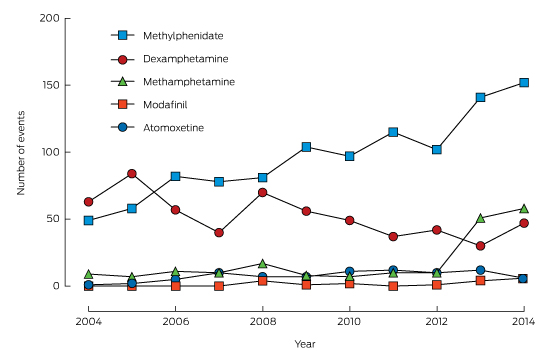
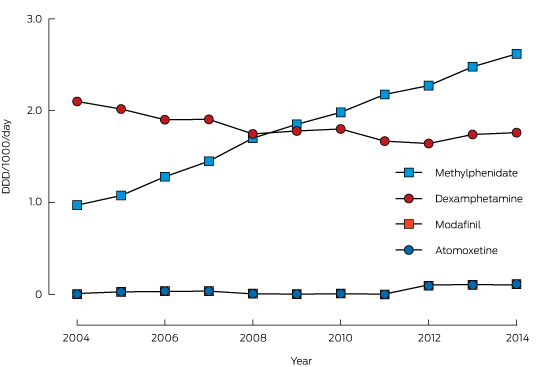
A summary of the unadjusted exposures over time is shown in Box 2. Most intentional exposures were to methylphenidate and dexamphetamine. There was a 210% increase in the annual number of exposures to methylphenidate during the study period, while dexamphetamine exposures declined by 25%. Modafinil and atomoxetine exposures were infrequent. Box 3 depicts the trends in dispensing of these medications (DDD/1000/day).

Methylphenidate exposures (expressed as a ratio of all calls about intentional exposures) increased significantly over the study period (Box 4; Appendix 1, A), with an AAPC of 9.8%. Dispensing of methylphenidate also increased significantly (Box 4; Appendix 1, B), with an AAPC of 10.8%; one joinpoint was identified, with the rate of increase slowing from 2008. When call numbers were adjusted for DDD/1000/day, there was no significant trend in the number of intentional calls about methylphenidate (Box 4), suggesting that trends in call numbers were associated with changes in the rate of medical dispensing.

Dexamphetamine exposures declined significantly from 2004 to 2014 (Box 4; Appendix 2, A), with an AAPC of −6.6%. Dexamphetamine dispensing (Appendix 2, B) decreased significantly between 2004 and 2012, with an APC of −2.7%, with no significant trend for 2012–2014 (Box 4). As with methylphenidate, there was no significant trend when the number of calls to the NSWPIC was adjusted for DDD/1000/day.

Results stratified by age and sex are shown in Box 5. The trends are similar to those in the unstratified data. The reduction in dexamphetamine exposures was only significant in adult women, adolescent men, and boys. The increase in the number of methylphenidate calls was significant for both sexes and for all age categories, with the exception of boys.

We also examined trends in illicit use, defined as use of the medication together with alcohol (146 calls) or any street drug (43 calls). Illicit use increased by 429% across the study period. Joinpoint analysis identified a significant increase in illicit use from 2004 to 2014 (Box 4; Appendix 3, A), with an AAPC of 13.8%. Further, there was also a significant increase in the number of reported exposures to methamphetamine (Box 4; Appendix 3, B), with an AAPC of 23.4%.

Atomoxetine and modafinil exposures and intravenous exposures were excluded from detailed joinpoint analysis because of the low numbers of calls about these drugs.

Discussion

The number of calls to the NSWPIC about ADHD medication exposures increased dramatically during the study period, driven mostly by calls about methylphenidate. While our joinpoint analysis showed a significant increase in the number of methylphenidate exposures and a significant decrease in that of dexamphetamine exposures, there were no significant trends after call numbers were adjusted for the dispensing rates for each medicine, indicating that call frequency had changed in line with prescribing rates. This finding was consistent with other PIC studies in which exposure trends were correlated with the sale or prescribing rate (and thus with the availability) of dexamphetamine and methylphenidate, but not of atomoxetine.5,13,14

This study was unable to capture whether the individual was prescribed the medicine involved in a call, or the reasons for an overdose. However, a Danish PIC study found that methylphenidate had been prescribed at the time of exposure in 65% of overdose cases; of these, attempted suicide (54%) and recreational use (40%) were the most frequent reasons for exposure.15 A further study, comparing exposures related to the non-medical use of atomoxetine and methylphenidate, found that recreational use was more frequent in methylphenidate (40%) than atomoxetine exposures (19%), with suicide attempt or emotional strain more common in atomoxetine (62%) than methylphenidate exposures (54%).13

The number of symptomatic patients in our study is consistent with the findings of other international studies. In the Danish PIC study, 323 patients (86%) were symptomatic; the symptoms presented were predominantly central nervous system/constitutional (altered psychomotor activity, mood symptoms, perceptual disorders; 81%) or cardiovascular (70%) in nature.15 A Swiss PIC study found a similar spectrum of toxicity for methylphenidate, with most people reporting mild to moderate symptoms.14 In our study, most calls resulted in hospitalisation, suggesting a high degree of overdose severity. A report from RADARS, an American prescription drug monitoring system incorporating PIC and diversion surveillance methods, found significant increases in the severity of overdoses associated with extended release amphetamine and methylphenidate.5

Our study found that the route of administration of these drugs was oral in most cases, but rates of intravenous administration were increasing. This is concerning because of the greater morbidity associated with intravenous use, and raises the question of whether those who inject these drugs are new or existing injecting drug users. The potential for harm associated with injection of these agents is reportedly comparable with that of amphetamines or cocaine.16 Other PIC studies have found similar trends in exposure routes, with oral ingestion being the most common, followed by injection (5–10%) and snorting (4–13%).14,15 In contrast, a study of regular ecstasy users found that up to 43% reported snorting the drug, but only a small number described injecting or smoking it.17

There has been a dramatic increase in the number of calls to the NSWPIC about incidents in which alcohol or illicit drugs were co-ingested with ADHD medicines, predominantly with methylphenidate, suggesting that misuse of this drug is increasing in Australia. In our study, this increase in suspected illicit use has been most marked since 2012, corresponding to a rise in the number of methamphetamine-related calls. This may be related to an increase in supply and demand for amphetamines for misuse, or with increasing toxicity among existing amphetamine users. Increases in methamphetamine purity were also seen around this time.8 Similar rates of co-ingestion were found by previous PIC studies.14,15 The United States National Survey on Drug Use and Health data for 2002–2009 indicated that 3.4% of those aged 12 years and over had used ADHD medications for non-medical purposes.18

Unfortunately, no equivalent national data are available for Australia. A recent systematic review of the misuse of prescription methylphenidate and amphetamine found that young adults (16–25 years), people being treated for ADHD, and known illicit substance users are at particular risk of misusing these medications. However, these studies were not population-wide, and may have been biased by focusing on specific populations. Studies of pharmaceutical stimulant misuse among US university and college students have yielded lifetime prevalence estimates of 7–17%, compared with a general population lifetime prevalence of 0.3–2.1%.19 In terms of current drug users, the results of a 2013 Australian survey of people who inject drugs found ADHD medication misuse to be uncommon.20 Conversely, half of a sample of regular ecstasy users reported illicit use of pharmaceutical stimulants at some point, and 30% reported using them in the past six months. Most of this misuse was of diverted rather than of prescribed medications.17 A US study found that two-thirds of those who used illicit drugs in addition to ADHD medications had begun using them before they had started an ADHD medication.18

Misuse has been described in people who are prescribed ADHD medications.19 In one study, as many as 14.3% of 545 respondents from an ADHD treatment clinic indicated that they had misused prescription stimulants at least once. Further, 39.1% of respondents also used non-prescription stimulants, particularly cocaine (by 62.2% of those who misused stimulants), methamphetamine (4.8%), or both cocaine and amphetamine (31.1%).21 However, another study found that people treated for ADHD in childhood do not appear to be at increased risk of illicit substance-related death, crime, or hospital visits later in life than children diagnosed with ADHD diagnosis who were not treated with stimulant medications.22

In studies examining reasons for misuse of ADHD medications, the most frequently reported were to improve attention, concentration and alertness, to improve study habits and academic performance, and to “get high”.19 However, the frequencies of these responses tend to reflect the populations most commonly studied, including college students and people with ADHD. A minority of people also report self-medication of undiagnosed ADHD symptoms.19 Of those who misuse these medications, the most common source is diversion from a friend, relative or dealer.20

According to reports by a group of regular ecstasy users, the median age of first use of ADHD medications by recent users was 18 years (range, 6–30 years) and the median amount taken in an average session was two tablets (range, 0.33–30 tablets).17 Other than this, little is known about the natural history or prevalence of ADHD medication misuse in Australia. The relatively young median age of first use found by this and other studies may be related to ease of access within peer networks.

The effectiveness and tolerability of atomoxetine are comparable with those of methylphenidate,23 but it is often prescribed only as a second-line drug, or for those perceived to be at risk of psychostimulant misuse.15,24 Atomoxetine exposures in our study appeared to result in less severe toxicity and to not be associated with illicit use, but the number of calls was too low to reach any conclusions. Significant toxicity associated with atomoxetine overdose has been described by other authors.25

Australian PIC data (together with data from other sources, such as hospital presentation data, police data, and wastewater analysis) are underutilised in detecting emerging trends in substance use. However, limitations of this retrospective study include the lack of outcome data, as Australian PICs do not routinely conduct follow-up calls. As specific symptoms were not coded, we were unable to construct a comprehensive symptom severity profile. Further, this study was limited to exposures in people aged 10 years or more, so that we are unable to comment on intentional poisonings in younger persons. Our data comprised a collection of all intentional exposures reported to the NSWPIC that does not allow further sub-categorisation into self-harm, recreational use, and other forms of misuse, so that co-ingestion of alcohol and illicit drugs were used as a marker of illicit intent. Alcohol is unlikely to be a specific marker, as it may also be taken with a self-harm overdose. A deeper understanding of these aspects of toxicity could be gained from examining poisoning cohorts, such as the Hunter Area Toxicology Service database.26 In addition, as PIC data collection relies on voluntary calls, our study is likely to have significantly underestimated the true frequency of the toxicity and misuse of ADHD medications. However, benchmarking to methamphetamine calls at least allows us to comment on trends. Our study predominantly reflects the NSW experience, with limited data from the rest of the country (resulting from the on-call system), so it may not be possible to generalise our findings to the rest of Australia.

Clinical implications

The incidence of poisoning exposures appears to be correlated with community prescribing rates. Misuse of these medications mostly involves diverted drugs, so that increasing prescribing of these medications is likely to increase their availability for diversion. There also appears to be an increased risk of misuse and overdose in people who are prescribed ADHD medications, but such misuse is often related to a past history of other drug misuse. In a similar vein to opioid management, care should be taken when initiating these medications to complete a full risk assessment for misuse, which includes taking an addiction history, and ensuring that they are used safely, appropriately and in an evidence-based manner, including considering non-medical or non-stimulant alternatives. Atomoxetine may be an alternative for those at risk of misuse. There may also be scope for regulatory measures and guidance. An example of this is the Stimulant Regulatory Guidelines developed in Western Australia in response to one of the highest global rates of stimulant use disorder.27

Box 1 –
Characteristics of 1735 intentional exposures to ADHD medication reported to the New South Wales Poisons Information Centre, 2004–2014

Dexamphetamine

Methylphenidate

Modafinil

Atomoxetine

Total


Number of reports (percentage of all exposures to ADHD medications)

575 (32%)

1059 (62%)

18 (1%)

83 (5%)

1735

Median age (interquartile range), years

19 (16–31)

16 (14–20)

30 (21–36)

16 (14–19)

17 (15–23)

Sex

Male

269 (47%)

503 (47%)

6 (33%)

42 (51%)

820 (47%)

Female

273 (47%)

499 (47%)

12 (67%)

32 (39%)

816 (47%)

Not recorded

33 (6%)

57 (5%)

0

9 (11%)

99 (6%)

Treatment

Hospitalised

533 (93%)

966 (91%)

17 (94%)

78 (94%)

1594 (92%)

Referred to toxicologist

22 (4%)

35 (3%)

0

3 (3%)

60 (3%)

Co-ingestants

Illicit

49 (9%)

133 (13%)

7 (39%)

8 (10%)

197 (11%)

Non-illicit

73 (13%)

312 (29%)

9 (50%)

60 (72%)

454 (26%)

Route of exposure

Ingestion

557 (97%)

987 (93%)

18 (100%)

81 (98%)

1643 (95%)

Parenteral

15 (3%)

56 (5%)

0

1 (1%)

72 (4%)

Inhaled/nasal

3 (1%)

16 (2%)

0

1 (1%)

20 (1%)

Symptom assessment

Symptomatic

352 (61%)

626 (59%)

14 (77%)

45 (54%)

1037 (60%)

Asymptomatic

143 (25%)

286 (27%)

3 (17%)

24 (29%)

456 (26%)

Unknown

80 (14%)

147 (14%)

1 (6%)

14 (17%)

242 (14%)


All percentages are column percentages, with the exception of the first row (number of reports).

Box 2 –
Intentional exposures to methylphenidate, dexamphetamine, modafinil, atomoxetine and methamphetamine reported to the New South Wales Poisons Information Centre, 2004–2014

Box 3 –
Pharmaceutical Benefits Scheme prescriptions for dexamphetamine, methylphenidate, modafinil and atomoxetine, expressed in defined daily doses (DDD)/1000/day, 2004–2014

Box 4 –
Results of joinpoint regression analysis of trends in exposures to methylphenidate, dexamphetamine and methamphetamine reported to the New South Wales Poisons Information Centre, 2004–2014

Time segment

AAPC or APC (95% CI)


Methylphenidate

Exposures

2004–2014

AAPC, 9.8% (7.5 to 12.3%)*

Dispensing

2004–2014

AAPC, 10.8% (10.0 to 11.5%)*

2004–2008

APC, 15.7% (13.8 to 17.6%)*

2008–2014

APC, 7.6% (6.7 to 8.6%)*

Calls adjusted for DDD/1000/day

2004–2014

AAPC, −2.0% (−4.4 to 2.9%)

2004–2011

APC, 4.5% (−1.1 to 10.4%)

2011–2014

APC, −15.7% (−31.4 to 3.6%)

Dexamphetamine

Exposures

2004–2014

AAPC, −6.6% (−10.7 to −2.3%)*

Dispensing

2004–2014

AAPC, −1.4% (−3.2 to 0.3%)

2004–2012

APC, −2.7% (−3.8 to −1.7%)*

2012–2014

APC, 4.1% (−5.8 to 15.1%)

Calls adjusted for DDD/1000/day

2004–2014

AAPC, −4.3% (−9.0 to 0.5%)

Illicit use of ADHD medication

Exposures

2004–2014

AAPC, 13.8% (8.1% to 19.7%)*

Methamphetamine

Exposures

2004–2014

AAPC, 23.4% (2.5% to 48.5%)*

2004–2012

APC, 2.3% (−8.9% to 14.8%)

2012–2014

APC, 161.5% (−9.5% to 665.9%)


AAPC = average annual per cent change; APC = annual per cent change; DDD/1000/day = defined daily dose per 1000 population per day. * APC or AAPC is significantly different from zero (P < 0.05). † Inferred (alcohol or illicit drugs were co-ingested).

Box 5 –
Results of joinpoint regression analysis, stratified by age category and sex: trends in exposures to methylphenidate and dexamphetamine, 2004–2014

AAPC (95% CI)


Methylphenidate

Adults (20–75 years)

8.6% (2.1 to 15.4%)*

Male

8.2% (1.0 to 15.8%)*

Female

9.5% (2.6 to 16.8%)*

Adolescents (15–19 years)

13.0% (8.1 to 18.0%)*

Male

8.2% (1.0 to 15.8%)*

Female

9.5% (2.6 to 16.8%)*

Children (10–14 years)

8.9% (3.5 to 14.6%)*

Male

6.0% (−2.7 to 15.5%)

Female

11.4% (6.5 to 16.5%)*

Dexamphetamine

Adults (20–75 years)

−2.8% (−7.9 to 2.5%)

Male

1.2% (−3.9 to 6.6%)

Female

−7.5% (−14 to −0.4%)*

Adolescents (15–19 years)

−11.9% (−21.4 to −1.3%)*

Male

−17.4% (−24.1 to −10.2%)*

Female

−7.6% (−20.8 to 7.9%)

Children (10–14 years)

−18.1% (−27.7 to −7.2%)*

Male

−21.5% (−30.6 to −11.3%)*


AAPC = average annual per cent change. * APC or AAPC is significantly different from zero (P < 0.05). † Joinpoint analysis not performed for exposures to dexamphetamine in female children (missing data).

Prescription drug monitoring in Australia: capacity and coverage issues

Recent years have seen increases in prescription of pharmaceutical opioids and benzodiazepines, and in the associated harms.1 This presents challenges for clinicians and governments regarding appropriate monitoring and responses. Real-time prescription drug monitoring programs (RT-PDMPs) are being considered in Australia2,3 to enable detection of drug diversion (when drugs are transferred from a licit to an illicit channel of distribution or use), and inappropriate prescribing or dispensing. RT-PDMPs are supported by professional bodies, but challenges exist for policy makers in terms of capacity and coverage.

Capacity

The success of RT-PDMPs requires clear delineation of what information will be collected, who will have access to it, and how long records will be kept to ensure patient and practitioner privacy. Tasmania’s RT-PDMP (currently the only Australian RT-PDMP) offers benefits over systems which do not provide real-time data,2 but other jurisdictional policy makers must determine whether their systems will be proactive (eg, identify those at risk of abuse), or reactive and rely on prescriber and dispenser requests once a patient is deemed at risk. There is also concern that patients with genuine needs may not receive appropriate prescriptions for fear that they, or the prescriber, may be flagged as a misuser.3,4

RT-PDMPs pose challenges regarding the capacity of health and/or law-enforcement departments to respond. In Australia, 55 000 people were identified as doctor-shoppers in 2005–06.1 The ability of the current system to meet these demands is lacking, with prescribers estimated to be notified in only 5% of doctor-shopper cases.5

An RT-PDMP will increase demand for professional development and specialist support for addiction and pain management, a particular challenge given the current gaps in training and significant shortages of relevant specialists. Potential RT-PDMP administrators, including health and law-enforcement bodies, will need capacity to analyse, interpret and disseminate findings through suitable channels, with necessary policies in place to facilitate appropriate responses.

Coverage

The proposed RT-PDMPs seek to monitor only S8 medications.2 Some opioids (eg, tramadol and codeine) and benzodiazepines (except alprazolam and flunitrazepam) will be excluded, despite their contribution to harm. Such reduction in capacity decreases the ability to investigate possible shifts in prescribing habits towards non-monitored medications. One solution involves staged inclusion of other drugs to respond to changes in prescribing trends, and as new drugs become available.3

To be effective, an RT-PDMP must collect Pharmaceutical Benefits Scheme and private prescription data, and flag potential misuse and diversion at the time of prescribing and dispensing. Diversion can also occur after dispensing (eg, drug sharing and online sales including cryptomarkets which enable online purchaser anonymity),6 but research in these areas is limited. Diversion cannot be entirely identified by RT-PDMP, which highlights the need for clinicians to adopt safe prescribing practices and communicate clearly with patients about their responsibilities.

RT-PDMP may become available outside Tasmania, but issues of coverage and capacity require policy maker attention before implementation to ensure more appropriate monitoring of prescription medications.3

Drug checking to improve monitoring of new psychoactive substances in Australia

Drug checking may need to play a part in future public health interventions

As has been reported previously in the Journal,1 novel psychoactive stimulant drugs are now increasingly prevalent in patients presenting to hospital emergency departments. A further cluster of 11 patients showing confusing hallmarks of sympathomimetic poisoning but no identifiable substance presented to St Vincent’s Hospital in Sydney over a public holiday weekend in April 2015. Also, the start to the 2015–2016 summer festival season has included multiple deaths and hospitalisations following drug use at festivals, leading to calls for novel actions to protect public health.2 Here, we take the opportunity to describe a method of harm minimisation that has been deployed in Europe and could potentially be deployed locally to tackle this problem.

Monitoring new psychoactive substances

New psychoactive substances (NPS) are emerging rapidly into the market, with more than 100 identified in the past year by European monitoring systems.3 Existing psychoactive drug monitoring systems have limited capacity to identify NPS. Their limitations are detailed as follows:

  • self-reports (eg, household surveys and regular interviews with sentinel groups, as reviewed by Burns et al4) can identify what users think they are taking, but not necessarily what they are actually taking;

  • web vendor monitoring (eg, analyses of surface web and dark web [also see Burns et al4]) can identify what vendors report they are selling, but not what is actually sold; and

  • pharmacological analyses (eg, wastewater analyses5) can provide more accurate information about what is actually being consumed, but not what people believe they are consuming.

These monitoring systems have been used to identify NPS and track their use in Australia, but they are not able to characterise the congruency between what people believe they are taking and what they are actually taking. Combining all three of these methods and providing an innovative drug-checking service would strengthen surveillance of drugs being used in festival settings. Accurate and tailored information can facilitate an open dialogue between health care providers and drug users at the point of consumption. Identifying emerging trends in NPS will provide opportunities to prevent harm, and enable our services to respond more effectively to the harms arising from both intentional and unintentional NPS use.

Drug-checking services

Several European countries now provide drug analysis services,6 whereby individuals submit samples of their drugs to have their contents identified and analysed for purity. The results are provided to the consumer. The analytical facility can be based either on-site (eg, at large parties or festivals) or off-site. In some of the European services, brief health interventions aimed at reducing harm are offered to consumers simultaneously. Fast turn-around drug analysis services may have reduced harms resulting from recent episodes of mass intoxications at festival settings by:

  • identifying the NPS and other contents of the pills or powders;

  • monitoring NPS availability and use trends to enable an effective public health response;

  • identifying emerging hazards from specific NPS and the formulations available;

  • improving the knowledge base for effective clinical management of acute and chronic presentations;

  • providing an opportunity for users to seek help, obtain health information to reduce potential harms and to offer options for individual behaviour change; and

  • providing intelligence that could influence supply dynamics.

The optimal method for providing analytical services will depend largely on the social and legal context. In Austria and Switzerland, field workers from a non-government organisation conduct on-the-spot drug analysis to patrons at dance parties via a field laboratory equipped with high-pressure liquid chromatography machines. Samples are received directly from consumers and results are available to them within 20 minutes, accompanied by a brief intervention with referral if required.7 In the United Kingdom, amnesty bins are placed in party venues and a private, not-for-profit laboratory undertakes the analyses to add to a library of NPS. In larger nightclubs, on-site field workers use infra-red mass spectrometry to compare the drugs received with the database. Local accords between police, public health officials and the nightlife venue operators are required to ensure successful integrated services. A network of 26 drug-checking sites in the Netherlands is incorporated into the Ministry of Health as part of a national surveillance system.8 This service offers immediate results of quick office tests to potential users, with intervention and referral if necessary. Subsequently, samples are sent for more accurate spectrometric analysis, and results are available within a week. Most importantly, results are incorporated into the national surveillance system and are monitored for trends in emerging substances, and results are used to inform public policy and practice. While the direct prevention of deaths has not been documented, dangerous pills or powders identified by checking systems in the Netherlands have quickly disappeared from the Dutch markets following the launch of warning campaigns.9

Discovering new compounds that endanger life is unlikely to benefit the user after he or she has taken the drug except in ruling out other causes for developing severe syndromes. However, as more becomes known about the psychopharmacology of specific compounds, best-practice treatment algorithms can be created. If backed up by a sensible brief intervention, such a service might see users of drugs more engaged in caring for their health, recognising problem substance use, and seeking help. From a public health perspective, information on new compounds can be used to monitor emerging trends and inform prevention activities.

Problems to overcome

Several hurdles need to be overcome before drug checking can be established in Australia. Drug sellers may view the service as an opportunity to have their drugs checked before they distribute them. As in Europe, drug-checking services would need to ensure they are not complicit in aiding drug distribution. There may also be a misconception among users of the service that by having their drugs “checked”, their use is condoned or seen as safe. Existing drug-checking services deal with this misconception through careful engagement with service users to explain that all drug use is risky and that the only completely safe option is to avoid drug use. This message is more likely to be heeded by users of drug-checking services who are receiving advice about harm reduction that is individually tailored to their personal characteristics and the known characteristics of the drugs they may consume.

As happens overseas, Australian drug-checking services will need to be provided in multiple sites in both metropolitan and regional locations. Transport problems would need to be solved to provide access to services outside metropolitan areas.

Effective laboratory testing is expensive; without adequate investment, the drug-checking service may be restricted to ad hoc sites or subject to unreliable testing techniques. Indeed, drug-checking interventions were conducted in Australia over a decade ago,10 but, at that time, on-site testing technology was restricted to colour reagent test kits, which are not reliable enough nor able to detect the larger number of substances currently available. In 2016, for an investment of under $200 000 (based on the costs of a high-performance liquid chromatography machine and employing a Scientist and Drug and Alcohol Counsellor), a mobile laboratory could be set up and attached to existing peer-run harm-reduction services, supported by existing full laboratories providing in-kind support. While there are expenses associated with the ongoing running of such a service, the costs of trialling this kind of intervention are relatively low with the use of currently available technology that has been field-tested in other countries.

In addition, handling materials that are suspected of being illegal substances is prohibited by law; there are harm-reduction services currently operating in Australia that have been provided with an exemption for service staff and clients, such as Sydney’s medically supervised injecting centre. Therefore, providing a drug-checking service would not require a radical shift in national drug policy, but would require cooperation between health and police stakeholders.

Conclusions

An important public health need in Australia could be met by providing an easily accessed drug-checking service that provides reliable and fast information to consumers about the content of drugs, along with non-judgemental harm-reduction advice. A further advantage is the ability of such a service to track the appearance of NPS on the market rapidly,8 which is helpful and sometimes necessary if we are to respond more effectively to NPS-related harm. Such a service could mitigate the severity and impact of situations that commonly overwhelm emergency departments around Australia by rapidly disseminating information about NPS to (a) potential consumers, warning them about specific products and batches, and (b) clinicians, guiding them on the predicted toxidrome and management of affected patients.

Concerns about the unintended consequences of providing a drug-checking service include legitimisation of the use of drugs, civil responsibility of the drug checkers towards consumers of tested drugs, and the use of the service by drug sellers as a quality control mechanism. Such concerns have not been supported by evidence in the European context.11 In Europe, the service is used in tandem with opportunistic brief interventions that provide a moment for education on health and harm reduction, and reduces the delay to treatment for problem drug use. Further experience with services of this kind is required to ascertain the feasibility, acceptability and effectiveness in inducing behaviour change of various models of drug checking in the Australian context, which is different from the Dutch context (eg, there is no threat of prosecution for using these drugs in the Netherlands). Therefore, it is very important that a high-quality research trial of drug checking in Australia be conducted.

Take-home naloxone programs and calls to emergency services

Updated advice to be given by Triple Zero call-takers is being developed

In May 2012, Australia’s first take-home naloxone program for opioid overdose prevention commenced in the Australian Capital Territory1; it was soon followed by programs in other jurisdictions. Current Australian naloxone training programs cover calling an ambulance, administering naloxone and giving cardiopulmonary resuscitation (CPR). Some training programs are as short as 10 minutes, and others are as long as 2 hours, so capacity to present practical emergency management scenarios, including calls to emergency services, varies.

We are involved in the National Naloxone Reference Group (NNRG), which is run under the auspices of the Centre for Research Excellence into Injecting Drug Use. The NNRG brings together representatives involved in take-home naloxone programs from all states and territories. Currently, all programs recommend that opioid overdose responders initially call Triple Zero (000) for ambulance assistance to ensure adequate post-resuscitation care and further assessment and treatment if needed. In evaluating take-home naloxone programs, we have identified conflicts between advice given in training and advice received from emergency services. In this article, we explore the decision-making process for calling emergency services while administering life support measures and (potentially) naloxone to reverse an opioid overdose, and advice of call-takers. Our discussion includes recommendations on appropriate action in a generalised overdose scenario that we sought from NNRG members and other researchers.

In most Australian jurisdictions, calls to Triple Zero may result in individuals being given advice which is contrary to that provided during current naloxone training programs. Triple Zero calls are diverted to emergency call centres which, in all jurisdictions other than the ACT, use Medical Priority Dispatch System (MPDS) software to guide call-takers through assessment scripts. These scripts, developed through extensive research and consultation, are designed to consistently help callers manage risks, but may not reflect the needs of population subgroups or be responsive to new practices, such as take-home naloxone programs.

Although there are no specific MPDS scripts for opioid overdose, there is a generalised overdose script, which may be activated when someone reports an opioid overdose. Opioid overdoses present in a variety of ways depending on the severity of the overdose. Clinical signs of opioid overdose include (but are not limited to) shallow breathing, clamminess, pallor, cyanosis, decreasing level of consciousness and seizures, progressing to complete cessation of breathing and loss of consciousness, followed by cardiac arrest and death if resuscitation procedures are not commenced.2 Should the opioid overdose sufferer be unconscious and not breathing, the call will most likely activate the cardiac arrest script (the highest priority script) rather than the overdose script, which advises CPR until emergency services arrive. These instructions are supported by evidence showing that decreases in the number, rate and quality of chest compressions delay return of spontaneous circulation3,4 and reduce survival rates.5,6 Under this script, no caller would be instructed to delay or stop CPR to administer naloxone, even after reporting training and naloxone availability. When other scripts (eg, the overdose script) are activated, callers might be instructed to administer a medication in accordance with the patient’s own doctor’s instructions, although typically only if the patient is conscious.

Hence, the advice of call-takers can directly contradict naloxone training and first-aid response to opioid overdose. This means that those trained in administering naloxone who are present at an overdose must decide whether to ignore the call-taker’s advice and administer naloxone as trained; if they do, they must also decide when to administer it vis-a-vis CPR. As trainees may already be reluctant to call an ambulance during an opioid overdose (it is estimated that only about 50% of opioid overdoses involve an ambulance service call7,8), due to concern that police will attend,911 or concern that ambulance attendance will attract unwanted attention from public housing or child protection officials,12 contradictory and seemingly unhelpful messages from call-takers are another disincentive.

Key stakeholders suggest that a short-term solution is to provide instructions based on whether the overdose witness is alone (apart from the victim) at the scene. If another person is present, then the call-taker’s CPR instructions can be followed and naloxone administered simultaneously; otherwise, stakeholders suggest that naloxone be given just before or while calling Triple Zero.

A flowchart describing when to administer naloxone, based on overdose witness numbers, is being developed for naloxone training while new MPDS scripts are being developed. MPDS scripts must query whether naloxone is available and whether it has been administered. Emergency call-takers should be trained about naloxone and responding appropriately. NNRG members have been engaging with ambulance authorities nationwide and contributing to MPDS scripts that incorporate take-home naloxone principles, and will continue raising public awareness of community naloxone programs through a range of activities, including community advocacy and publications.

ADHD and psychostimulants — overdiagnosis and overprescription

Careful assessment and universal precautions are necessary

Attention deficit hyperactivity disorder (ADHD) is the most widely studied child and adolescent mental health disorder, yet it remains the subject of ongoing debate, both about the validity of the diagnosis and its treatment. Increasing rates of psychostimulant prescription highlight the possibility of overprescription and overdiagnosis with the implication that disorders of children in particular are being “medicalised”. There are risks for children that the use of stimulant medication is a simplistic attempt to find solutions to more complex problems underlying behavioural and emotional difficulties1, and risks in adolescents and adults prescribed or exposed to stimulants, including poisonings, as identified in this issue of the MJA.2

Several factors appear to contribute to the increasing diagnosis of ADHD since the 1970s, before which the diagnosis was relatively rare. On the positive side, there is increasing awareness of the associated developmental morbidity and implications of early attentional disorders and related neurodevelopmental problems; increasing scientific understanding of the risk factors for neurodevelopmental difficulties such as ADHD, which are very broad and include in utero, peripartum and postpartum factors, with genetic and environmental components; and increasing recognition of the coordinated educational and family support needs for children with this spectrum of difficulties and evidence from a range of randomised control trails about the importance of comprehensive intervention. Despite this, the controversies around ADHD persist without consensus as to whether increases in diagnosis and treatment result in symptom reduction and improved long-term outcomes.3

The controversy around ADHD and its treatment has contributed to emotive and highly polarised discussions, with proponents of both over- and underdiagnosis positions. As is often the case, the complexity of this situation means that there are many developmental pathways to the condition commonly diagnosed as ADHD, and a major issue remains in the need for comprehensive assessment, which excludes other conditions. ADHD may be confused with other conditions, such as trauma-related neurodevelopmental difficulties, autistic spectrum disorder, and fetal alcohol spectrum disorders. In these instances, stimulants may be of benefit. The use of medication in various neurodevelopmental conditions may be quite appropriate but should not be seen as the sole treatment approach. It is therefore important that diagnosis includes a clear differential approach and that it is not made in a perfunctory fashion. It is also crucial that attention is paid to the needs of families, including parenting interventions and other strategies to support the development of positive emotional relationships and security of attachment in children who have major challenges in both behavioural and emotional regulation.

The issues related to the prescription of stimulant medications are also complex. There are increasing rates of prescription, especially of methylphenidate and an associated increase in poisonings.2 The proportion of deliberate overdoses and associated suicidal behaviour is of particular concern. Given concerns about the use of stimulant medication across the community in general, it is in some ways unsurprising that psychostimulants that may be appropriately prescribed can be misused. This pattern of greater rates of prescribing of psychoactive medications being associated with greater rates of misuse has also been dramatically and tragically seen with opioids.4

In the absence of national guidelines, the Royal Australian and New Zealand College of Psychiatrists5 supports the use of Canadian6 or United Kingdom 7 guidelines for ADHD treatment. Both highlight the need for comprehensive assessment of ADHD and substance use disorders. An approach supported by specialist Australian medical colleges that has been suggested for opioid prescription could be adapted for stimulant prescribing for ADHD.8 The concept of “universal precautions” implies routinely assessing all patients for risk of diversion, misuse or overdose, both before and on an ongoing basis while prescribing psychoactive drugs.

With regard to prescribing stimulants for ADHD, this approach could include ensuring comprehensive assessment with alternative diagnoses considered. These include multimodal non-pharmacological approaches to ADHD treatment; assessing all patients (including parents of children) for current and past history of substance use disorders; clinical assessment and drug toxicology to assess medication adherence and exclude substance use disorders; treatment agreements including informed consent; and addressing assessment of non-medical use. If substance use disorders are identified, they warrant concurrent specialist treatment.

In addition, prescription monitoring programs may have a role;9 however, with the exception of Tasmania, this has not occurred to date in Australia. While careful assessment and universal precautions will not stop all non-medical use of prescription stimulants, including poisonings, they remain practical and feasible approaches to limit misuse.

Australia reschedules naloxone for opioid overdose

The Therapeutic Goods Administration has changed naloxone scheduling to make it available over the counter

On 24 November 2015, the Therapeutic Goods Administration (TGA) announced its final decision to place “naloxone when used for the treatment of opioid overdose” on Schedule 3, thereby allowing over-the-counter (OTC) purchase.1 This measure came into effect on 1 February 2016, making Australia the second country, after Italy (in 1995), to have naloxone formally available OTC.

Background

With much recent media focus on problems due to crystalline methamphetamine use in Australia, few may be aware that deaths from opioid overdose have been increasing over recent years.2 Following the “heroin drought” of late 2000, accidental deaths from heroin and other opioids among Australians aged 15–54 years dropped from 1116 deaths in 1999 (10.19 deaths per 100 000 population) to 386 deaths in 2001 (3.46 deaths per 100 000 population). However, opioid-related deaths have been rising steadily since 2007 — the most recent confirmed data indicate that 617 Australians aged 15–54 years died in 2011 (4.95 deaths per 100 000 population). Estimates for 2012 and 2013 suggest that this trend continues.2

Take-home naloxone (THN) programs are designed to help manage opioid overdose events in the pre-hospital setting.3 These programs involve training potential overdose witnesses (typically opioid users, and their friends and families) in overdose response (including naloxone administration) and then prescribing and distributing naloxone to potential overdose victims for later use in an overdose situation. Training typically includes education on risk factors for opioid overdose, signs of opioid overdose, basic life support and overdose response, including resuscitation techniques, calling for an ambulance, administration of naloxone, and post-naloxone management. Training addresses the possibility of rebound opioid toxicity due to the relatively short half-life of naloxone (mean, 60 min; range, 30–80 min)4 compared with many opioids and the need to monitor the person and administer another dose of naloxone if required. However, the evidence indicates that rebound toxicity is rare.5 To date, naloxone kits provided to trainees in Australian THN programs have typically comprised between 2 and 5 minijets of naloxone 400 μg/mL plus intramuscular needles, swabs, gloves and instructional materials.

Reports on THN programs, including successful reversals with few adverse effects, emerged in the late 1990s and programs have expanded since that time. A survey of programs in the United States in 2010 found that, since 1996, 53 000 kits containing naloxone were distributed through 188 programs across 16 US states, and naloxone was administered in over 10 000 successful overdose reversals.6 In November 2010, Scotland became the first jurisdiction to implement a national THN program7; however, like most current programs, this program involves prescription. Many advocates of THN programs have called for better access to naloxone by making it available OTC.8 To our knowledge, only Italy and some US states have naloxone available OTC (the US has inconsistent policy across state pharmacy boards, and at least one pharmacy chain in the US recently began offering naloxone OTC),9 and recent initiatives will further expand OTC naloxone availability in the US.10 There are no published accounts of the extent and consequences of naloxone use in Italy.

Timely naloxone administration is crucial for preventing morbidity and mortality associated with opioid overdose. Wider access, through making the drug available OTC, is a positive step towards reducing morbidity and mortality.11

The TGA’s decision

The TGA’s decision creates a new listing for OTC naloxone, under Schedule 3, while keeping the original listing under Schedule 4 (requiring prescription). This dual system means that the drug will be government-subsidised, but only when on prescription. The decision was made in response to a Melbourne community pharmacist’s rescheduling application, which resulted in 96 individual submissions to the TGA in the subsequent consultation process. According to the TGA, all submissions supported the proposal to down-schedule naloxone; the main points were that: making it OTC will remove barriers to access; naloxone is safe and has no effect on anyone without opioids in their system; and it has little to no misuse potential. The TGA’s reasons for the recommendation included that: naloxone is a well tolerated life-saving medicine with minimal adverse effects, and the benefits outweigh the risks; and overseas experience and the outcomes of a program conducted in the Australian Capital Territory12 show that easier availability of naloxone will likely decrease the proportion of opioid overdoses that result in fatality. The TGA further suggested that OTC naloxone would need to be supplied with full and clear instructions for use, understandable by lay people (rather than only for trained health care professionals, as is currently the case), and emphasised that naloxone does not replace other resuscitation treatments.1

Further considerations

Several matters must be addressed before OTC supply of naloxone is effectively implemented. Currently available products do not include needles for administration (the kits are assembled by individual programs), and product instructions need to be modified for lay people using the minijet to give the intramuscular injection. These issues are typically addressed in THN programs that involve extensive training, but recent research found no significant differences between trained and untrained lay rescuers using naloxone to manage an overdose.13 As a Schedule 3 medication, the most important requirements for THN are therefore: an easily used product with appropriately designed information materials and needles to administer the drug within the package; pointers to online and other training resources; and brief advice from pharmacy staff.

A major issue regarding OTC availability is the cost to consumers. Naloxone is currently listed (exclusive of dispensing fee) at A$16.90 per minijet, distributed by UCB Australia. However, under the Pharmaceutical Benefits Scheme, five minijets cost A$37.70, or A$6.10 on concession. Although the dual listing means that naloxone will be available at the discounted price on prescription, it is important that the retail price per OTC unit is kept as low as possible as price will be a significant barrier to initial access, and any subsequent replacement of expired naloxone, especially for opioid users who are financially disadvantaged.

Another issue regarding OTC availability is the implications for THN programs, such as those operating in the ACT, New South Wales, Western Australia and Victoria. These programs may be run by specialist drug treatment or other services but often involve community services or groups such as drug user organisations and community health services. These programs have access to particularly marginalised and financially disadvantaged drug users. They currently provide naloxone via prescription, typically engaging a doctor to attend small-group training sessions. The doctor must then review participants, and both prescribe and dispense the medication. While OTC access removes the need for a doctor’s prescription, the requirement for dispensing by a doctor or pharmacist remains. Access to naloxone will be maximised when those providing instructions for use (including, for example, allied health or peer workers) also provide the medication. Thus rescheduling to Schedule 3 does little to simplify dispensing arrangements for current THN programs. We note that in other countries where THN programs operate, health authorities have put in place arrangements such that approved programs which meet defined training and other criteria can dispense naloxone to their participants. We hope that the rescheduling of naloxone to make it available OTC will lead to state and territory health officials exploring ways to similarly allow Australian THN programs to dispense this medication directly and cost-effectively to their clients.

Implications

The TGA decision sets a new precedent for other countries exploring ways to make naloxone available OTC. We recommend that the rescheduling of naloxone be followed by regulatory changes that allow current THN programs to dispense naloxone directly to their clients for later use in an overdose situation.

Therapeutic advances and risk factor management: our best chance to tackle dementia?

An update on research advances in this field that may help tackle this growing challenge more effectively

Increasing life expectancy has fuelled the growth in the prevalence of dementia. In 2015, there were an estimated 47 million people with dementia worldwide (including 343 000 in Australia), a number that will double every 20 years to 131 million by 2050 (900 000 in Australia).1 The global cost of dementia in 2015 was estimated to be US$818 billion.1 Low-to-middle income countries will experience the greatest rate of population ageing, and the disproportionate growth in dementia cases in these nations will be exacerbated by a relative lack of resources.

The diagnostic criteria for dementia (relabelled “major neurocognitive disorder”) of the American Diagnostic and Statistical Manual of Mental Disorders, fifth edition (DSM-5)2 include a significant decline in one or more cognitive domains that is clinically evident, that interferes with independence in everyday activities, and is not caused by delirium or other mental illness. Whether the new diagnostic label catches on remains to be seen. The most common type of dementia is Alzheimer’s disease (AD) (50–70% of patients with dementia), followed by vascular dementia (10–20%), dementia with Lewy bodies (10%) and fronto-temporal dementia (4%).3 These percentages are imprecise, as patients often present with mixed pathology.

Our discussion will focus on AD because it receives significant research attention as the most common cause of dementia. The two hallmark pathological changes associated with neuronal death in AD are deposition of β-amyloid plaques, and tau protein neurofibrillary tangles. Understanding this process has been enhanced by prospective cohort studies, such as the Australian Imaging Biomarkers and Lifestyle (AIBL) study.4 As shown in the Box, the results of this research indicate that the degree of β-amyloid deposition exceeds a predefined threshold about 17 years before the symptoms of dementia are detectable. In the absence of an alternative model, the amyloid cascade remains the most compelling hypothesis for the pathogenesis of AD. This is supported by the fact that early onset familial AD is caused by mutations in chromosome 21 that result in the production of abnormal amyloid precursor protein (APP), or by mutations in chromosomes 1 or 14 that result in abnormal presenilin, each of which increase amyloid deposition. The extra copy of chromosome 21 in Down syndrome also leads to faster amyloid deposition and the earlier onset of AD. Further, the symptoms of AD are correlated with imaging of amyloid in the living brain and with cerebrospinal fluid biomarkers that are now included in new diagnostic criteria for AD and which will enable suitable participants to be selected for trials of drugs that may prevent or modify the disease,2 in particular to determine whether anti-amyloid agents are useful for delaying or treating AD.

At present, cholinesterase inhibitors (donepezil, galantamine and rivastigmine) and the N-methyl-D-aspartate (NMDA) receptor antagonist memantine are licensed for treating AD dementia, and produce modest but measurable benefits for some patients. These medications are thought to work by increasing cholinergic signalling and reducing glutamatergic activity respectively, partially redressing neurochemical abnormalities caused by the amyloid cascade.5 More than 200 other drugs advanced to at least Phase II development between 1984 and 2014, but none has yet entered routine clinical use.6 Lack of efficacy in clinical trials may be the result of their being introduced at a rather late stage of the disease process; hippocampal damage is so profound by the time individuals present with AD dementia that attempting to slow their decline with an anti-amyloid agent may be analogous to starting statins in patients on a heart transplantation waiting list. As it provides the most compelling hypothesis for AD, the amyloid cascade remains the main target for developments in treatment. Treatment trials in people with preclinical or prodromal AD will in due course determine its validity.

Recent developments include promising results for treating prodromal AD with passive vaccines containing monoclonal antibodies directed against β-amyloid, such as solanezumab and aducanumab. This may point the way to treatments in the next decade that delay the onset of dementia in people with developing AD pathology.7,8

The identification of risk factors for AD may lead to risk reduction strategies. Recent randomised controlled trials of multidomain interventions, such as the Finnish Geriatric Intervention Study to Prevent Cognitive Impairment and Disability (FINGER) study (a 2-year program including dietary, exercise, cognitive training and vascular risk monitoring components), show that such interventions could improve or maintain cognition in at-risk older people in the general population.9 Greater risk reduction might be attained by intervening 10 to 20 years before the first clinical signs of cognitive impairment are presented. A recent review of 25 risk and protective factors associated with AD concluded that “the evidence is now strong enough to support personalized recommendations for risk reduction by increasing levels of education in young adulthood, increasing physical, cognitive and social activity throughout adulthood, reducing cardiovascular risk factors including diabetes in middle-age, through lifestyle and medication, treating depression, adopting a healthy diet and physical activity, avoiding pesticides and heavy air pollution and teaching avoidance of all potential dangers to brain health while enhancing potential protective factors”.10 These risk factors, and particularly vascular risk factors, are implicated in neurodegeneration pathology in a number of dementia processes.

While the search for effective preventive strategies and access to evidence-based pharmacological treatments and psychosocial interventions are critical, there are still delays in diagnosis and a failure to utilise existing available resources.1,3 The introduction of the federal government-funded, state-based Dementia Behaviour Management Advisory Services (DBMAS), the initiation of severe behaviour response teams, and increased funding for research should be applauded, but there needs to be greater coordination of service delivery systems for patients and carers at every stage, from prevention through to end-of-life care, and the medical profession needs to do more to ensure that all existing and trainee practitioners are well informed about what we can do for people with dementia right now.

Box –
Relationship of ß-amyloid deposition with other parameters in Alzheimer disease


Aß-amyloid = ß-amyloid; CDR = Clinical Dementia Rating. Reproduced with permission from Villemagne et al (2004).4

Uptake of novel oral anticoagulants in Australia

Clinical trials have shown that novel oral anticoagulants (NOACs) are as efficacious as warfarin in reducing the risk of stroke in patients with atrial fibrillation.13 However, concerns regarding efficacy and safety in real-world populations remain, particularly in patients aged 75 years and older and those with comorbid conditions.4 Three NOACs — dabigatran, rivaroxaban and apixaban — were listed by the Pharmaceutical Benefits Scheme in 2013, but there is little information about their uptake in clinical practice in Australia.

We conducted a retrospective observational study to examine overall use and initiation of oral anticoagulants, and the characteristics of patients for whom they are prescribed. We used administrative claims data from the Australian Government Department of Veterans’ Affairs for patients who were full entitlement holders (ethics approval E010/010). Monthly rates of NOAC and warfarin use were calculated for the period 1 January 2012 – 31 August 2014, and numbers of veterans initiated each month on low-dose and high-dose NOACs were calculated for the period 1 September 2013 – 31 August 2014. Clinical characteristics of new users of NOACs or warfarin (no use of warfarin in the previous 12 months) were compared using χ2 or Wilcoxon rank sum tests.

In the year after NOACs were listed on the Pharmaceutical Benefits Scheme, the overall rate of anticoagulation therapy increased, while the rate of warfarin use decreased (Box 1). There were 3936 and 1506 new users of NOACs and warfarin respectively. The median age of patients in the cohort was 86 years. Use of low-dose formulations of NOACs was most common, potentially reflecting impaired renal function in this older population (Box 2).

Those initiated on NOACs were younger, more likely to be men, had fewer comorbidities, and were less likely to reside in aged care facilities. Use of dose administration aids was similar for NOAC and warfarin users (10.6% [416/3936] and 10.7% [161/1506] respectively). Those initiated on NOACs had fewer hospitalisations recorded in the previous 12 months for gastrointestinal bleed, stroke and myocardial infarct compared with those initiated on warfarin (1.7% [67/3936] v 3.1% [46/1506], P = 0.0017; 3.3% [128/3936] v 7.2% [108/1506], P < 0.0001; and 2.2% [86/3936] v 4.5% [68/1506], P < 0.0001 respectively). Concomitant use of antithrombotic medicines was significantly lower in those initiated on NOACs compared with those initiated on warfarin (21.0% [803/3819] v 35.1% [491/1397], P < 0.0001). Non-steroidal anti-inflammatory drug use was greater in those initiated on NOACs (8.7% [332/3819] v 6.2% [87/1397], P < 0.004). (The denominators 3819 and 1397 include only those who survived 120 days after initiation of the NOAC or warfarin.) Together with the lack of reversibility of the anticoagulation effect of NOACs, these results are of concern and suggest that prescribers should consider the potential risk of bleeds when NOACs are co-administered with medicines such as non-steroidal anti-inflammatory drugs. This analysis was performed in an older veteran population and may not be generalisable to the wider Australian population.

The overall increased use of oral anticoagulants since the introduction of NOACs may reflect use in patients who were previously considered unsuitable for treatment with warfarin. It appears that pre-existing risk factors are being considered by prescribers when making the choice between NOACs and warfarin. However, prescribers need to remain vigilant to the risk of bleeding with NOACs, particularly in patients who are taking other medicines that might increase bleeding risk.

Box 1 –
Rates of anticoagulant use by veterans, 1 January 2012 – 31 August 2014

Box 2 –
Number of veterans initiated on individual novel oral anticoagulants, by dose, 1 September 2013 – 31 August 2014