


×

Pharmacological treatment approaches to difficult-to-treat depression

This is a republished version of an article previously published in MJA Open

It is widely accepted that at least one in three patients with depression will not respond adequately to a series of appropriate treatments.1 There have been several approaches to defining this difficult-to-treat depression. One recently developed proposal is the Maudsley staging method — a points-based model of degrees of treatment resistance, which takes into account details of the specific treatments employed and the severity and duration of the depression.2 Another widely used and more straightforward definition is the failure to respond to two adequate trials of antidepressants from different pharmacological classes.3

Here, we use a pragmatic definition of difficult-to-treat depression — failure to respond to an adequate course of a selective serotonin reuptake inhibitor (SSRI) antidepressant. This was the definition used in the Sequenced Treatment Alternatives to Relieve Depression (STAR*D) trial in the United States,4 which was funded by the National Institute of Mental Health and is the single biggest study on sequenced treatment for depression and investigated rates of improvement in patients who had failed to respond to an SSRI. In this article, we draw liberally on the findings of the STAR*D trial, as well as other studies of difficult-to-treat depression.

STAR*D: a real-world study

The STAR*D trial used a series of treatment steps, premised on an initial failure to achieve remission after an adequate course of an SSRI. This approach reflects the reality of primary care and specialist treatment of depression in Australia (and most countries), whereby most patients who require antidepressants are initially treated with an SSRI. The trial recruited “real-world” patients with depression, including patients who are usually excluded from formal randomised controlled trials (RCTs), such as those with chronic symptoms, comorbid psychiatric and physical disorders, and substance misuse. STAR*D used a four-step approach for each patient, with the three potential steps after the initial SSRI comprising the main options developed over decades for difficult-to-treat depression: switching, augmenting or combining antidepressants. It used “remission” rather than the usual measure of “response” as its outcome. Remission refers to achieving nil or minimal depressive symptoms, whereas response is usually defined as a 50% reduction in symptoms. In clinical practice, both practitioners and patients aim for remission rather than response.

Studying almost 3000 patients, STAR*D found that, although 50% of patients responded to the initial trial of an SSRI, only a third achieved the more clinically meaningful outcome of remission. Furthermore, the final remission rate, even after four potential treatment steps, was only 70% (ie, 30% of patients did not remit with up to four different antidepressant treatment approaches). This finding reflects the reality of clinical practice and highlights the need to employ the best available evidence in the management of people with complex depression.

Two limitations of STAR*D need to be acknowledged: some of the treatment choices used are not approved for the treatment of depression in Australia, and there was a low retention rate of subjects in the latter phases of the trial.

Structuring management

In this article, we cover the main pharmacological strategies used in the management of difficult-to-treat depression (Box 1). The studies we refer to have mainly focused on patients with unipolar depression (major depressive disorder). While targeted towards people with difficult-to-treat major depressive disorder, some of the recommendations we give may also be relevant to those with difficult-to-treat bipolar depression.

Increasing antidepressant dose

A number of studies have demonstrated the value of increasing the antidepressant dose to the maximum tolerated level approved in the product information. While early RCTs reported the superiority of high-dose fluoxetine (60 mg/day) over some augmentation strategies,5 later systematic reviews found limited evidence to support high-dose SSRI usage in difficult-to-treat depression.6 However, there is stronger evidence for the effectiveness of increasing the dose of other categories of antidepressants, particularly tricyclic antidepressants (TCAs) and the serotonin–noradrenaline reuptake inhibitor venlafaxine.6,7 For some TCAs (but not other antidepressants), monitoring serum levels may be useful in achieving optimal clinical response.

Switching to another antidepressant

There are three main issues to consider with this approach. Is switching to a second antidepressant an effective strategy? Does this switch need to be to a different class of antidepressants? When should a switch occur? Recent evidence has suggested that antidepressants may have a faster onset of action than initially thought,8 with most guidelines suggesting that treatment changes should be considered if no response is seen after 4 weeks.7

After failure to respond to initial treatment with an SSRI, there is strong evidence for switching to another antidepressant, but inconsistent evidence as to whether this needs to be a non-SSRI antidepressant or a different SSRI. One meta-analysis has reported a small but significant advantage (relative risk [RR], 1.29) of switching from an ineffective SSRI to a non-SSRI antidepressant (bupropion, mirtazapine, venlafaxine) compared with a second SSRI.9 In an RCT, venlafaxine was found to be superior to paroxetine in achieving response and remission.10 Other studies have reported that patients who had failed a trial with an SSRI responded to TCAs (imipramine,11 nortriptyline12). In an earlier study, patients who did not respond to two tricyclic antidepressants significantly improved with the monoamine oxidase inhibitor tranylcypromine.13 The STAR*D trial, however, demonstrated no significant differences in response rates between patients who switched to a second SSRI (sertraline) or to other classes of antidepressants (bupropion, venlafaxine).14 Consistent with this, a large systematic review concluded that treatment response was similar whether patients switched to a second SSRI or another class of antidepressants.15 Overall, and contrary to intuition, the accumulated evidence suggests no clear advantage of switching to a non-SSRI compared with a different SSRI.

Augmenting with a non-antidepressant agent

Augmentation involves adding a non-antidepressant drug to ongoing antidepressant therapy to which there has been no or only partial response. Here, we review the evidence for several well studied augmentation strategies.

Lithium

The evidence for lithium augmentation of antidepressants is very strong. One meta-analysis found lithium augmentation of TCAs and SSRIs significantly more effective in achieving response than augmentation with a placebo (odds ratio [OR], 3.11; 95% CI, 1.80–5.37), with a number-needed-to-treat of 5.16 Another meta-analysis reported a number-needed-to-treat of 3.8.17 Lithium augmentation was less efficacious in the STAR*D trial, but patients were prescribed suboptimal doses because of concern about adverse effects.18

Atypical antipsychotics

The atypical antipsychotics studied as augmentation agents include risperidone, quetiapine, olanzapine and aripiprazole. Two meta-analyses have confirmed the efficacy of this strategy. The first included 10 RCTs and concluded that risperidone, quetiapine and olanzapine were effective as augmentation agents (RR, 1.75).19 The other meta-analysis reported similar findings for aripiprazole (OR, 2.0).20

Thyroid hormone (triiodothyronine)

One meta-analysis reported triiodothyronine (T3) augmentation of TCAs to be twice as likely to achieve response as placebo.21 A further meta-analysis found that T3 augmentation significantly accelerated the treatment response of TCAs.22 A systematic review that included three open-label studies and one RCT supported T3 augmentation of SSRIs.23 In the STAR*D trial, remission rates were not significantly different between patients with difficult-to-treat depression whose SSRI was augmented with T3 or lithium, but T3 augmentation was associated with a lower side-effect burden.18 Thyroxine (T4) augmentation has not been extensively investigated.

Other augmenting agents

Lamotrigine is an anticonvulsant for which there is strong evidence of prevention of depressive recurrences in bipolar disorder.24 While early clinical reports suggested lamotrigine may have a similar effect in unipolar depression,25 two RCTs26,27 and a systematic review28 have so far failed to demonstrate significant reductions in depressive symptoms in patients with difficult-to-treat depression receiving lamotrigine augmentation.

Methylphenidate is used clinically for depressed patients with significant apathy and fatigue, particularly on the eastern seaboard of the US. Although early open-label studies suggested efficacy, two recent RCTs have reported no significant benefit of methylphenidate augmentation.29,30

Modafinil, which is less likely than other stimulants to cause dependence, has also been investigated as a potential augmenting agent, although at present data supporting its use are very limited.31,32

Pindolol has been reported to accelerate the speed of response to SSRIs. However, this β-blocker did not enhance the antidepressant action of SSRIs in three RCTs.3335

Combining therapy with another antidepressant

It has been hypothesised that the synergistic effects of two antidepressants with different mechanisms of action may enhance response in difficult-to-treat depression. One of the earliest RCTs to test this theory reported greater efficacy from combining desipramine and fluoxetine, compared with monotherapy with either agent.36 Mirtazapine added to SSRI therapy was reported to improve outcome in one RCT.37 However, the widely used mirtazapine–venlafaxine combination was not found to be superior to monotherapy with tranylcypromine in a trial of patients whose depression had failed to respond to three medication trials.38 The citalopram–bupropion combination yielded similar remission rates in patients with difficult-to-treat depression as those who received augmentation with buspirone.39

It should be noted that while bupropion is approved as an antidepressant in the US, it has never been approved for this indication in Australia, where it is only approved for reducing craving on cessation of smoking. Prescribers also need to be aware of the risk of serotonin syndrome when combining two different antidepressants.40

Future possible pharmacological strategies

As excessive glutamatergic activity has been hypothesised to cause depression, drugs that modulate N-methyl-d-aspartate (NMDA) receptors have attracted interest. Ketamine is an NMDA receptor antagonist, and ketamine infusion has demonstrated rapid (within 4 hours) and significant antidepressant effects in patients with difficult-to-treat depression.41 Riluzole, which decreases glutamate release and has been shown to be efficacious in treating amyotrophic lateral sclerosis, has shown promise in an open-label study of depression.42 There have been no RCTs of riluzole in depression or difficult-to-treat depression. Preclinical studies have suggested zinc, a non-competitive NMDA receptor antagonist, may be another augmentation option, but robust clinical trial data are currently lacking.43 In view of the cholinergic system being implicated in depression, agents that act on acetylcholine receptors are also being investigated. Scopolamine is an antimuscarinic drug that has been reported to significantly relieve depression in patients with major depressive disorder.44 Mecamylamine is a nicotinic acetylcholine receptor antagonist that showed promise in a preliminary study as an augmentation agent in patients responding poorly to SSRIs.45

Treatment recommendations

Before adopting a new pharmacological strategy for a patient with difficult-to-treat depression, some general clinical issues should be considered (Box 2). Furthermore, the use of psychological interventions or other physical treatments such as electroconvulsive therapy (see Casey et al, Psychosocial treatment approaches to difficult-to-treat depression;46 and Fitzgerald, Non-pharmacological biological treatment approaches to difficult-to-treat depression47) should be considered at each step in management.

Although there is no strong evidence for the order of implementing pharmacological strategies for difficult-to-treat depression, we recommend the following: i) increase antidepressant dose; ii) switch to different antidepressant; iii) augment with a non-antidepressant agent; and iv) combine antidepressants (Box 3). Sometimes it may be more appropriate to consider augmentation before switching antidepressants, particularly if there has been partial response to the antidepressant treatment. In addition to the benefits associated with each of these options, prescribers need to be aware of the potential for side effects and the need for close monitoring with all of these strategies. In general, specialist assistance should be sought if augmentation or combining antidepressants is being considered.

1 Pharmacological strategies for difficult-to-treat depression

  • Increasing antidepressant dose

  • Switching to another antidepressant

  • Augmenting with a non-antidepressant agent

  • Combining therapy with another antidepressant

2 Clinical factors to consider when assessing a patient with difficult-to-treat depression

  • Possible missed diagnoses such as bipolar disorder, major depressive disorder with psychotic features, other psychotic disorders such as schizophrenia, primary anxiety disorders, or primary personality disorders

  • Unresolved psychosocial issues (eg, ongoing relationship difficulties or unemployment)

  • Treatment non-adherence (consider measurement of serum antidepressant levels)

  • Rapid antidepressant metabolism (consider genotyping
    of relevant metabolising enzymes, such as cytochrome P450 2D6)

  • Inadequate antidepressant trial (ie, suboptimal dose
    and/or duration)

  • Comorbid psychiatric illnesses: anxiety disorders, substance use disorders

  • Comorbid medical illnesses: endocrine disorders
    (eg, hypothyroidism), neurological disorders (eg, cerebral neoplasm, multiple sclerosis), autoimmune disorders
    (eg, systemic lupus erythematosus)

  • Concurrent medications: antihypertensives
    (β-blockers, calcium-channel blockers), steroids, anti-Parkinsonian drugs (bromocriptine, levodopa) or interferon, which may exacerbate depression

3 Pharmacological treatment recommendations for difficult-to-treat depression

1. Increase antidepressant dose

  • The maximum tolerable approved dose should be prescribed for at least
    4–6 weeks

2. If nil or partial response, consider switching to another antidepressant

  • Different SSRI

  • Non-SSRI antidepressant (such as venlafaxine or other SNRI, mirtazapine, TCA, monoamine oxidase inhibitor or bupropion*)

3. If nil or partial response, consider augmenting with a non-antidepressant agent

  • Lithium

  • Atypical antipsychotic

  • Triiodothyronine

4. If nil or partial response, consider combining antidepressants

  • SSRI + mirtazapine

  • Mirtazapine + venlafaxine (or other SNRI)

  • SSRI + TCA

  • SSRI + bupropion*

SSRI = selective serotonin reuptake inhibitor. SNRI = serotonin–noradrenaline reuptake inhibitor. TCA = tricyclic antidepressant.
* Bupropion is not approved for the indication of depression in Australia.
Evaluating the costs and benefits of using combination therapies

To the Editor: Clarke and Avery make an important point highlighting the substantial costs arising from a loophole allowing multibrand fixed-dose combinations (FDCs) listed on the Pharmaceutical Benefits Scheme (PBS) to retain price premiums long after premiums on their individual components have eroded.1

However, we should not throw the baby out with the bathwater. FDCs could reduce costs for the PBS if used instead of more expensive therapies (eg, the Kanyini-GAP polypill trial2) and reduce patient costs with fewer copayments. Also, FDCs have most benefit when non-adherent patients are “switched up” from partial treatment on single pills to fuller treatment with FDC-based regimens.2,3 These benefits were not the focus of Clarke and Avery’s article. Their focus on the costs of combinations versus the separate components is understandable; current regulatory and reimbursement paradigms focus on “straight substitution” (ie, switching people stabilised on specific medications to an FDC containing the same drugs at equivalent doses). However, FDCs are best considered as treatment options to overcome treatment inertia and poor adherence. Defining the eligible population as those already taking recommended drugs at specific doses effectively defines a group with the least to benefit from combination therapy.

Currently, the PBS spends around $3 billion annually on lipid-lowering, blood pressure-lowering, antidiabetic and antiplatelet therapies — yet most Australians at high risk of cardiovascular disease do not receive all recommended medications over the long term.4 Appropriate use of combination therapy in chronic disease management potentially contributes to a more sustainable and equitable health system. However, the role of FDCs in closing treatment gaps in a cost-effective way has far to travel from our current situation.

The hidden issues of anticipatory medications in community palliative care

To the Editor: I support reform for providing anticipatory palliative care medication under Pharmaceutical Benefits Scheme (PBS) arrangements, as identified by O’Connor et al.1 There is merit in providing emergency and anticipatory medications under PBS prescriber bag supply arrangements to community-based palliative care.

There has been a decline in the provision of after-hours care and home visits by general practitioners.2 Many GPs, fearful of assault by drug-dependent individuals, no longer carry potentially dangerous injectable medications such as narcotics and benzodiazepines.3 As it is illegal for unused medications to be returned to pharmacies for resupply, supplies currently provided to terminally ill patients by GPs, to assist community palliative care teams, often remain unused on the patient’s death and must be destroyed.

Prescriber bag supplies allow medical and nurse practitioners to provide essential drugs to patients at public expense.4 However, the current formulary mostly includes injectable drugs and few oral medications.5 Modernising the formulary to include small quantities of oral antibiotics, antipsychotics and benzodiazepines would allow patients access to earlier treatment where emergency pharmacy services are restricted. Currently supplied emergency medications have an excessive pack size and often a short therapeutic life. By using smaller pack sizes, the pharmaceutical industry could help to reduce wastage and the risk of diversion.

By limiting the costs to taxpayers and patients of unused PBS medication while increasing community access, these measures are more likely to deliver savings and appeal to GPs and the community.

First do no harm: a real need to deprescribe in older patients

Deliberate yet judicious deprescribing has considerable potential to relieve unnecessary medication-related suffering and disability in vulnerable older populations. Polypharmacy — variously defined as more than five or up to 10 or more medications taken regularly per individual — is common among older people (defined here as those aged 65 years or over). Depending on the circumstances, including why and how drugs are being administered, polypharmacy can be appropriate (potential benefits outweigh potential harms) or inappropriate (potential harms outweigh potential benefits).

While many older people benefit immeasurably from multiple drugs, many others suffer adverse drug events (ADEs). In Australia, one in four community-living older people are hospitalised for medication-related problems over a 5-year period1 and 15% of older patients attending general practice report an ADE over the previous 6 months.2 At least a quarter of these ADEs are potentially preventable.2 Up to 30% of hospital admissions for patients over 75 years of age are medication related, and up to three-quarters are potentially preventable.3 Up to 40% of people living in either residential care4 or the community5 are prescribed potentially inappropriate medications. In both hospital and primary care settings, about one in five prescriptions issued for older adults are deemed inappropriate.6

Polypharmacy in older people is associated with decreased physical and social functioning; increased risk of falls, delirium and other geriatric syndromes, hospital admissions, and death; and reduced adherence by patients to essential medicines. The financial costs are substantial, with ADEs accounting for more than 10% of all direct health care costs among affected individuals.7

The single most important predictor of inappropriate prescribing and risk of ADEs is the number of medications a person is taking; one report estimated the risk as 13% for two drugs, 38% for four drugs, and 82% for seven drugs or more.8 One in five older Australians are receiving more than 10 prescription or over-the-counter medicines.9 People in residential aged care facilities are prescribed, on average, seven drugs,10 while hospitalised patients average eight.11 While hospitalisation might provide an opportunity to review medication use, on average, while two to three drugs are ceased, three to four are added.12

In responding to polypharmacy-related harm, a new term has entered the medical lexicon: deprescribing. This is the process of tapering or stopping drugs using a systematic approach (Box).13 Inculcating a culture of deprescribing will be challenging for several reasons.

Barriers to deprescribing

Underappreciation of the scale of polypharmacy-related harm

Clinicians easily recognise clinically evident ADEs with clear-cut causality. In contrast, ADEs mimicking syndromes prevalent in older patients — falls, delirium, lethargy and depression — account for 20% of ADEs in hospitalised older patients but go unrecognised by clinical teams.14

Increasing intensity of medical care

The drivers of polypharmacy are multiple: disease-specific clinical guideline recommendations, quality indicators and performance incentives;15 a focus on pharmacological versus non-pharmacological options; and “prescribing cascades”, when more drugs are added in response to onset of new illnesses, including ADEs misinterpreted as new disease.

Narrow focus on lists of potentially inappropriate medications

Lists of potentially inappropriate medications (such as the Beers, McLeod and STOPP [Screening Tool of Older Persons’ Potentially Inappropriate Prescriptions] criteria)16 comprise drugs whose benefits are outweighed by harm in most circumstances. Examples include potent opioids used non-palliatively, non-steroidal anti-inflammatory agents, anticholinergic drugs and benzodiazepines. However, such drugs account for relatively few ADEs in Australian practice.17 In contrast, commonly prescribed drugs with proven benefits in many older people, such as cardiovascular drugs, anticoagulants, hypoglycaemic agents, steroids and antibiotics, are more frequently implicated as a result of misuse.18

Reluctance of prescribers and ambivalence of patients

Many prescribers feel uneasy about ceasing drugs for several reasons:19,20 going against opinion of other doctors (particularly specialists) who initiated a specific drug and which patients appear to tolerate; fear of precipitating disease relapse or drug withdrawal syndromes or patient approbation at having their care “downgraded”; paucity of precise benefit–harm data for specific medications to guide selection for discontinuation; apprehension around discussing life expectancy versus quality of life in rationalising drug regimens; limited time and remuneration for reappraising chronic medications, discussing pros and cons with patients, and coordinating views and actions of multiple prescribers.

While agreeing in principle to minimising polypharmacy, patients simultaneously express gratitude that their drugs may prolong life, abate symptoms and improve function. Fear of relapsing disease lessens patients’ desire to discontinue a drug, especially if combined with negative past experiences. Inability to see the personal relevance of harm–benefit trade-offs or lack of trust in their doctors’ advice about drug inappropriateness and the safety of discontinuation plans also act against deprescribing.21

Possible solutions

Ultimately, deprescribing is a highly individualised and time-consuming process, but several facilitative strategies are offered.

Reframe the issue

Both the patient and clinician should regard deprescribing as an attempt to alleviate symptoms (of drug toxicity), improve quality of life (from drug-induced disability) and lessen the risk of morbid events (ADEs) in the future. Its objective is not simply to reduce the burden, inconvenience or costs of complex drug regimens, although these too are potential benefits. Deprescribing should not be seen by patients as an act of abandonment but one of affirmation for highest quality care and shared decision making. Compelling evidence that identifies circumstances in which medications can be safely withdrawn while reducing the risk of ADEs and death needs to be emphasised.2225

Discuss benefit–harm trade-offs and assess willingness

In consenting to a trial of withdrawal, patients need to know the benefit–harm trade-offs specific to them of continuing or discontinuing a particular drug. Patient education initiatives providing such personalised information can substantially alter perceptions of risk and change attitudes towards discontinuation.26

Target patients according to highest ADE risk

In addition to medication count, other ADE predictors include past history of ADEs, presence of major comorbidities, marked frailty, residential care settings and multiple prescribers.

Target drugs more likely to be non-beneficial

Such drugs, as initial targets for deprescribing, consist of five types.

  • Drugs to avoid if at all possible (comprising those previously cited in “drugs to avoid” lists16).
  • Drugs lacking therapeutic effect for substantiated indications despite optimal adherence over a reasonable period of time.
  • Drugs that patients are unwilling to take for various reasons, including occult drug toxicity, difficulty handling medications, costs and little faith in drug efficacy.
  • Drugs lacking a substantiated indication, either because the original disease diagnosis was incorrect — as often occurs with regard to heart failure, Parkinson disease and depression — or because the stated diagnosis-specific indication is invalid owing to evidence of harm or no benefit. Importantly, indications or treatment targets derived from studies involving younger patients or highly selected, older individuals with a single disease may be inappropriate for older, frail patients with multimorbidity.
  • Drugs that are unlikely to prevent disease events within the patient’s remaining life span. The question here is not how much benefit drugs aimed at preventing future disease events (such as statins and bisphosphonates) may confer, but when. If the time until benefit exceeds the patient’s estimated life span, no benefit will result, while the ADE risk is constant and immediate. Undertaking such reconciliations is facilitated by accurate estimation of longevity using easy-to-use web-based mortality indices (eg, see http://eprognosis.ucsf.edu) and drug-specific time until benefit using trial-based time-to-event data.27

Access and apply specific discontinuation regimens

Detailed descriptions of how clinicians can safely withdraw specific drugs and monitor for adverse effects can be found within various articles and websites.28,29

Foster shared education and training

Interactive, case-based, interdisciplinary meetings involving multiple prescribers, combined with deprescribing advice from clinical pharmacologists or appropriately trained pharmacists have been shown to be beneficial with regard to doctors’ deprescribing practice.30

Extend the time frame with the same clinician

Several patient encounters with the same overseeing generalist clinician, focused on one drug at a time, can provide repeated opportunities to discuss and assuage a patient’s fear of discontinuing a drug and to adjust the deprescribing plan according to changes in clinical circumstances and revised treatment goals. Deprescribing can be remunerated under extended care or medication review items, with patients’ full awareness that such consultations are expressly for reviewing medications.

Conclusion

Inappropriate polypharmacy and its associated harm is a growing threat among older patients that requires deliberate yet judicious deprescribing using a systematic approach. Widespread adoption of this strategy has its challenges, but also considerable potential to relieve unnecessary suffering and disability, as embodied in that basic Hippocratic dictum — first do no harm.

Core themes in deprescribing13

  • Ascertain all current medications (medication reconciliation)
  • Identify patients at high risk of adverse drug events
    • number and type of drugs
    • patient characteristics (physical, mental, social impairments)
    • multiple prescribers
  • Estimate life expectancy in high-risk patients
    • with focus on patients with prognosis equal to or less than 12 months
  • Define overall care goals and patient values and preferences in the context of life expectancy
    • relativity of symptom control and quality of life v cure or prevention
    • patient preference for aggressive v conservative care; willingness to consider deprescribing
  • Define and validate current indications for ongoing treatment
    • medication–diagnosis reconciliation
    • drugs lacking valid indications are candidates for discontinuation
  • Determine time until benefit for preventive or disease-modifying medications
    • drugs whose time until benefit exceeds expected life span are candidates for discontinuation
  • Estimate magnitude of benefit v harm in absolute terms for individual patient
    • drugs with little likelihood of benefit and/or significant risk of harm are candidates for discontinuation
  • Implement and monitor a drug deprescribing plan
    • ongoing reappraisal for illness relapse or deterioration or withdrawal syndromes
    • communication of plan and shared responsibility among all prescribers
    • supervision of drug discontinuation by single generalist clinician

The benefits and harms of deprescribing

As people age there tends to be an increase in their number of comorbidities and, consequently, an increase in the number of medications they take. With Australia’s ageing population, concerns regarding polypharmacy, such as increased risk of adverse drug reactions (ADRs) and financial costs, are set to rise.1 While polypharmacy is appropriate in many individuals, up to 60% of older people are exposed to inappropriate medication use (IMU; ie, use of a medication when the harms outweigh the benefits in an individual). Medications that may initially have been appropriately prescribed can, with ageing and new medical conditions, become inappropriate.2 Evidence to date indicates that ceasing use of medication is at least as complicated as initiating treatment, and the term “deprescribing” was coined to describe the complex process that is required.1 Deprescribing has the potential to greatly improve health outcomes through stopping or reducing the dose of inappropriate medications; but, currently, concrete evidence regarding its effect is equivocal. In addition, deprescribing is not free from harm, and the potential adverse consequences of medication withdrawal must therefore be considered.

Potential benefits of deprescribing

Reduction in harms associated with polypharmacy

Being prescribed an increasing number of medications has been associated with increased risk of non-adherence, ADRs, drug–drug and drug–disease interactions, morbidity and mortality.2,3 A reduction in the number of medications taken (which may be achieved through identifying and ceasing use of inappropriate medications via a deprescribing process) may theoretically reduce the risk of these negative outcomes.1

Pharmacist, medical practitioner and multidisciplinary interventions have all shown effectiveness in reducing polypharmacy, but the scant data on their effects on clinical outcomes are inconsistent.2,3 In a recent review of interventions to reduce polypharmacy, only half of the included studies had any outcome measures other than the number of medications taken, and only one-third of those that did measure clinical outcomes showed a benefit.3 This may be due to study design limitations, including short follow-up and poor methods of detecting improvements in adverse events. In addition, data supporting the association between polypharmacy and poor outcomes come from epidemiological studies of, at times, thousands of patients; the intervention studies were orders of magnitude smaller and may have been insufficiently powered to detect small improvements in less common events. Therefore, it is still proposed that there is a clinical benefit to reducing polypharmacy through ceasing use of some medications. Alternatively, polypharmacy may simply be a marker for poor overall health, and reducing the number of medications may not alter this trajectory.3

Benefits of ceasing use of inappropriate medications

When determining the potential benefits of deprescribing, since direct evidence is scant, it may be more relevant to review the evidence related to reduction of IMU (as this is a desired outcome of deprescribing) rather than reduction of polypharmacy. Taking a medication that is inappropriate is, by definition, exposing the patient to more harms than benefits; therefore, ceasing to use this medication will lead to a better overall risk–benefit profile and should, theoretically, lead to better patient outcomes. Again, however, the effect of reduction of IMU on clinical outcomes has not been rigorously studied.4,5 A systematic review including 24 original studies that investigated interventions to reduce inappropriate prescribing found only one that measured and reported an outcome measure other than appropriateness of medication use.5 Other studies that have measured clinical outcomes due to reduced IMU have not shown any effect on ADRs,6 or have only shown a non-significant reduction.7 Again, limitations in study design, including underpowering, may be responsible for this lack of demonstrated effect. A reduction in drug–drug interactions may also result from deprescribing inappropriate medications, but this has yet to be investigated.

Polypharmacy is not only associated with IMU, but also with underuse of necessary medications, as medical practitioners report a reluctance to start new medications in patients with polypharmacy.8,9 Therefore, deprescribing may improve appropriateness of therapy, not just through ceasing use of inappropriate medications, but indirectly via less underuse of appropriate medications.

Benefits associated with ceasing use of specific classes of medications

Evidence suggests that withdrawal of specific classes of medications leads to a resolution of ADRs known to be caused by those groups of drugs. For example, discontinuing use of classes of drugs known to increase the risk of falls results in a reduction in falls; discontinuing use of benzodiazepines results in improvement in cognitive and psychomotor abilities;10 and withdrawing non-steroidal anti-inflammatory drugs results in improvement in blood pressure.11 In addition to such immediate benefits, ceasing use of inappropriate antihypertensives has been shown to be associated with fewer cardiovascular events and a lower mortality rate over a 5-year follow-up period.12 Mortality benefits have also been shown after discontinuing antipsychotic therapy in patients with Alzheimer disease in residential aged care.13

Conversely, there are also many studies of medication withdrawal that did not show the expected benefit.10 For example, while use of anticholinergic medications in older adults is associated with decreased cognitive function, a randomised controlled trial of withdrawal of these drugs did not show an improvement in cognitive function in patients who were no longer given the medication compared with those who continued to take it.14

Other benefits

The amount of money spent on purchasing medications by Australians and the Australian Government is increasing;15 therefore, a potentially significant benefit of deprescribing is a reduction in financial costs associated with medication use.1 An Australian study proposed that if the average number of medications taken per person could be reduced by one, an annual cost saving of $463 million would result.16 Given the high prevalence of IMU, such reductions in medication use, and therefore cost savings, may not be as farfetched as they first seem. Additional cost benefits of deprescribing may be achieved through reduction in ADRs and, consequently, less use of health services.

Deprescribing may improve overall medication adherence through a variety of mechanisms, including reducing the number of medications taken (and costs), simplifying the medication regimen, increasing self-efficacy and reducing ADRs.17 Patients report a dislike of taking medications in general and are often uncomfortable with the number of tablets they take;18,19 therefore, deprescribing may also lead to improved patient satisfaction.

Potential harms of deprescribing

Adverse drug withdrawal reactions

Withdrawal of a medication can result in a physiological response, termed a “withdrawal reaction”.20,21 This can generally be prevented (or minimised) by tapering the dose before withdrawing medication.20

A retrospective review of medical records of older adult outpatients revealed that 26% of occasions of medication cessation led to an adverse withdrawal reaction, and of these, 36% resulted in increased health service use (eg, hospitalisation or emergency outpatient clinic evaluation).21 Similar frequencies have been found among older adults in residential aged care.22 While withdrawal reactions can lead to increased health service use, their total impact on health services is likely to be small. A retrospective cohort study showed that withdrawal reactions were the cause of only 1% of unplanned emergency department visits. This, however, may be an underestimation as the retrospective study design was limited by its reliance on accurate reporting of adverse drug withdrawal reactions. Ceasing use of medications in these patients had not been planned, and hospitalisations may have been prevented if there had been opportunity to taper medications.23

Pharmacokinetic and pharmacodynamic changes

Ceasing use of a medication may result in changing the pharmacokinetics and pharmacodynamics of other medications taken by that patient. For example, discontinuing use of a cytochrome P450 enzyme inhibitor may lead to increased clearance of medications that are metabolised by that enzyme, resulting in decreased serum levels. In patients who are taking both a potassium-lowering and a potassium-increasing medication, ceasing to use one of these has been shown to lead to a change in serum potassium level in most patients and result in hypokalaemia or hyperkalaemia in 3%–17%, although the clinical significance of this is unclear.24 Currently, very limited work has been done on what surveillance should be conducted when stopping interacting medications, and it is left to the prescriber to determine what follow-up is appropriate on a case-by-case basis.

Return of a medical condition

Lack of symptoms of a condition may indicate that either the medication is working or that the underlying condition has resolved. It may be appropriate to trial medication withdrawal to determine which of these two scenarios is occurring, and therefore whether the medication was providing a benefit or not.20 A systematic review of medication withdrawal trials in older adults showed varying rates of condition relapse for different medications and between studies. If a patient’s medical condition returned, restarting the medication resulted in them being quickly resolved.10

Of more concern is the potential for discontinuation to negatively and irreversibly affect the medical condition. This is a particular concern with acetylcholinesterase inhibitors (eg, donepezil) in Alzheimer disease. The optimal duration of use of acetylcholinesterase inhibitors is unknown, and although evidence of a benefit beyond 12 months is lacking, the average duration of use is 2 years. This makes these medications potential targets for deprescribing.25 Some data, however, have shown that after discontinuing use of donepezil, cognitive scores of patients with mild to moderate dementia dropped below pretreatment baseline levels and did not return to these levels despite reinitiation of donepezil use.26 This may have reflected natural disease progression, though, and may be of less concern in patients with severe dementia, among whom donepezil would be targeted for deprescribing.

When ceasing use of medications prescribed for a preventive purpose, recurrence of a condition cannot be determined through short-term monitoring of symptoms. Few studies have assessed the safety of withdrawing preventive medications, although long-term monitoring after appropriate withdrawal of antihypertensives and bisphosphonates indicates that it is safe.12,27 Deprescribing preventive medications will remove the long-term benefits conferred by their use, potentially increasing mortality. Yet, if the medication is deemed inappropriate and identified for deprescribing then the risks of continuing outweigh the long-term benefits, and stopping their use should, hypothetically, have a net benefit. In older adults, where neither harms nor benefits of many preventive medications are clearly defined, informed decisions about appropriateness (and therefore potential for deprescribing) are, at best, difficult to make.4

Conclusions

Although limited, the evidence to date suggests deprescribing will produce more benefits than harms.28,29 Deprescribing can be done safely and may well result in benefits to patients,10 although the benefits of deprescribing shown in studies involving specific medication classes may not translate to all medications. Different population groups may experience different harms and benefits from deprescribing. For example, in the palliative care setting the likelihood of achieving a benefit from some medications is lower, as their benefit may not be achieved in the person’s remaining life span. However, the benefits of deprescribing may also not be realised, and the stress of making changes to medications and potential withdrawal reactions must also be considered.

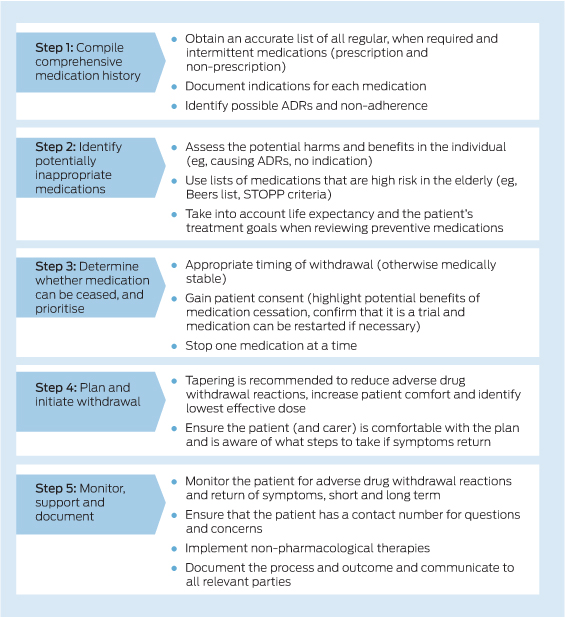
Most of the harms of deprescribing can be minimised with proper planning (ie, tapering) and monitoring after use of the drug is discontinued, with reinitiation of the medication if the patient’s condition returns. Medications deemed inappropriate (cessation may be recommended because of high levels of harm imposed) may still have some benefits, so loss of benefits cannot be excluded as a harm of deprescribing. More evidence is needed regarding negative, non-reversible effects of ceasing use of certain classes of medication, and to better define the harm–benefit profile of preventive medications in older adults. Additionally there are many medication classes for which cessation of use has not been studied, and large-scale randomised controlled trials of deprescribing according to a predefined protocol are required before the true benefits and harms can be known. We have developed an evidence-based patient-centred deprescribing process that provides practical steps to maximise patient involvement and minimise harms (Box).30

Not all patients will ultimately be able to successfully stop taking medications (eg, those with multiple morbidities), and the greatest benefits will be achieved if deprescribing is considered part of a holistic approach to optimising medication use.

A patient-centred deprescribing process*


ADRs = adverse drug reactions. STOPP = Screening Tool Of Older Persons’ Potentially Inappropriate Prescriptions. * Adapted from: Reeve E, Shakib S, Hendrix I, et al.30

Demystifying bioequivalence

Doctors are key to helping patients understand any real or perceived differences between different brands of medicines, but confusion still abounds among health professionals and consumers when it comes to choosing between alternative (or generic) brands of medicines.

The availability of alternative brands can lead to cost savings in the health system, and alternative brands represent an important choice for patients. Much of our work in this area over the past few years has been designed to improve health literacy and understanding about active ingredients in a marketplace where both innovator and generic brands of medicines are available, and to support safe and effective use of these medicines.

It is fair to say that there remains a perception that alternative brands are somehow inferior. While consumer confidence has increased over the past few years, there are still occasionally media reports or comments from prominent health professionals supporting a view that generics are of a lower standard.

The reality in Australia is that for generic medicines to be established as bioequivalent they must meet stringent standards for quality, and they are only approved by the Therapeutic Goods Administration if these standards are met.

NPS MedicineWise recently launched a freely available e-learning program, Demystifying bioequivalence (http://learn.nps.org.au). Produced for health undergraduates and practising health professionals, it addresses scientific and clinical questions about bioequivalence, explaining how alternative medicines are established as bioequivalent and approved for the Australian market. It is designed to help doctors support patients to understand why they might be offered a choice of medicines, and to answer questions that patients may have about medicine quality. The program debunks some of the myths that exist around bioequivalence and explores questions of the safety and effectiveness of alternative brands.

Bioequivalence is an area of great uncertainty. This program is designed to provide health professionals with a greater level of confidence and understanding.

Are high coronary risk patients missing out on lipid-lowering drugs in Australia?

Lipid-lowering drugs (LLD), especially statins, are of proven benefit in preventing future coronary heart disease (CHD), both recurrent events and first events in those at high coronary risk.13 The Organisation for Economic Co-operation and Development (OECD) noted that consumption of LLD in Australia in 2011 was the highest of 23 countries reported.4 The rate was 50% higher than the OECD average and had risen more than 300% since 2000.4

Given this high level of use, it is important to know whether LLD are being prescribed for the correct mix of patients. The Australian ACACIA registry reported that statins were prescribed for 75%–89% of patients with acute coronary syndrome in 2005–2007, with the rate varying depending on the clinical presentation.5 Similarly, a large European survey of patients with CHD reported that 89% had been prescribed statins in 2006–2007,6 while a companion survey in the general practice setting found that 47% of “high-risk” patients with hypercholesterolaemia had been prescribed statins.7

The AusHEART study, an Australian general practice survey of risk factor perception and management in 2008, found that 50% of patients with established cardiovascular disease were prescribed a combination of statin, antihypertensive and antiplatelet therapy.8 Only a third of patients without established cardiovascular disease but at high risk of a first event were prescribed statin and antihypertensive medication.8 The AusDiab Study in 2011–2012 reported that 60% of people with diabetes were using statins.9 None of these outcomes take into account the poor long-term persistence in patients prescribed these and other cardiovascular drugs.1012

In previous studies, we have used the Pharmaceutical Benefits Scheme (PBS) database to explore patient behaviour in those prescribed various medications.1012 The database also contains information on co-prescriptions, which can be used as a surrogate for accompanying medical conditions. Here, we used the PBS database to explore whether patients arbitrarily defined as being at high coronary risk (those with prior CHD, diabetes or hypertension) are receiving LLD as they should, according to contemporary prevention guidelines.2,3

Methods

Data source

Dispensing is only recorded in the PBS database for patients classified as concession card holders, who are nevertheless estimated to represent 65% of all patients receiving statins.13 We analysed PBS pharmacy payment claim records for a 10% random sample of the included population. The data were drawn from de-identified records held by Medicare Australia, via the Department of Human Services, for the period January 2006 through May 2013, inclusive. Various statin drugs were priced below the general patient copayment threshold for some or all of this period, and no record of their prescription would have been sent to the PBS. Hence, our study was limited to patients who had received > 90% of their PBS prescriptions on a concessional basis during the study period, indicating that they were long-term concession card holders. Prescriptions for LLD included statins, fibrates and ezetimibe, although statin drugs were predominant.

Definition of surrogates

Groups of patients at high risk of future CHD were arbitrarily defined by the following co-prescriptions:

  • CHD: antiplatelet drugs (clopidogrel, prasugrel, not solo aspirin) and anti-anginal drugs (nitrates, nicorandil, perhexiline)
  • Diabetes: all standard drugs
  • Hypertension: all standard drugs (not solo diuretics).

To be classified in a high-risk group, patients needed to have three prescriptions for the specified drugs within 6 months at any time during the study period. Patients could belong to multiple groups.

Ethics approval

Patient identities remained anonymous during this investigation. Ethics and publication approval was obtained from the External Request Evaluation Committee of Medicare Australia.

Results

We extracted information from the PBS claims database on 853 836 concessional patients who had received PBS drugs during the study period (representative of 8 538 360 patients nationally). Of these, we classified 276 212 (32%) as being at high coronary risk. A comparison of the Australian population distribution with the concessional and high coronary risk populations is shown in Box 1. Compared with the Australian population, the distribution of concessional patients was shifted towards older age groups. High coronary risk patients were older than the overall concessional group (mean age, 66.1 [SD, 14.8] years, 44% male v 47.9 [SD, 28.0] years, 45% male).

Of the total concessional group, 657 454 patients (77%) were not prescribed any LLD during the study period. Of the total high coronary risk group, 115 477 (42%) were not prescribed any LLD.

Among the clinical groups of high-risk patients not receiving LLD, there were minor variations by age and sex (Box 2). For patients in a single risk-factor group, the proportion not receiving LLD was lowest in the CHD group (40%). For patients in multiple risk-factor groups, the proportions not receiving LLD were lower, down to 8% in the CHD + diabetes + hypertension group. Among all CHD groups combined, 19% of patients were not receiving LLD.

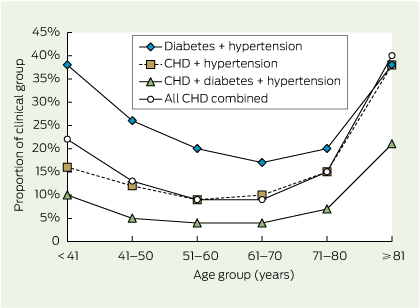
The proportions of patients in high-risk groups not receiving LLD are shown by age groups in Box 3. Across all risk groups, the proportions not receiving LLD were generally higher in the youngest and oldest age groups and lowest in those aged 51–70 years. This U-shaped relationship in the proportions not receiving LLD by age is clearly apparent for the largest multiple risk-factor groups in Box 4.

Discussion

Australia’s national guidelines for the primary or secondary prevention of CHD provide a general framework for appropriate management of all risk factors.2,3 However, such therapy needs to be individualised according to background risk, prognosis, comorbidities, drug tolerance, lifestyle and living circumstances, and personal choices.2,3 Hence, there can be no simple threshold for the proportion of people not treated that would signify undertreatment. Using conservative definitions for high coronary risk, we identified that the proportions of patients with multiple risk factors who were not receiving LLD are generally low, particularly in the CHD + diabetes + hypertension risk group.

Our findings are broadly consistent with Australian data for patients with CHD5 or diabetes,9 as well as data from Europe.6,7 The AusHEART study reported much higher proportions of patients with cardiovascular disease or at high risk of disease who were not receiving statins, antihypertensive therapy or antiplatelet drugs,8 but the findings were derived from general practice surveys and are not strictly comparable with administrative data from the PBS database.

We found that the concessional patient population was older than the Australian population and, not surprisingly, that the high coronary risk population was older still. The proportions of patients aged 71–80 and ≥ 81 years in the high-risk population were about fivefold those in the Australian population, reflecting a greater presence or risk of disease. The finding that greater proportions of those aged ≥ 81 years, and to a lesser extent those under 41 years, were not receiving LLD across all clinical groups is intriguing. This may represent a form of age discrimination and may not be consistent with national guidelines.2,3 The PBS database contains no further clinical information that might explain the behaviour of prescribers, but if there is a genuine bias against lipid-lowering therapy in these age groups, further research and education will be required.

There are limitations in our analysis. It was restricted to concessional patients; however, we have previously noted that concession card holders account for two-thirds of statin use.13 As the PBS database is administrative, with no relevant clinical information, we had no information on how well risk factors are controlled in these patients. The clinical definitions of high coronary risk we employed were conservative and would have good ability to identify high-risk patients, but would be less reliable in identifying those not at high risk. Very few patients using the nominated drugs would be misclassified as having CHD. There is minimal use of metformin in patients without diabetes (much less so in older patients), while some antihypertensive drugs are used for other indications, notably CHD. The major strength of our analysis is the use of a large, nationwide database.

Despite our study’s limitations, we also examined the reciprocal question of whether too many “low-risk” patients are receiving LLD. After subtracting data for the high-risk group from the total dataset of 853 836 concessional patients, we calculated that only 7% of those not identified as being at high coronary risk were receiving LLD. At limited face value, this is an encouraging statistic, given the high use of statin drugs in Australia.4

Our study suggests a large proportion of patients at high coronary risk, especially those with CHD and multiple risk factors, are being appropriately prescribed LLD in Australia. However, long-term persistence of therapy remains problematic10 and we have no information on how well risk factors are controlled. While use of LLD in Australia may be very high, it appears that middle-aged concession card holders at high coronary risk are being well managed.

1 Comparison of Australian population distribution with concessional and high coronary risk populations, by age*


Age group (years)


Population

< 41

41–50

51–60

61–70

71–80

≥ 81


Australian population (n = 22 710 352)

12 546 208 (55%)

3 143 550 (14%)

2 827 714 (12%)

2 165 462 (10%)

1 255 465 (6%)

771 953 (3%)

Concessional patients (n = 853 836)

367 141 (43%)

73 628 (9%)

63 695 (7%)

90 591 (11%)

135 129 (16%)

123 618 (14%)

High coronary risk patients (n = 276 212)

11 429 (4%)

17 122 (6%)

35 793 (13%)

88 210 (32%)

82 816 (30%)

40 842 (15%)


* Estimated Australian population at 30 June 2012.14 The other two groups are based on a 10% random sample of the Pharmaceutical Benefits Scheme database. Percentages refer to proportion of the population group (eg, 55% of the Australian population were aged < 41 years).

2 Mean age, sex and proportions of high coronary risk patients not receiving lipid-lowering drugs (LLD), by clinical group

Clinical group

No. of patients

Mean age (SD), years

Male

Not receiving LLD


CHD alone

6 696

74 (13)

3 375 (50%)

2 676 (40%)

Diabetes alone

12 713

68 (13)

6 191 (49%)

7 007 (55%)

Hypertension alone

166 094

53 (20)

66 105 (40%)

88 942 (54%)

Diabetes + hypertension

39 772

65 (12)

18 971 (48%)

8 543 (21%)

CHD + diabetes

853

74 (11)

465 (55%)

215 (25%)

CHD + hypertension

35 827

71 (13)

17 161 (48%)

6 983 (19%)

CHD + diabetes + hypertension

14 257

70 (10)

7 884 (55%)

1 111 (8%)

All CHD groups

57 633

66 (15)

28 817 (50%)

10 985 (19%)


CHD = coronary heart disease.

3 Numbers and proportions of high coronary risk patients not receiving lipid-lowering drugs, by clinical and age groups*


Age group (years)


Clinical group

< 41

41–50

51–60

61–70

71–80

≥ 81


CHD alone


No. (%)

56/104 (54%)

88/239 (37%)

141/512 (28%)

312/1480 (21%)

627/2023 (31%)

1452/2338 (62%)

P

0.000

0.000

0.003

reference

0.000

0.000

Diabetes alone


No. (%)

2680/3272 (82%)

981/1894 (52%)

871/2118 (41%)

1131/2822 (40%)

795/1800 (44%)

549/807 (68%)

P

0.000

0.000

ns

reference

0.006

0.000

Hypertension alone


No. (%)

4981/6173 (81%)

7537/10 579 (71%)

12 297/21 806 (56%)

27 210/56 274 (48%)

22 310/48 471 (46%)

14 607/22 791 (64%)

P

0.000

0.000

0.000

ns

reference

0.000

Diabetes + hypertension


No. (%)

546/1451 (38%)

794/3049 (26%)

1429/7147 (20%)

2394/14 120 (17%)

2207/10 901 (20%)

1173/3104 (38%)

P

0.000

0.000

0.000

reference

0.000

0.000

CHD + diabetes


No. (%)

4/17 (24%)

7/41 (17%)

13/109 (12%)

27/201 (13%)

65/275 (24%)

99/210 (47%)

P

ns

ns

reference

ns

0.010

0.000

CHD + hypertension


No. (%)

45/279 (16%)

97/823 (12%)

221/2418 (9%)

864/8789 (10%)

2098/13 918 (15%)

3658/9600 (38%)

P

0.000

0.028

reference

ns

0.000

0.000

CHD + diabetes + hypertension


No. (%)

13/133 (10%)

23/497 (5%)

64/1683 (4%)

180/4524 (4%)

402/5428 (7%)

428/1992 (21%)

P

0.001

ns

reference

ns

0.000

0.000

All CHD combined


No. (%)

118/533 (22%)

215/1600 (13%)

439/4722 (9%)

1384/14 994 (9%)

3192/21 644 (15%)

5637/14 140 (40%)

P

0.000

0.000

reference

ns

0.000

0.000


CHD = coronary heart disease. ns = not significant (> 0.05). * Percentages refer to the proportion of the clinical group. There was a pairwise comparison in each clinical group with the reference age category. The age category with the smallest percentage was used as the reference, employing a two-tailed Z test.

4 Proportions of high coronary risk patients in selected multiple risk-factor groups not receiving lipid-lowering drugs, by age group


CHD = coronary heart disease.

Role of the medical community in detecting and managing child abuse

To the Editor: I thank Oates,1 and Gwee and colleagues2 for writing on the role of the medical community in detecting and managing child abuse. I would like to add to the points they make. Doctors have a crucial role in medical follow-up for children in out-of-home care. Many children in out-of-home placements have complex needs, with physical and mental health disorders.3 Placement breakdowns mean that some children lack consistency in medical follow-up, which can lead to complete treatment drop-out. This is a significant risk factor for children in care.4

Keeping the child health passport up to date can help with handover of medical conditions for children changing placements. General practitioners can assist with handover by keeping a log of prescriptions issued, with photocopies of private scripts.5 A doctor should highlight in the medical record when a patient is a child in care, making note of the name of the person who attends with the child, which organisation he or she works for, and details of the responsible government department and case worker. Such details can be useful to track a new abode for the child, particularly in the context of a missed appointment. Details of the guardian are also valuable when seeking consent for treatment.

Medication safety can be promoted through: carers leaving prescriptions at a designated pharmacy; weekly or fortnightly dispensing; use of Webster-paks; and the safe storage of medications by carers. The medical community can, with documentation and attention to prescribing, assist with the medical management of children in care.

The end of HIV: how do we get there?

Treatment is now the focus of prevention

The world’s HIV research policy and advocacy community will converge in Melbourne in July for the 20th International AIDS Conference. This is the first time this particular event has been held in this country, and provides an opportunity to focus on our response to the epidemic in our region, where we are now, and how to reduce transmission to zero. Over the years, the prevailing metaphor has evolved from the Grim Reaper’s “prevention is the only cure we’ve got” to its polar opposite, “treatment as prevention”.1,2 Recent high-profile reports of “cures” provide hope that ending HIV is a possibility.35 But what is needed to ensure this goal is accessible to all?

While Australia’s clinical and public health response to HIV has ensured that we remain a low-prevalence country with a relatively concentrated epidemic, there is currently a rising rate of new infections — the highest in more than 20 years.6 To meet this challenge, state and national HIV strategies have outlined targets that aim to halve sexual transmission by 2015, with the goal of virtual elimination of transmission by 2020.7,8 To achieve this, testing rates need to double and antiretroviral coverage needs to be around 95%.7 Lowering the barriers to HIV testing, as well as the Pharmaceutical Benefits Advisory Committee’s recent removal of the need for a CD4 criterion to prescribe subsidised antiretroviral treatment, are key steps towards a “test and treat” approach.

The dialogue with patients is changing; they are being encouraged to take responsibility not only for their own health but for that of others, by choosing to commence antiretroviral therapy at an earlier stage. The evidence for this “treatment as prevention” public health approach was first demonstrated by the HTPN 052 study, in which transmission was reduced by 96% in serodiscordant couples receiving early treatment, regardless of CD4 count.2 This approach is not the only answer, and the safe sex message that also applies to many other sexually transmissible infections should not be lost.

With the life expectancy of a person living with HIV approaching that of the general population, the focus now is on chronic disease management. Modelling predicts that the population living with HIV is not only ageing, but will increase in size due to increased life expectancy as well as the burden of new infections. While AIDS-defining illnesses are declining, significant contributors to morbidity and mortality are serious non-AIDS illnesses (SNAs), including malignancy and cardiovascular, cerebrovascular, liver and renal disease. It still remains to be seen whether the timing of antiretrovirals affects the individual risk of developing these complications — the Strategic Timing of Antiretroviral Treatment (START) study, due for completion in December 2015, aims to answer this question.

The rollout of antiretrovirals in the developing world has ensured that 10 million people now have access to treatment, thanks to programs such as PEPFAR and the Global Fund to Fight AIDS, Tuberculosis and Malaria. As these funding sources decline, vulnerable groups need to be the focus of locally based programs to ensure the continuum of care: from identifying those infected to being diagnosed, engaged in care, retained in care and, finally, initiated and maintained on treatment. Australia should continue its commitment to support countries in our region with concentrated epidemics in vulnerable populations such as Papua New Guinea, Cambodia, Indonesia and Myanmar. Priorities are to ensure access to treatment, reduce detectable viral load and ultimately stop HIV transmission.

Despite the success of antiretroviral therapy, it is not curative, and there is an ongoing role for vaccine development and research into other novel therapies. Progress has also been made in vaccine development, with modest evidence for prevention of HIV being demonstrated for the first time in the RV 144 Thai vaccine trial. The T cell vaccine approach is also being explored, alone and in combination with neutralising antibody vaccines. Cell therapies such as transcriptional gene silencing could facilitate viral latency, resulting in functional cure. Gene therapies that prevent HIV binding to and entering cells may also be the source of breakthroughs in the future.

An HIV-free generation is closer than ever before, and can be achieved through targeted campaigns, enhanced testing and treatment rollout. Simultaneously, ongoing research into vaccines and potential cures must continue, as chronic disease management is not the end goal.

Antibiotic prescribing practice in residential aged care facilities – health care providers’ perspectives

Widespread and inappropriate antibiotic use in residential aged care facilities (RACFs) has been widely reported.14 This is especially concerning given emerging evidence of antibiotic resistance in RACFs.5 Further, older people are particularly susceptible to the adverse consequences of antibiotic use, including Clostridium difficile infection.6 Thus, efforts to optimise antibiotic prescribing in this population are warranted.

Existing strategies to improve antibiotic use have largely focused on the acute care setting;7 however, different approaches are needed in the RACF setting due to differences in antibiotic prescribing behaviour and organisational resources. Several studies have proposed various factors leading to the widespread prescribing of antibiotics in RACFs, including difficulty in establishing clinical diagnosis of infection and lack of onsite diagnostic facilities.1,8,9 These, however, were based primarily on anecdotal presumption rather than the individual experience of relevant health care providers.

There may be unique challenges to improving antibiotic use in RACFs; however, limited data exist. Accordingly, this study reports on the organisational workflow and workplace culture influencing antibiotic prescribing behaviour and the perceived difficulties in optimising antibiotic use in RACFs.

Methods

This study involved high-level care RACFs affiliated with four major public health care services in metropolitan and regional Victoria, Australia. It forms part of a larger study exploring antibiotic prescribing practices in RACFs. Key health care providers, namely nurses, general practitioners and pharmacists servicing individual RACFs, were recruited using a combination of purposive and snowball sampling strategies.10 Institutional ethics approvals were obtained from all participating health care service networks and Monash University. Informed consent was sought from individual participants.

Senior executive nurses, nurse unit managers (NUMs) and registered nurses (RNs) were invited to participate in one-to-one interviews or focus groups. One-to-one interviews were conducted with GPs and pharmacists. Semistructured interview guides tailored to different health care providers’ perspectives were used. All data collection and interviews were conducted by one or two interviewers (C J L and M K) between 8 January 2013 and 2 July 2013. Recruitment continued until data saturation was reached. All interviews were audio recorded and transcribed verbatim. Onsite observation of the working environment and documentation related to antibiotic prescribing was also undertaken. Field notes from onsite observations were compared with interview transcripts for discrepancies.

Data were analysed and coded for emergent themes using the framework approach.11 Data management was facilitated with NVivo version 9.0 (QSR). All transcripts were independently verified against audio recordings by C J L and M K. Data analyses were performed independently by C J L and M K for cross-validation purposes. Themes and codes were finalised at regular meetings involving all researchers.

Results

Characteristics of study sites and participants

Twelve public RACFs (with 30–100 beds per facility) within the four health care networks participated. Primary care was delivered by GPs from different practices (range, 1–19 GPs per RACF). Individual RACFs were serviced by external community pharmacies (for medication supply) and consultant pharmacists (for medication review). Sixty-one participants consented to interviews: 40 nurses (four executive nurses, 15 NUMs and 21 RNs), 15 GPs and six pharmacists (Appendix). Fifteen RNs participated in three focus groups (4–6 participants per group). Other participants were interviewed individually.

Emergent themes

These can be categorised into workflow- and culture-related factors.

Workflow-related factors

Logistical challenges with provision of medical care. An important concern cited by all informants was the lack of onsite doctors to provide immediate clinical assessment. Consequently, antibiotics were commonly prescribed by phone order, especially for minor or recurrent infections. Telephone prescription would not necessarily be followed by onsite review (Box 1, quote 1). Due to logistical barriers, GPs tended towards initiating antibiotics early rather than waiting and observing (Box 1, quotes 2 and 3). There was delay in reviewing antibiotic prescriptions, particularly among GPs without regular onsite visits. All stakeholder groups believed that reliance on locum doctors was associated with greater use of antibiotics (Box 1, quotes 4 and 5).

Pharmacy support. Half the RACFs (6/12) did not have access to onsite antibiotics for after-hours use, which sometimes hindered timely administration (Box 1, quote 6). Medication review for individual RACF residents was only performed annually by consultant pharmacists through a scheduled residential medication management review; as such, short-term courses of antibiotics were rarely reviewed. Most GPs and nurses felt that there was a limited role for pharmacists in influencing antibiotic prescribing (Box 1, quote 7). Pharmacists also perceived major challenges in guiding antibiotic use, including their offsite location, limited communication with GPs and lack of access to clinical notes (Box 1, quote 8).

Nurse-driven infection management. All participants acknowledged the significant role of nurses in driving infection management in RACFs, with mixed opinions about having such a nurse-led system. Some GPs felt confident with nursing assessment, relying primarily on nursing staff information to guide their decisions to prescribe antibiotics (Box 2, quote 1). Other GPs had negative views, commenting on rapid staff turnover, lack of experienced nurses and variability of assessment quality, especially from agency or casual nursing staff (Box 2, quote 2). Several GPs also raised concerns about overreporting and pressure to treat from nurses, leading to unnecessary antibiotic prescribing (Box 2, quote 3). From nurses’ perspectives, some emphasised their influence on GPs in initiating or changing antibiotics (Box 2, quote 4). However, many considered their responsibility in infection management overwhelming, given existing staffing and workload issues. Some also indicated a lack of confidence and knowledge in advising about antibiotic use (Box 2, quotes 5 and 6).

Institutional policy and guidelines for antibiotic prescribing. None of the participating RACFs had an antimicrobial restriction policy. Prescribing was often based on residents’ histories and antimicrobial susceptibility results, if available. In most instances, however, the type and dose of antibiotics were chosen without following guidelines or evidence, with few GPs citing use of the Australian Therapeutic guidelines: antibiotic.12 Indeed, several GPs had concerns that the guidelines are generally not applicable to the older RACF population. Pharmacists likewise claimed that choice of antibiotics used in this population did not normally follow the guidelines (Box 3, quotes 1 and 2).

There was no standardised method for infection surveillance across participating RACFs. Some (eight RACFs) used infection control practitioners and followed the McGeer definitions for infection surveillance,13 while others (four RACFs) had a self-initiated infection registry. Only one facility monitored long-term trends in antibiotic use and the benefits of this were highlighted (Box 3, quote 3).

It was routine practice at several RACFs to perform regular (monthly or bi-monthly) dipstick urinalysis for all residents, regardless of presence of symptoms. However, this practice was criticised as leading to overtreatment of asymptomatic bacteriuria, with consistent views across stakeholders supporting its abolishment (Box 3, quotes 4 and 5).

External expertise and diagnostic facilities. Most GPs rarely sought advice from infectious diseases specialists (Box 3, quote 6). External supports used included microbiologists at pathology services (regarding multidrug-resistant organisms) and mobile services from hospitals (eg, Mobile Assessment and Treatment Service and In-Reach service) for assistance in administering intravenous antibiotics.

Few of the RACFs (2/12) had onsite radiology or pathology services. Most GPs rarely ordered radiological investigations for chest infections, partly because of the difficulty in transferring debilitated residents to an external site (Box 3, quote 7). Additionally, delay in pathology sample collection often complicated the clinical decision (Box 3, quote 8). Interestingly, GPs had mixed views about the usefulness of urine cultures in guiding antibiotic treatment for urinary tract infections (UTIs) (Box 3, quotes 9 and 10).

Culture-related factors

Patient. Most GPs and nurses felt that resident frailty was an important factor in early initiation of antibiotic treatment, with many GPs also prescribing broader spectrum antibiotics (eg, amoxicillin–clavulanate as opposed to amoxicillin) for this reason (Box 4, quotes 1 and 2). Difficulties in assessing residents with behavioural problems or cognitive deficits also complicated the prescribing decisions. Among this population, correctly obtaining a urine sample for microbiological investigation was often impossible. Fever and typical urinary symptoms were often not observed in presumed UTIs, and therefore, the decision for antibiotic therapy frequently depended on less specific symptoms including changes in behavioural or functional status (Box 4, quotes 3 and 4).

Family. Pressure from family members was identified to influence antibiotic prescribing (Box 4, quotes 5 and 7). Often there were unrealistic expectations of antibiotics being prescribed for minor symptoms or to avert hospitalisation. Antibiotics were sometimes prescribed for residents in end-stage illness to fulfil family expectation.

Institutional. Several GPs felt institutional pressure to use antibiotics in order to avoid legal consequences and sometimes to prolong a resident’s life inappropriately, with most nursing staff admitting to overreporting symptoms due to fear of litigation (Box 4, quotes 8 and 9). Both GPs and nurses emphasised the importance of advance care planning in guiding antibiotic prescribing decisions (Box 4, quote 10).

Discussion

To our knowledge, this is the first study that has explored the views of key health care providers about barriers and challenges to optimising antibiotic prescribing in RACFs. One of the major concerns raised was the logistical barrier associated with lack of onsite doctors. This places heavy responsibility on nurses for infection management, a role they are generally not trained to perform. Indeed, this study highlighted a perceived lack of knowledge and guidance regarding antibiotic use among nursing staff. Further guidance and support to the nursing staff is clearly needed. Additionally, the Therapeutic guidelines: antibiotic12 were deemed not relevant to the RACF population, highlighting an unmet need.

Extending the roles of pharmacists in antimicrobial stewardship (AMS) in the RACF setting has shown positive outcomes.14,15 There is potential for consultant pharmacists to provide additional support to nursing staff, particularly with regard to education about appropriate antibiotic use and facilitating surveillance of antibiotic use. Extensive antibiotic surveillance has been common practice in the United States and in European RACFs;16,17 however, such activities are relatively scarce in Australian RACFs. Monitoring of longitudinal trends of antibiotic use and benchmarking across RACFs will be a useful starting point to improve antibiotic use.

Another recurrent theme was the influence of routine dipstick urinalysis (regardless of symptoms) on overprescribing of antibiotics for asymptomatic bacteriuria. Despite studies showing that urine dipstick tests are unreliable for identifying older residents with laboratory evidence of UTI,18 half of the participating RACFs used routine full-ward tests. Anecdotally, positive dipstick urinalysis often led to initiation of antibiotics, especially among psychogeriatric residents. This is concerning, given that treatment for asymptomatic bacteriuria has been shown to contribute to the emergence of antibiotic resistance.19,20 Accordingly, nursing staff education highlighting evidence-based practice about diagnosis and treatment of UTI should be promoted.

Empiric antibiotic prescribing without pathological or radiological investigations was found to be common practice. Reassessing antibiotic therapy according to culture and susceptibility results is critical given the increasing occurrence of multidrug-resistant organisms in the RACF setting,21,22 and particularly helpful given the GPs’ reliance on nursing staff to follow-up on the duration and outcomes of antibiotic treatment. Indeed, the recently revised McGeer criteria for infection surveillance has recommended mandatory urine culture for the diagnosis of UTIs.13 On the other hand, however, mandatory culture of urine samples regardless of obvious signs and symptoms could paradoxically lead to an increase in unnecessary antibiotic prescribing for asymptomatic bacteriuria. Thus, strict evidence-based guidelines for the indication of urine cultures and treatment of UTIs are warranted.

The pressure to prescribe antibiotics from nursing staff and family was reportedly a significant influence on antibiotic prescribing behaviour; notably, these factors are potentially modifiable. Antibiotic prescribing decisions in older patients are often difficult and controversial, particularly as part of end-of-life care.23 Studies have shown higher use of antibiotics and a greater risk of acquiring multidrug-resistant organisms among older people with advanced dementia or end-stage illness,24,25 highlighting the need to re-evaluate antibiotic prescribing in this group. Ideally, all new residents of RACFs should have an advance care plan, including decisions about future antibiotic therapy and palliation alternatives. This might prompt appropriate discussions with family and reduce pressure to prescribe in some situations.

In conclusion, significant issues with the existing organisational workflow and culture of RACFs have been identified that might contribute to poor antibiotic prescribing practices, underlying the need for targeted AMS initiatives in this setting. Further intervention should consider the limitations of institutional resources and health care professionals’ working relationships within this environment. Importantly, this study has highlighted areas and modifiable factors that will assist in developing future AMS interventions.

1 Logistical issues with offsite medical doctors and pharmacists

Issues with offsite doctors

Phone order of antibiotics

Q1: “[At the] MAC [medication advisory committee] meeting this morning they want me to sign off on a doctor that hasn’t seen her resident since she had a UTI [urinary tract infection] in February, and still hasn’t signed the drug chart … that patient hasn’t been reviewed for over 4 months, and that’s a fairly typical situation.” (GP; 27 years’ RACF experience)

Lack of instant support

Q2: “They [GPs] will prescribe something because if they don’t prescribe something it could be 3 or 4 days before that resident gets an antibiotic prescribed.” (NUM; 12 years’ RACF experience)

Q3: “You know I’m not going to come here every day and listen to their chest . . . so you tend to treat earlier.” (GP; 25 years’ RACF experience)

Difficulties of locum doctors

Q4: “And in many cases they [locum doctors] will prescribe an antibiotic because if the locum got the call out at night they think ‘I had better do something rather than nothing’.” (Pharmacist; 12 years’ RACF experience)

Q5: “They [locum doctors] have got even a lower threshold of prescribing antibiotics than perhaps I do, and it’s hard for them at 3 o’clock in the morning . . . it’s harder to assess properly, and therefore I think there is an overuse [of antibiotics].” (GP; 5 years’ RACF experience)

Issues with offsite pharmacists

Q6: “We just don’t have an Imprest [onsite source] of antibiotics. I have to fax the pharmacy and wait for the next delivery. And with the aged care, with our aged care clientele here, sometimes 4 or 6 hours, or maybe 7 hours until we get that antibiotic, they can really deteriorate rapidly. I know it sounds extreme, but that can happen with them.” (NUM; 37 years’ RACF experience)

Q7: “They [pharmacists] are not there at 6 o’clock at night when I make the decision which antibiotic to put them [residents] on and they’re not there, it’s not their role. I don’t see how they actually have a particular role. I’m happy to consider it, but I don’t see where they would fit in with the decision making of which antibiotic, the side effects or something that’s clinically assessed.” (GP; 5 years’ RACF experience)

Q8: “You see the drug chart, a course of antibiotics that happened 4 months ago, am I going to go back and look at what it was for, why it was for, did it have the right bugs? You know, it’s just, at this point in time it is irrelevant to the review of this resident’s medications.” (Pharmacist; 12 years’ RACF experience)


GP = general practitioner. NUM = nurse unit manager. Q = quote extracted from interview transcripts. RACF = residential aged care facility.

2 Mixed perceptions about nursing-driven infection management

General practitioner perspectives

Q1: “Well the nurses in fact are very good, they call me because they’re very much aware that the antibiotic
has been ordered but what suits you see. And that’s a good thing, because otherwise I’d forget the whole
story if I don’t hear anything.” (GP; 40 years’ RACF experience)

Q2: “… unfortunately from my perspective and my experience, the nursing staff are de-skilling, and I can’t
really rely on what they’re saying to a great degree … because there’s such a turnover of aged care nursing
staff, and a lot of international graduates are coming into the industry, that’s another good reason why I need
to be responsive.” (GP; 27 years’ RACF experience)

Q3: “So we don’t get really good feedback from nursing homes any more. We’re told about everything,
someone sneezed we get to hear about it … They often initiate MSUs [midstream urine tests] or urine ward
tests on their own, and report those to us, so often insisting the urge to prescribe antibiotics to people with
abnormal full ward tests or abnormal MSU even if they’re clinically well. So we do get pressured a little bit by
nursing staff to do something.” (GP; 32 years’ RACF experience)

Nursing staff perspectives

Q4: “Whereas if we’ve got a result that you know the antibiotics and the infection don’t match, we’ll call the
GP. If they have prescribed we’ll call the GP and say ‘um change’, or if they haven’t prescribed we’ll call them
and say ‘can we have a prescription’.” (NUM; 12 years’ RACF experience)

Q5: “That should be his [GP’s] role I suppose. It’s not up to me to go and check what the results are and hop on
the phone and say ‘… there’s resistant or sensitive bug, so what do you want them to have’.” (NUM; 25 years’
RACF experience)

Q6: “I am saying the patient doesn’t require antibiotic; that’s my feeling, what if my assessment is wrong? And
so we tend to follow someone else especially the GPs.” (RN; 2 years’ RACF experience)


NUM = nurse unit manager. Q = quote extracted from interview transcripts. RACF = residential aged care facility.

3 Institutional guides and external support for infection management

Institutional guides

Antibiotic policy and guidelines

Q1: “They [elderly residents] always get the acute bronchitis which the antibiotic guidelines say no evidence
that antibiotics make any difference to acute bronchitis. But what about in the 70s age group? What is the
data? Do we have any evidence? Obviously so little evidence pertains to elderly people.” (GP; 5 years’ RACF
experience)

Q2: “You will see particular prescribing habits from doctors. One particular doctor everything with the
cephalexin is always 10 days, but generally it is a 7-day course.” (Pharmacist; 4 years’ RACF experience)

Surveillance of antibiotic use

Q3: “I keep a spreadsheet so I know who’s getting antibiotics and when they’re getting them, how long
they’re on for, so I keep a note of that … I’ll start posting that [antibiotic register spreadsheet] out to all the
nursing staff … they can maybe become a bit more frontline with that as well, and saying to the doctors, you
know they [the residents] have had this [antibiotic] twice so do you not think maybe they should be using
something else.” (NUM; 9 years’ RACF experience)

Regular dipstick urinalysis

Q4: “I know staff sometimes they’re very very proactive, they’re checking urine non-stop, but in nursing
home we’re not supposed to do it, it’s not a good practice … some GPs will ask if they’re symptomatic
or asymptomatic, but some GPs they will give [antibiotic] order [without asking].” (NUM; 12 years’ RACF
experience)

Q5: “I have tried to tell every facility when they are resident of the day don’t check their urine. You know, of
course they are going to have white cell counts, of course they are going to have nitrites. I mean they are, most
of them are incontinent, they have got pads … I get frustrated with that. So I tend not to prescribe antibiotics
in those instances.” (GP; 20 years’ RACF experience)

External support

Q6: “I don’t think we rely on too much external sources for that [antibiotic prescribing], we make those calls
ourselves . . . very occasionally [I would] ring infectious diseases registrars and get advice from the major
hospitals, but that’s not very common.” (GP; 32 years’ RACF experience)

Q7: “… [Ordering investigations for] respiratory [infections], rarely, occasionally sputum [culture] if they’re not
improving. Chest x-ray, a lot of them aren’t in the position to go out and don’t want to go out. Often the next
step is if they are for hospital would be hospital.” (GP; 20 years’ RACF experience)

Q8: “Well one thing that would be helpful is the ability to get a blood test on the day if you wanted one . . .
most usually the [pathology service] they won’t come for 3 or 4 days. And if we could get immediate
pathology for what we wanted, then it would make it easier to know by the morning whether I really need to
treat it or not.” (GP; 25 years’ RACF experience)

Q9: “I would always send an MSU [midstream urine] if I suspected a UTI [urinary tract infection], because of
firstly wanting to confirm the diagnosis, and secondly wanting to make sure that there was not resistant bugs
there.” (GP; 20 years’ RACF experience)

Q10: “You see the trouble is that in terms of MSU that they are so common that every second person has it
every second week . . . So I think we are wasting resources if we order MSU every time.” (GP; 25 years’ RACF
experience)


GP = general practitioner. NUM = nurse unit manager. Q = quote extracted from interview transcripts. RACF = residential aged care facility.

4 Cultural factors related to patient, family and institutional factors influencing antibiotic prescribing behaviour

Patient factors

Q1: “I think the doctors’ kind of point of view is get them on antibiotics quite quickly before it gets any worse
or turns into anything else, so I think that’s probably part of the reason they tend to jump on antibiotics first . . .
they don’t do the tests to see actually what’s going on first, they’ll put the antibiotics out and then go from
there.” (NUM; 9 years’ RACF experience)

Q2: “First of all they don’t breathe as deeply, they’re more likely to develop pneumonia just from a cough, and
they deteriorate very very fast … So again you want to be more aggressive in terms of treatment, they’re more
likely to require things like the high powered antibiotics like ceftriaxone, for example.” (GP; 30 years’ RACF
experience)

Q3: “So a lot of our residents are incontinent so it makes it very difficult to get a clean sample for a full ward
test, but what we do do where we can’t get a sample is use a urine analysis strip to just sort of soak it in
the pad and just see if there’s any indication there. Sometimes it’s too difficult to get an MSU [midstream
urine], and doing an in-and-out catheter is not advisable to get an MSU, so we would just go mainly on the
symptoms of what we see … 99% of the time we won’t get a culture.” (NUM; 5 years’ RACF experience)

Q4: “But usually by this stage you know their behaviours have changed and they’ve got changes in their
urine . . . particularly we can’t wait to see whether it resolves, we’ve got to treat them just to get their
behaviours under control.” (NUM; 30 years’ RACF experience)

Family factors

Q5: “I think sometimes there is a potential for family members to push for use of antibiotics where they
shouldn’t have and the GP has gone with the wish of the family.” (NUM; 13 years’ RACF experience)

Q6: “Well the family, the resident and the staff … the bias is always an inappropriate expectation of the use of
antibiotics.” (GP; 5 years’ RACF experience)

Q7: “If I think it’s a viral thing and they’ve got a cough and they haven’t got fevers, I tend to kind of go ‘let’s just
see how they go’. But if the family is insistent or if they [residents] are insistent, then I do tend to prescribe
rather than argue with them.” (GP; 12 years’ RACF experience)

Institutional factors

Q8: “I would think so, because the other thing that’s happened in aged care is there’s a reluctance to let
people die from their chest infections, there’s a real push from nursing home staff to treat people. And often I
think that’s for secondary gain, you know they don’t want an empty bed, so they pressure GPs to treat people
that otherwise shouldn’t be treated.” (GP; 32 years’ RACF experience)

Q9: “I think staff sometimes worry, and that’s borne out of a litigious consciousness, and staff worry that ‘oh
my God they’ve coughed twice, better report it’. Because if they don’t report it then whose fault is that? That’s
our fault, and we don’t really like to be blamed for things. So there’s that potential to overreport I think.”
(NUM; 12 years’ RACF experience)

Q10: “Certainly in our area of work we have groups of people that are so advanced in their debility and
dementia that you have to ask the question ‘will we treat or not treat’. So there’s a bit of an algorithm
there. So I would like to think that a lot of my residents have got advance care plans.” (GP; 27 years’ RACF
experience)


GP = general practitioner. NUM = nurse unit manager. Q = quote extracted from interview transcripts. RACF = residential aged care facility.