Australian researchers have developed a tiny device to electrically stimulate the brain in the hope of treating epilepsy and Parkinson’s disease without invasive surgery in the future.
The Stentrode device, just 4mm in diameter, can be permanently put inside a blood vessel to place electrodes in the brain through a vein in the neck, according to a study released on Tuesday.
The device was put into blood vessels in sheep and their brain tissue was simulated, the proof-of-concept study published in Nature Biomedical Engineering reveals.
“By adding the ability to speak to the brain using electrical stimulation, we have created a two-way digital communication device,” Lead researcher Dr Nick Opie said.
“In one application, the Stentrode could be used as a tool to record the onset of an epileptic seizure, and provide stimulation to prevent it.”
It is hoped the device could be used for a range of treatments which traditionally require open brain surgery including deep brain stimulation for epilepsy and Parkinson’s disease.
“This offers hope of less invasive treatments for the symptoms of conditions such as Parkinson’s disease, epilepsy, depression and obsessive-compulsive disorder,” co-author Dr Sam John said.
It builds on 2016 research which found the device could be used to record brain signals related to movement.
Researchers at The University of Melbourne, Florey Institute of Neuroscience and Mental Health, The Royal Melbourne Hospital, Monash University and Synchron Australia contributed to the work.
New research has revealed that cardiovascular risk factors, particularly high cholesterol, play a role in the development of cognitive decline, further highlighting the importance of kickstarting healthy heart habits earlier in life.
Professor Cassandra Szoeke, director of the Healthy Ageing Program at the University of Melbourne and lead researcher, said the results showed that strategies to target vascular damage are vital to prevent brain cell loss.
“Neurodegenerative brain disease works insidiously for decades before people are diagnosed with dementia – we need to stop it in its tracks, or ideally before it starts.”
“What you do now affects what you will be decades later.”
What did the study involve?
The Australian study, published in Brain Imaging and Behaviour, included 135 participants from the Women’s Healthy Ageing Project. These women had completed midlife cardiovascular risk measurement in 1992, followed by an MRI scan and cognitive assessment in 2012.
The researchers found that higher midlife Framingham Cardiovascular Risk Profile (FCRP) score was associated with greater White Matter Hyperintensity (WMH) volume two decades later, and was predominantly driven by the impact of HDL cholesterol level.
Structural equation modelling demonstrated that the relationship between midlife FCRP score and late-life executive function was mediated by WMH volume.
“We saw those with low brain volume lost even more volume over the next 10 years,” Professor Szoeke said.
The authors wrote that their results indicated that intervention strategies targeting major cardiovascular risk factors at midlife might be effective in reducing the development of WMH lesions and thus late-life cognitive decline.
Massive exercise changes aren’t needed – but being active every day is key
“We all know we should eat healthily and exercise, but we also know many people who start up a program are not participating 3 months later, and 12 months later even less are still participating,” Professor Szoeke said.
Going into the study, her research team had expected that women who did intense physical activity would have the best cognition down the track.
“We found it was those who did activity every day over the 20 years of follow-up. It could be walking the block or gardening or a mix of Saturday dancing, Sunday walking home, and Monday walking to work – but it is each and every day for 20 years.”
Professor Szoeke said the impact of the research should be a greater recognition that vascular risk is modifiable, If it’s left unchanged, this will lead to brain damage in the form of WMH, low brain volume and poor cognition.
She said modifying this risk doesn’t mean a huge lifestyle change. In fact, the benefit can be obtained from just being more active.
“Move often and eat healthily. Choose what works for you, change it as you need, and do it each and every day.”
Women are disproportionately affected by dementia
Women account for around two-thirds of all dementia cases. Understanding the reasons behind this is an issue close to Professor Szoeke’s heart.
She said while women generally live 3 to 4 years more than men, it is not just an effect of age. The fact that the symptoms, assessment, treatment, management and prevention of heart disease differs between men and women suggested that cardiovascular risk also plays a role.
“Last year, the Australian Hidden Hearts report was released, showing that women have more heart disease, heart failure and stroke than men,” Professor Szoeke said.
“The Health Minister Greg Hunt has announced an update of women’s health policy. There has been $18 million announced for research to fill these gaps in knowledge, particularly highlighting issues not often focused on in traditional women’s health.”
She said the strategic areas for the new update reflect key issues for women, including mental health, dementia, chronic disease and healthy ageing.
“I hope we can quickly see major improvements with investment in these areas.”
Cooling the brain and body soon after a severe traumatic brain injury does not improve patient outcomes as previously thought, and exposes patients to unnecessary harm, a landmark Australian trial has found.
The technique – using a combination of cold intravenous fluids and surface cooling wraps, followed by slow re-warming – has been shown to be neuroprotective in animal studies, and is used in selected patients with severe traumatic brain injury (TBI) in most Australian intensive care units.
The theory is that hypothermia limits secondary brain injury by attenuating inflammation and biochemical cascades set off by trauma.
However limited clinical trial evidence to date has failed to demonstrate that the potential benefits of hypothermia outweigh the known increased risks of bleeding, infection, decreased heart rate and blood pressure and pneumonia.
Led by Professor Jamie Cooper, director of the Australian and New Zealand Intensive Care Research Centre, the POLAR study randomized 500 traumatic brain injury patients recruited from emergency departments and ambulance services in six countries to either prophylactic hypothermia or normothermia. All other care was at the discretion of the treating physician.
Whereas a previous study (Eurotherm) only used hypothermia in patients with evidence of brain swelling, patients in the POLAR trial were randomised to hypothermia regardless of intracranial pressure. This was in order to ensure hypothermia commenced as soon as possible after injury, to maximise the likelihood of benefit.
The targeted temperature in the hypothermia group was 33-35⁰C for at least 72 hours and up to 7 days. For patients in the normothermia group, the targeted temperature was 37⁰C, with surface-cooling wraps used when required.
At six months follow-up, the study found no benefit to patients receiving hypothermia, as measured by their capacity to live independently. In both groups, 49% of patients had a favourable Glasgow Outcome Scale Extended Score.
Furthermore, hypothermia did not improve secondary outcomes including mortality.
The intervention was, however, associated with increased rates of pneumonia (55% vs 51.3%) and intracranial bleeding (18.1% vs 15.4%), the authors reported in JAMA.
Professor Cooper told doctorportal: “My view is that we should now cease using hypothermia for TBI patients in Australia”.
“From now on, patients should not have to endure the risks of hypothermia because we know there are no benefits.”
Why no effect?
The latest study showed it takes much longer to reach the target temperature in clinical practice than it does in lab rats – even when hypothermia management commences as early as possible. It took 2.5 hours on average to reach the initial target temperature of 35⁰C, and 10 hours to reach the final target temperature of 33⁰C.
The authors said the delay was largely due to the time required to exclude risk factors for bleeding, such as ruptured spleen or persistent hypotension, that would contraindicate hypothermia.
An accompanying editorial by doctors from the University of Edinburgh suggested this time lag might explain why hypothermia “failed in translation from the bench to the bedside”.
The editorialists agreed that the weight of evidence was now firmly against hypothermia initiation during the acute phases of TBI management.
Is there ever a place for hypothermia in TBI?
Professor Cooper said it’s time for an explicit warning that hypothermia has no place in the management of TBI, even when there is significant intracranial pressure.
Professor Cooper said there was now clear evidence that if intensive management of intracranial pressure was required, barbiturates were the standard of care – not hypothermia or decompressive craniectomy. In a 2011 study in the New England Journal of Medicine, Professor Cooper’s team found decompressive craniectomy was linked with poorer outcomes compared with standard care.
Professor Stephen Bernard, medical director of Ambulance Victoria told doctorportal: “I think the POLAR trial did in fact provide a definitive answer that there is no benefit in the provision of early, prophylactic therapeutic hypothermia in patients with isolated severe traumatic brain injury.”
He continued: “I understand that there is still some enthusiasm for hypothermia as a last resort for the management of intracranial hypertension after thiopentone infusion, but these patients have a dreadful outcome so it is uncertain whether this will ever be tested in a clinical trial.”
Professor Cooper said the study’s findings were far from expected.
“Few of the authors anticipated that such extensive hypothermia would have such little evidence of any measurable effect at all, other than the known complications,” he said.
As the son of a nurse and an engineer, Craig Anderson, Executive Director of The George Institute for Global Health in China and Professor of Neurology and Epidemiology at Australia’s University of New South Wales, always knew he was destined for a career in science. “I’ve got the health-care provider—some degree of benevolence, wanting to help people—and I’ve got a problem solving, analytical, methodological approach to wanting to understand and find solutions to things”, he says.
As a neurology registrar, I worked in a department that ran social events that were exclusively for men. Male doctors were invited to golf outings, while female doctors stayed at work. Somebody had to hold the fort, after all. Cricket matches were more inclusive. Women could attend, but only to make the tea, not to play. This took place in 2003 in one of the UK’s foremost centres for neuroscience. I think of it any time I am faced with claims that women have equal opportunities to men in medicine and that any failure to achieve senior positions is out of a lifestyle choice.
Just 25 minutes into the 2015 Rugby World Cup Final, pitting the Wallabies against the All Blacks, Aussie veteran Matt Giteau attempted a tackle on Kiwi lock Brodie Retallick that went wrong, crashing Giteau to the ground where he lay in a daze. After stumbling about on all fours for a few seconds, he slowly got to his feet and staggered sideways as he tried to walk, a classic sign of concussion. Although he seemed to recover quickly, a medical officer pulled him from the pitch and he was out for the rest of the game.
“They wouldn’t have done that a decade ago,” says Dr David Hughes, Chief Medical Officer at the Australian Institute of Sport (AIS) and co-author of a new CPD learning module on concussion in sport. “That they pulled a key player off in such an important match shows just how seriously the football codes are taking the issue of concussion.”
Dr Hughes says there’s been an enormous cultural shift in how sport-related concussion is approached over the past few years.
“There was a time, particularly in contact and collision sports, when getting up and playing on after a concussion or even after being completely knocked out was seen as being tough or a sign of your commitment to the game. That has shifted, and a lot of the heavy lifting has been done by the sports codes themselves.”
Nowadays, he says, you’ll rarely see a professional player returning to the field until six days or so after concussion, let alone in the same game. And for many top athletes who are concussed, it may be weeks before they’re competing again.
“There is far more focus on the welfare of the athlete. We understand that there’s no such thing as a good concussion.”
Dr Hughes says the new awareness around the issue of consciousness is happening at the grassroots as well, and not just at the professional level.
“There’s parental concern, and there’s an understanding that concussion is not just about professional contact and collision sports, but it’s actually a public health matter. In the professional sports, you’ve got access to medical professionals and video, which makes identifying and dealing with concussion that much easier, but at the school or amateur level it’s a lot more difficult.”
Dr Hughes says there’s still a lot of confusion over the issue in the general community.
“You have the situation where a child suffers a concussion and the parent immediately thinks their child will have long term brain issues, and there’s just no evidence that this is the case. But we do know there’s a need to differentiate between children and adults. Children take longer for symptoms to resolve, and the recommendation is to wait 14 days following symptom resolution before the child resumes competitive sport.”
Then there’s the question that has been all over the media in the past couple of years of whether repeated concussion can lead to degenerative brain disease. Dr Hughes says he thinks the jury is still out.
“There was a paper published in JAMA by a group in Boston which has maintained a brain bank of professional athletes. Out of 220 people who had donated their brains, 210 had signs of degenerative brain disease. So you get all these headlines saying 90% of football players have degenerative brain disease. The problem is you can’t extrapolate from this study because it’s such a skewed sample. Everyone who donated their brains already had symptoms, and that’s why they donated.”
He says the fact is that the vast majority of people who suffer sport-related concussion will go on to lead perfectly normal lives.
“The AIS and AMA are not saying there are no long-term effects. All we’re saying is the studies have not been done. There is no research to date that clearly demonstrates cause and effect between sport-related concussion and later degenerative brain disease. There’s a lot of passion and emotion around the subject. You can hold up a slice of someone’s brain and then show a video of that same person being concussed many years ago, and it’s a very powerful image. But it’s not good scientific research.”
A 51-year-old man presented to the emergency department with a 2-day history of cognitive decline. He was admitted to the neurology department for an assessment where he was found to be confused and disorientated, and his attention, concentration, and memory were affected. He scored 12 on the Glasgow Coma Scale.
Who we are, and what makes us “us” has been the topic of much debate throughout history. At the individual level, the ingredients for the unique essence of a person consist mostly of personality concepts. Things like kindness, warmth, hostility and selfishness. Deeper than this, however, is how we react to the world around us, respond socially, our moral reasoning, and ability to manage emotions and behaviours.
Philosophers, including Plato and Descartes, attributed these experiences to non-physical entities, quite separate to the brain. “Souls”, they describe, are where human experiences take place. According to this belief, souls house our personalities, and enable moral reasoning to occur. This idea still enjoys substantial support today. Many are comforted by the thought that the soul does not need the brain, and mental life can continue after death.
If who we are is attributed to a non-physical substance independent of the brain, then physical damage to this organ should not change a person. But there is an overwhelming amount of neuropsychological evidence to suggest that this is, in fact, not only possible, but relatively common.
The perfect place to start explaining this is the curious case of Phineas Gage.
In 1848, 25-year-old Gage was working as a construction foreman for a railroad company. During the works, explosives were required to blast away rock. This intricate procedure involved explosive powder and a tamping iron rod. In a moment of distraction, Gage detonated the powder and the charge went off, sending the rod through his left cheek. It pierced his skull, and travelled through the front of his brain, exiting the top of his head at high speed. Modern day methods have since revealed that the likely site of damage was to parts of his prefrontal cortex.
Gage was thrown to the floor, stunned, but conscious. His body eventually recovered well, but Gage’s behavioural changes were extraordinary. Previously a well-mannered, respectable, smart business man, Gage reportedly became irresponsible, rude and aggressive. He was careless and unable to make good decisions. Women were advised not to stay long in his company, and his friends barely recognised him.
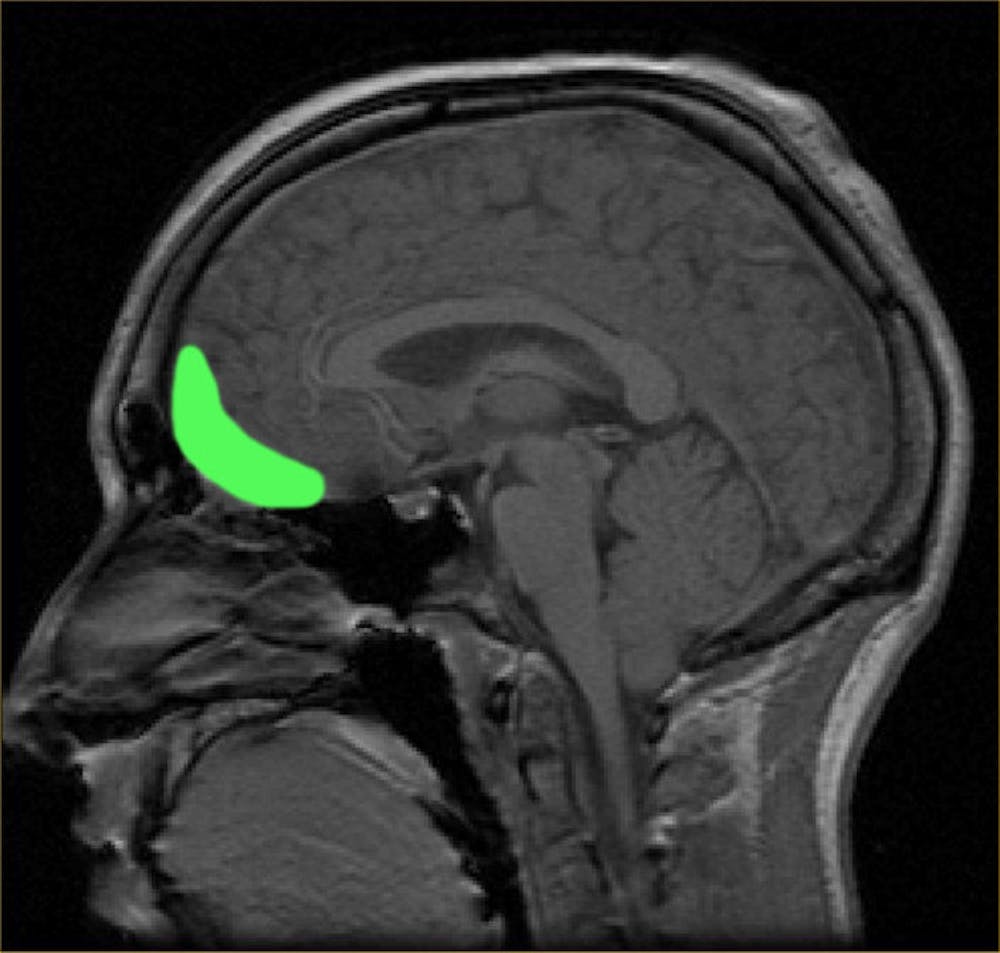
A similar case was that of photographer and forerunner of motion pictures Eadweard Muybridge. In 1860, Muybridge was involved in a stagecoach accident and sustained a brain injury to the orbitofrontal cortex (part of the prefrontal cortex). He had no recollection of the crash, and developed traits that were quite unlike his former self. He became aggressive, emotionally unstable, impulsive and possessive. In 1874, upon discovering his wife’s infidelity, he shot and killed the man involved. His attorney pled insanity, due to the extent of the personality changes following the accident. Sworn testimonies emphasised that “he seemed like a different man”.
Perhaps an even more controversial example is that of a 40-year-old school teacher who, in the year 2000, developed a strong interest in pornography, particularly child pornography. The patient went to great lengths to conceal this interest, which he acknowledged was unacceptable. But unable to refrain from his urges, he continued to act on his sexual impulses. When he began making sexual advances towards his young stepdaughter, he was legally removed from the home and diagnosed with paedophilia. Later, it was discovered that he had a brain tumour displacing part of his orbitofrontal cortex, disrupting its function. The symptoms resolved with the removal of the tumour.
All these cases have one thing in common: damage to areas of the prefrontal cortex, in particular the orbitofrontal cortex. Although they may be extreme examples, the idea that damage to these parts of the brain results in severe personality changes is now well-established. The prefrontal cortex has a role in managing behaviours, regulating emotions and responding appropriately. So it makes sense that disinhibited and inappropriate behaviour, psychopathy, criminal behaviour, and impulsivity have all been linked to damage of this area.
However, changes after injury can be more subtle than those previously described. Consider the case of Mr. L, who suffered a severe traumatic brain injury after falling off a roof while supervising a building construction. His later aggressive behaviour and delusional jealousy about his wife’s apparent infidelity caused a breakdown in their relationship. To her, he was not the same man anymore.
But with a growing appreciation of the relevance of emotional adjustment in rehabilitation, treatments
have been developed to help manage these changes. In our lab, we have developed the BISEP (Brain Injury Solutions and Emotions Programme), which is a cost-effective, education-based, group therapy. This addresses several common complaints of brain injury survivors and has a strong emphasis on emotion regulation. It teaches attendees strategies that can be used adaptively and independently, to help manage their emotions and associated behaviours. Although it is early days, we have obtained some positive preliminary results.
From a neuropsychological perspective, it’s clear that who we are is dependent on the brain, and not the soul. Damage to the prefrontal cortex can change who we are, and though people have become unrecognisable from it in the past, new strategies will make a big difference to their lives. It may be too late for Gage, Muybridge and others, but brain injury survivors of the future will have the help they need to go back to living their lives as they did before.
A high-profile US research panel has proposed a new way of defining Alzheimer’s disease that depends on biological markers, rather than a symptom-based clinical diagnosis.
The researchers from the National Institute of Aging and the Alzheimer’s Association say their proposed new definition would for the moment be used only for research purposes, to ensure that the right people are tested in Alzheimer’s trials. But some specialists fear that once the biological marker genie is out of the bottle, it will be very hard to put it back in.
A biological definition of Alzheimer’s has only recently become possible thanks to new technologies that allow measurement and imaging of what is considered the key pathology of the disease – the abnormal buildup in the brain of two proteins. Clumps of amyloid-beta are thought to disrupt communications between neurons and lead to their death, while tau protein causes neurofibrillary tangles in the brain which also disrupt communications.
In the past few years, PET scans and cerebrospinal fluid taps have been developed to detect these protein buildups, allowing for a clearer picture of what is happening inside the brain of someone sliding into dementia. The new paper, published in the journal Alzheimer’s and Dementia, bases its definition on what the researchers call an amyloid-tau-neurodegeneration (ATN) classification system, whereby if someone has biomarker evidence of both amyloid and tau, they will be diagnosed as having Alzheimer’s disease. A person with amyloid deposition but no tau pathology would be considered to have “Alzheimer’s pathologic change”. These two classifications would be situated on an Alzheimer’s continuum of varying severity, independent of outside symptoms. Clinical symptoms and evidence of neurodegeneration – brain shrinkage on imaging for example – could contribute to determining disease severity, but not to the presence of the disease itself.
The researchers say the need for a biological definition of Alzheimer’s is partly to do with the way dementia and Alzheimer’s have become conflated. Around 30% of people currently diagnosed with Alzheimer’s don’t seem to have amyloid plaques or tau tangles, which means they would not be suitable for the extremely expensive trials targeting those pathologies.
But some experts point to problems with this biological definition of Alzheimer’s. One is that just as not all people with dementia have amyloid plaques and tau tangles, not everyone with amyloid and tau buildup has clinical symptoms of dementia. Over recent years, there has in fact been some pushback against what is known as the “amyloid hypothesis” of Alzheimer’s, which posits that these amyloid clumps are the drivers of the disease. A key reason for the pushback is that in numerous trials over the past two decades, drugs targeting amyloid in the brain have comprehensively failed at the phase 3 level. Amyloid naysayers suggest that amyloid buildup may be more of a consequence than a cause of Alzheimer’s, and that the key problem may be further upstream. One proposal is that Alzheimer’s may be linked to inflammation in the brain, and that the amyloid buildup may in fact be a response to this inflammation.
But there are other issues as well. If Alzheimer’s disease gets redefined for research purposes, a redefinition for clinical purposes can’t be far behind. Once people know that there are tests for Alzheimer’s biomarkers, they are likely to ask for them. At the moment, the costs for these tests are prohibitive and are not reimbursable. But if costs were to come down, as they likely will eventually, the upshot may be a dramatic increase in the diagnosis of Alzheimer’s disease, since Alzheimer’s pathology can appear years and perhaps decades before clinical symptoms. With no disease-modifying treatment for Alzheimer’s disease currently available and no evidence that early intervention is beneficial, it may seem futile to expand diagnosis beyond those for whom there are clear clinical symptoms that need to be dealt with.
And there’s the fundamental problem that we simply don’t know enough about what these biomarkers signify, in terms of clinical development of the disease.
“You have a 72-year-old woman who is cognitively normal but has a positive amyloid PET scan. What does that mean? What do we tell her?” asks Dr Ron Peterson, a Mayo Clinic Alzheimer’s expert, in an interview with the publication MedPage Today.
“Right now, according to this new definition, you’re going to say, ‘Well, you’re on the Alzheimer’s continuum. You have Alzheimer’s pathology changes. What does that mean? The bottom line is, we don’t know.”
Western medicine is organised into silos. Faced with a patient requiring specialist advice, a general practitioner or emergency doctor has to make a call about where to direct them. Sometimes, the right clinical destination is obvious: a compound thigh fracture will always need an orthopaedic surgeon. But many patients fall foul of this rigid system. An individual complaining of dizziness might get bounced from ENT, to cardiology, to neurology, to psychiatry before achieving a diagnosis.


 more_vert
 From a neuropsychological perspective, it’s clear that who we are is dependent on the brain, and not the soul. Damage to the prefrontal cortex can change who we are, and though people have become unrecognisable from it in the past, new strategies will make a big difference to their lives. It may be too late for Gage, Muybridge and others, but brain injury survivors of the future will have the help they need to go back to living their lives as they did before.
