

 more_vert
Social connections are key predictors of mental health in older adults, especially interactions with friends, neighbours and the wider community. GPs are well placed to screen for social isolation and encourage patients to remain socially active as part of healthy ageing and depression prevention.
The scenario is familiar: A patient presents following retirement and gradual withdrawal from social life. Former friends were work-based, have moved or passed away, developed physical limitations or took on care-giving responsibilities. Last month the patient was invited to a birthday gathering but declined, because of “feeling unwell”. On gentle questioning, the patient describes persistent fatigue and a lack of motivation to attend. The patient no longer enjoys activities once valued and has a despondent look in the eyes.
This presentation is increasingly common. In Australia, 15% of adults aged 55 and over reported having depression or anxiety in 2021. This is not a surprise. According to the RACGP Health of the Nation 2025 report, 71% of GPs now cite mental health as the leading reason for patient presentations.
At the same time, 11% of Australian aged 65 and over reported being socially isolated in 2023, according to the Australian Institute of Health and Welfare. Loneliness is even more common, with 1 in 3 Australian reporting feeling moderately or severely lonely, based on the Social Connection in Australia 2023 Report. It is important to challenge a common assumption — loneliness does not only affect people living alone. Around 40% of people who live alone report loneliness, but so do 30% of people living with others.
While loneliness and depressive symptoms influence each other, an important clinical question remains: which types of social interactions are most protective against depression in later life?
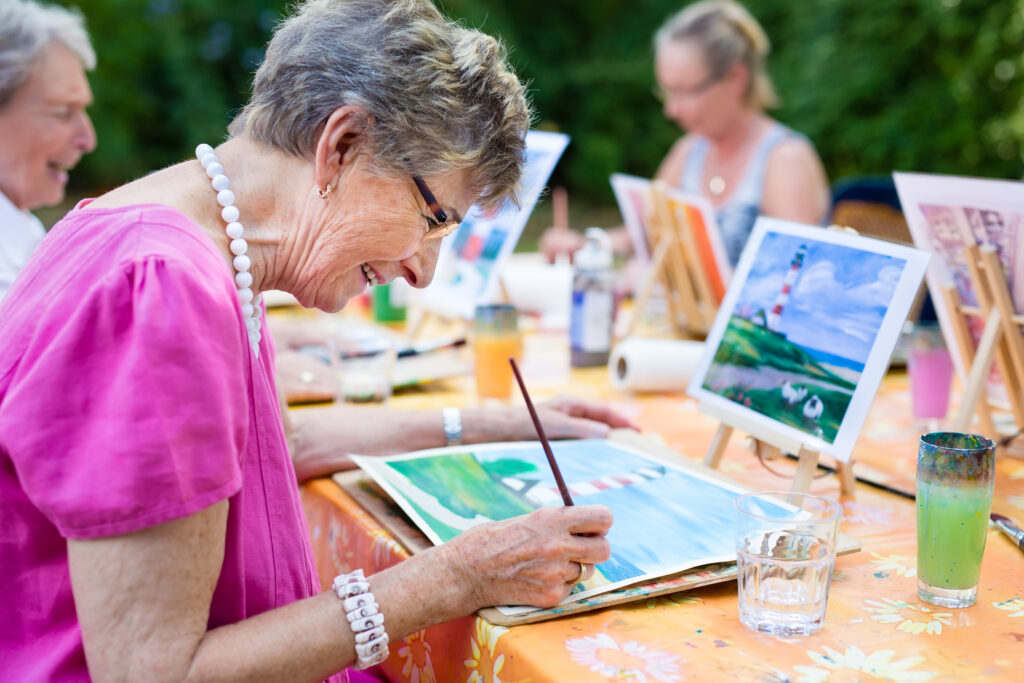
Social connections and mental health
At the Centre for Healthy Brain Ageing (CHeBA) at UNSW Sydney, our work focuses on understanding how brain health and mental health can be protected and promoted in older adulthood.
Our recent study, published in the British Journal of Psychiatry, analysed data from the Older Australian Twins Study, a six year longitudinal follow-up of 570 twins.
We examined patterns of social interactions among older Australians and their link to mental and cognitive health outcomes. Leveraging the twin design, we also explored heritability and genetic correlations related to social connections using ICE FALCON (inference about causation from examination of familial confounding), a new technique which allows us to examine shared genetic influences between predictors and outcomes, such as social isolation and depression.
We identified three main types of social interactions:
- with friends, neighbours and community;
- with family and childcare; and
- in religious groups and other caregiving.
Some older Australians engaged in multiple types of social interactions, while others primarily engaged in only one type of interaction.
Notably, social connectedness was only weakly heritable, suggesting that these behaviours are environmentally determined and so possibly remain modifiable, even in late life.
After adjusting for known risk factors for depression in older adults, including prior history of depression, neuroticism, physical activity, chronic pain, hypertension, diabetes, BMI, smoking and alcohol consumption, we found that regular engagement with friends, neighbours and family was associated with fewer depressive symptoms over time.
A key strength of this longitudinal study lies in its rigorous methodology, which included detailed cognitive assessments, medical examinations, blood tests, and comprehensive biopsychosocial questionnaires. Limitations include a highly educated sample of predominantly European ancestry, which may restrict generalisability to more diverse populations.
How do social connections support our health?
So why do social connections matter? Individuals with strong social relationships have a 50% higher likelihood of survival compared to those who are socially isolated. Conversely, social isolation is associated with increased risk of cardiovascular disease, poorer mental health outcomes and functional decline.
Loneliness has been compared in magnitude of risk to smoking up to 15 cigarettes a day.
One explanatory framework is the ‘stress buffering hypothesis’. Social support may reduce the physiological and psychological impact of chronic stress by providing emotional validation, practical assistance and a sense of belonging. Our findings suggest that peer-based and community connections — rather than solely family or caregiving roles — may be particularly protective.
Social support is very important for older adults. Our past work compared emotional support versus instrumental or practical support among almost 24 000 older adults from around the globe. We found that it was specifically having emotional support — someone to talk to, confide in and feel understood by — that was most strongly associated with fewer depressive symptoms.
Policy implications
There are a few things we need do as a society to boost social connections:
- Age friendly environmental spaces like malls, parks and senior citizen centres can promote socialisation.
- Awareness campaigns about social connections and health impacts.
- Correcting or compensating for modifiable factors such as hearing loss and provide transport assistance for those with disabilities.
- Volunteering programs: Encouraging people to volunteer to help older adults with transport or social activities. Encouraging older adults to volunteer to stay socially active.
Clinical implications
GPs are uniquely positioned to identify and address social isolation and loneliness, particularly as they may be the only health professional an older adult regularly sees when experiencing emotional distress.
Simple targeted questions can open meaningful conversations:
- When was the last time you caught up with a close friend?
- Is there someone you can talk to when something is on your mind?
- How often do you see friends or neighbours?
- Are you involved in any community or group activities?
Let me share a bonus clinical tip. As a clinical psychologist I often ask: What is an activity you used to enjoy? Is there someone or some activity you might be able to reconnect with?”
This can help patients identify personally meaningful pathways back into social engagement.
Conclusion
Social connection is not a luxury — it is a powerful, modifiable determinant of mental health in later life. As well as providing a buffer against depression, social connectedness reduces the risk of dementia and mortality.
By routinely screening for loneliness and social isolation, and supporting patients to rebuild or strengthen social ties, GPs can offer something to our patients that does not come in a bottle, yet has profound therapeutic value: human connection.
Dr Suraj Samtani is a Clinical Psychologist at Sunrise Psychology Group, and Postdoctoral Research Fellow at the Centre for Healthy Brain Ageing (CHeBA), UNSW Sydney.
The statements or opinions expressed in this article reflect the views of the authors and do not necessarily represent the official policy of the AMA, the MJA or InSight+ unless so stated.
Subscribe to the free InSight+ weekly newsletter here. It is available to all readers, not just registered medical practitioners.
If you would like to submit an article for consideration, send a Word version to mjainsight-editor@ampco.com.au.
This is an excellent article that is reinforcing the work the Canadian Coalition for Seniors’ Mental Health (CCSMH ) has been doing since 2022. In 2024 CCSMH launched the first clinical guidelines available on Social Isolation and Loneliness in Older Adults that can be accessed at ccsmh.ca. Along with pocket cards, brochures to share with clients and patients. Follow up on Linkedin and Facebook as we are currently running a campaign sharing actual ideas from a diversity of clinicians from across Canada. Thank you for sharing this current data coupled with practical ideas for things to try today!