

 more_vert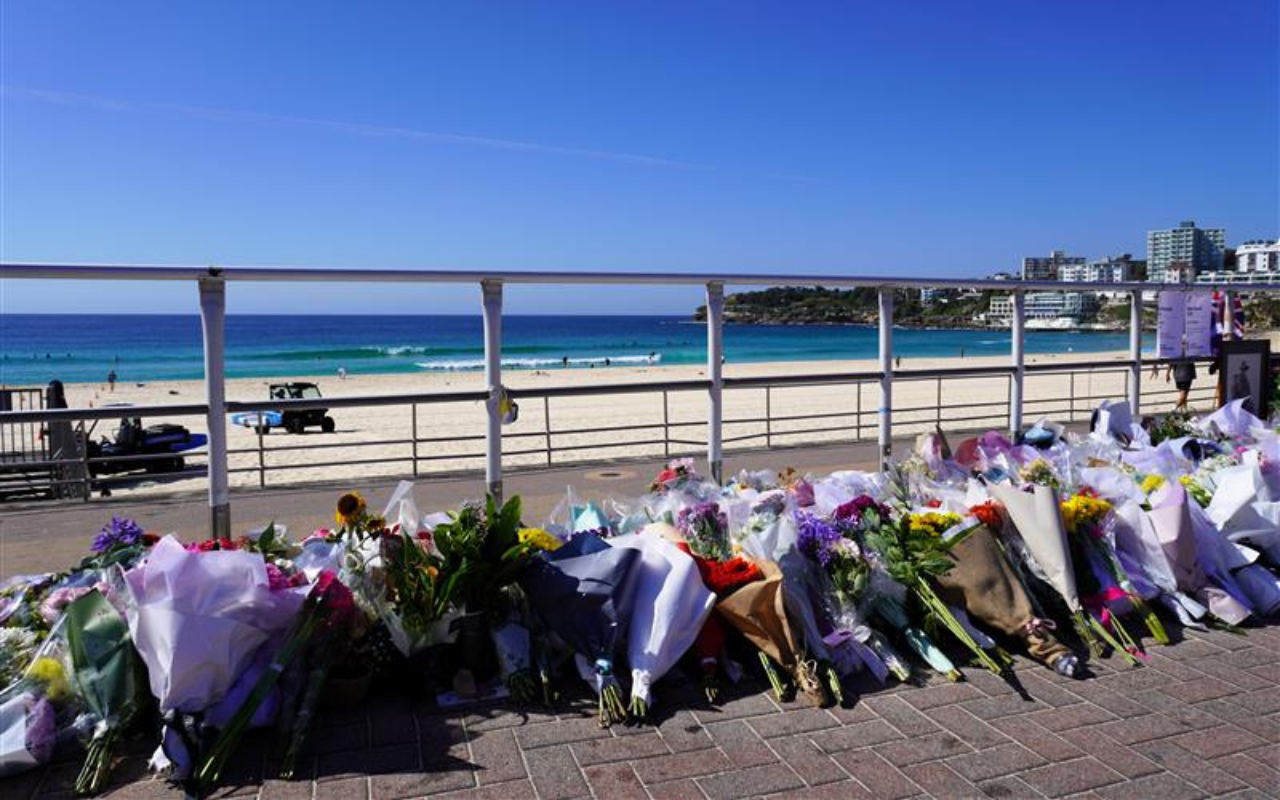
An expert on gun violence in Australia has urged for a public health guided approach to gun control reforms in the wake of the Bondi terror attack.
Fifteen people were killed in the antisemitic shooting at a Bondi Hanukah event on December 14 2025.
The federal government has now called a royal commission into antisemitism and social cohesion to be chaired by Former High Court justice Virginia Bell, which will report to the government before December 14 this year.
University of Sydney Professor of Public Health Joel Negin says there is much to be done before that report is handed down, and it would be a mistake to wait until the royal commission is finished before taking on the complexity of gun control reforms.
Professor Negin has been in consultations with NSW police as a member of the Firearms Registry Consultative Council, about what increased resources and changes to practice are needed.
“The New South Wales government has already passed legislation related to firearm changes, and those are things that I support. But I don’t think we should wait until December 14 2026 before we start thinking about action,” Professor Negin says.
“I think absolutely every state should be looking at its firearm policy settings and should be looking at where there are potential weaknesses.”
The public health perspective
Anthony Albanese has recalled both houses of federal parliament to sit from January 19 — two weeks before politicians were scheduled to return to Canberra — to push through a national gun buyback scheme and strengthen anti-vilification laws.
Professor Negin says it is crucial that a public health perspective is used to look at both the motives and the methods behind the terror attack, to guide what reforms are needed to protect more lives.
“The motives being extremism and antisemitism, and the methods being access to firearms, in most cases changes this type of event from something that would have limited casualties to one that can have, as in this case, 15 deaths, and I think about 40 people injured,” Professor Negin says.
“We have a responsibility as a public health community, and as an Australian community, to demonstrate that we can do multiple things at once to address complex challenges. Indeed, that is what public health does.”
“While obviously we have the focus right now on this type of mass shooting event, there’s actually work to be done in collaboration with GPs, with psychologists, with community groups and with gun clubs, to provide additional support to members of our community and address potential suicide or mental health risks among people in our state.”
While he commended the NSW parliament for its tough new gun control reforms passed at the end of last year in response to the Bondi terror attack, he says other states now also need to step up.
“I think there’s more that can be done,” he says.
“Some of the areas of concern is where it requires cooperation between different agencies, different departments, between the Commonwealth and states. So that’s communication with ASIO, with border control, with New South Wales police or other police forces.”
Opportunities for wider harm reduction
Professor Negin is calling for urgent improvements to mental health support along with tighter gun control regulations to better protect at-risk groups, such as older rural men.
“There’s a bit of a paradox here in that from a public health perspective, there are not many mass shootings in Australia. These are very, very, thankfully very rare events, but there are still quite a number of firearm suicides and firearm accidents that lead to injury or death,” he says.
“It’s actually older rural men suiciding by firearm that is the largest part of firearm deaths in New South Wales over the last 15 years or so.”
“Some of the areas that we are seeing where there has been a gap is people on rural properties either selling or providing permission for people to shoot or hunt on rural properties. And I think that’s an area that can certainly be tightened up.” he says.
“There’s also what’s called `try shooting’, which is where people go and try out shooting at a gun club without a firearm licence — that’s very poorly regulated.”
“We have to change the way that it is viewed to ensure that public safety comes first and foremost.”
Professor Negin says using a harm reduction approach in this way is not unique to firearm control.
“From a public health perspective … they’re the same types of approaches and ways of thinking that we’ve used for tobacco control or for alcohol or for gambling, for sexual health,” he says. “It’s the same type of idea, harm reduction, working closely with communities, working closely with affected people.”
“This is how public health works and a public health approach is what’s needed here.”
Legislation must keep up with a changing landscape
Professor Negin says constant vigilance is needed for effective firearm legislation.
“With cultural changes, with potential for 3D printing of firearms, there are changes to the types of firearms out there, to how they’re manufactured, to how they’re imported, how they’re classified, of course it needs constant vigilance.”
“Just like it does with the introduction of e-cigarettes and vaping and all those things. It requires changing perspectives, changing legislation and changing approaches.”
He’s concerned at efforts by the firearm lobby over recent years to erode gun laws across the country.
“We need increased vigilance and an increased focus on public safety as the starting point for consideration of any firearm legislation policy or practice,” he says.
“Firearm legislation and firearm policy by and large is a state-based matter. The registries are done by states. The legislation’s done by states. Where the federal government comes in with regard to firearms is on things like buybacks or importation.”
If you or anyone you know needs help:
- Suicide Call Back Service on 1300 659 467
- Lifeline on 13 11 14
- Aboriginal & Torres Strait Islander crisis support line 13YARN on 13 92 76
- Beyond Blue on 1300 224 636
- Headspace on 1800 650 890
- ReachOut at au.reachout.com
- MensLine Australia on 1300 789 978
Nance Haxton was a journalist at the ABC for nearly 20 years. She’s also worked as an Advocate at the Disability Royal Commission helping people with disabilities tell their stories and as a senior reporter for the National Indigenous Radio Service.
In that time she’s won a range of Australian and international honours, including two Walkley Awards, and three New York Festivals Radio Awards trophies.
Now freelancing as The Wandering Journo, Nance is independently producing podcasts including her personal audio slice of Australia “Streets of Your Town”.
Subscribe to the free InSight+ weekly newsletter here. It is available to all readers, not just registered medical practitioners.